Editor's note: Rob examines Blizzard's recent announcement to let mod- and mapmakers charge for their wares on Battle.net for StarCraft 2. Will it result in better user-created content and reward innovative creations? Or is it just another way for Blizzard to fleece your pockets? -Brett
As many of you probably know from the nearly inescapable Internet coverage of BlizzCon 2009 last week, Blizzard announced that StarCraft 2 will offer aspiring map and mod developers the opportunity to charge for their creations through Battle.net 2.0.
Opinion of this announcement has been anything but uniform, and a sharp divide is evident among gamers. I think this is an interesting move from Blizzard, but not all too surprising given their clear intentions of commercializing previously untapped aspects of their games.
I also think that both sides of the argument have some merit, so let’s take a closer look at the issue.
The September 2009 issue of Game Informer published a feature discussing the merits of review aggregator Metacritic through the lens of Glen Schofield, former general manager for Visceral Games, who developed and released Dead Space late last year.
Central to Schofield’s complaint is a lone score of 65 which caused Dead Space’s aggregate Metacritic score to drop one point from 90 to 89. Schofield states that “the difference between an 89 and a 90 is a big ass deal.”
Games journalist Mitch Krpata criticized the article, claiming that Game Informer was calling for reviewers to inflate scores in order to keep the Metacritic aggregate high. Whether or not Game Informer actually implied such is irrelevant to the observation that review score inflation would be at the detriment of the gaming public.
However, we all know that publishers use Metacritic scores to pressure developers by tying those scores to monetary compensation. Are publishers justified in using Metacritic in such a way? I decided to investigate the issue by tracking game sales and their accompanying Metacritic scores to find out the relationship between the two.
Upon learning of a rumored live-action film based on the Robotech universe, my interest in the series has rekindled. I started watching the Macross Saga, the first part of the anime. Robotech is a strange series, having been pieced together from three separate and unrelated anime cartoons. The Macross Saga is adapted and edited from The Super Dimension Fortress Macross anime.
Before there were Transformers, there was Macross, the original transforming mechas. The protagonists in the series operate Veritech fighters, essentially jet fighters, which can transform into bipedal mechas. The SDF-1, which is the space fortress that forms the backbone of the Earth’s defense against alien invaders, can also transform between bipedal mecha and space cruiser modes.
The setting for the series is based on a mysterious alien spacecraft which crash lands on Earth. Dubbed the SDF-1 (Super Dimension Fortress), the spacecraft is retrofitted with human technology to make it operable by the inhabitants of Earth. From studying the SDF-1, humans discover Robotechonolgy, which is used to create the transforming Veritech fighters.
Conflict arises when the Zentradi, a humanoid race of space-faring beings who are roughly 40 feet tall, descend upon the Earth to recover the SDF-1 for something called “protoculture.” The Zentradi bring millions of space cruisers housing a seemingly unlimited number of Zentradi operated battle pods to invade the Earth and recover the SDF-1. The crew of the SDF-1 and its Veritech fighter pilots are all that stand between the Earth and total annihilation.
Great setting for a game, right? This got me thinking, where are all the Robotech games? Are there any good ones?
Editor's note: Rob makes some interesting points about the things video game designers can learn from board games. A lot of developers do play board games -- they're gamers all around by nature. Wonder if they ever take any clues from them like Rob would like them to? -Shoe
It’s official -- the board game Space Hulk is being re-released to the public. I’ve previously written about my affection for one video game adaptation, Space Hulk: Vengeance of the Blood Angels, but this revelation got me thinking about what makes a board game so compelling and what their digital counterparts can learn from them.
Editor's note: Rob either has a fascination with the living dead or is preparing for the zombie apocalypse. Here's his take on his favorite zombie games. -Jason
Surprisingly, my previous post on DoubleBear’s Zombie-RPG garnered a lot of interest -- I’ve never seen so many hits so quickly! So as a way of saying thanks, I’ve decided to write a little something about zombies in video games by highlighting a few of my favorite games that feature zombies in some way.
New developments have occurred this week in the controversy between Tim Langdell of Edge Games and Mobigame, small independent developer (two people!) of critically acclaimed, yet commercially unavailable, Edge.
Earlier this week, Time Langdell authored an open-letter to Mobigame, stating his side of the issue. Mobigame responded, essentially calling the letter a pack of lies, claiming that Langdell has posted email conversations that never occurred and has fudged the truth on a number of issues, including Mobigame’s offer to rename their game to “Edgy.”
In point three of Langdell’s letter, he even admits in an update posted August 12 that he altered the wording of David Papazian’s (of Mobigame) email.
Read on for the rest of Langdell's shenanigans -- the controversy only heats up!
With the Xbox LIVE update being released this week, one aspect of particular interest is the games on demand service. A brilliant idea; however, I believe that there are several obstacles that Microsoft will have to address in order for the service to be a success.
One obstacle is out of Microsoft’s control, and that is the relatively slow adaption of digital distribution by console gamers as well as access to broadband internet. Other obstacles are the price of downloadable games, the issues of convenience versus value, and Microsoft’s storage problem for the Xbox 360.
Though we mostly agree that "console wars" are lame and that arguing over which system is better than the rest is counterproductive to playing games, we just can't seem to take our eyes away from the fight. Whether it's reminiscing of the clash between Sega and Nintendo or pointing out the stupidity of it all, we just can't seem to stop talking about the battle for console supremacy (yes, I recognize the irony in writing this post.)
Recently, Kotaku wrote about the coming feud between what could be the console mascots of a new generation -- Sony's EyePet and Microsoft's Milo. The article relates gamers' comments of the two to the battle that developed between Nintendo's Mario and Sega's Sonic. Whether or not there's any merit to such a comparison is irrelevant to the fact that sides are already being taken.
Why do we enjoying watching volleys of belittlement be thrown from one side or another? Are we fascinated as if passing by a car wreck on the highway? Maybe. More pressing, though, is why do such disputes arise in the first place?
That's a lot of RPG experience coming to this title -- Black Isle Studies is responsible for the originalFallout and Baldur's Gate games, Trokia for the already mentioned Vampire, and Obsidian is known for Star Wars: Knights of the Old Republic II, Neverwinter Nights 2 and expansions, and the recently announced Fallout: New Vegas. If there ever was an RPG to be excited about, this is it!
Mitsoda has revealed information on ZRPG himself, just yesterday. Read on for the details!
I've been keeping up with the story of Tim Langdell and his legal crusade to bludgeon developers who use the word "Edge" in the titles of their games.
Now it looks like members of the International Game Developers Association are taking action regarding his recent election to the board of directors and legal threats to developer Mobigame.
According to the IGDA forums, members are receiving emails to vote to call for a special meeting to vote Langdell off the board. There's no new information yet, but I'll update if something develops.
In the wake of my fiasco with Red Faction: Guerilla (a problem which I still haven't figured out), I picked up Resident Evil 5. I really wanted Killzone 2, but that wasn't available in the store when I returned Red Faction for another game. I admit, I was a little reluctant to pick up RE5; the reviews I read left me with the impression that I wasn't missing much if I'd already partaken in Resident Evil 4.
No review of RE5 would be complete without a mention of the veneer of subtle racism the game was charged with having, which put me on edge a little. I read the reviews and understood the complaints. I don't think it's necessary for me to dive into that already fought battle, but suffice it to say that I think Resident Evil 5 could have handled these underlying issues with a little more tact and care for detail.
The only result I can foresee would be me buying fewer games.
Ars Technica offers an argument against equating quality with sales
This needs to be said more often.
Gamasutra has an interesting article on game difficulty, player choice, and accessibility
I just hope that developers understand the difference between unforgiving (failure based on player mistakes) and punishing (failure based on cheap game design.)
The title says it all; below are descriptions of two of the worst games I've ever played. I was planning on adding more, but after writing up two games I'm already over 1,000 words. Maybe I'll revisit this subject in the future.
I'm going to stick to lesser-known games than rehash the same old list of terrible games that can be found just about anywhere (E.T., Custer's Revenge, Superman 64, etc.) These are also games that I either played all the way through or came damn close to doing so, simply because I really enjoy the game's genre and was willing to give such a terrible game a chance. Hopefully, this'll lead to a more interesting read since I'll have more than just a passing familiarity with the game.
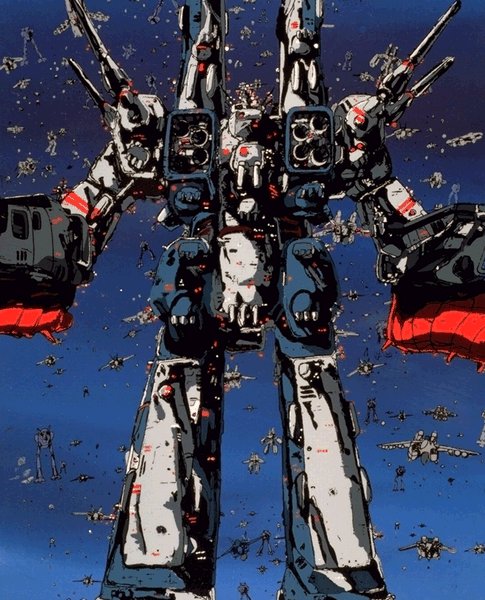 Before there were Transformers, there was Macross, the original transforming mechas. The protagonists in the series operate Veritech fighters, essentially jet fighters, which can transform into bipedal mechas. The SDF-1, which is the space fortress that forms the backbone of the Earth’s defense against alien invaders, can also transform between bipedal mecha and space cruiser modes.
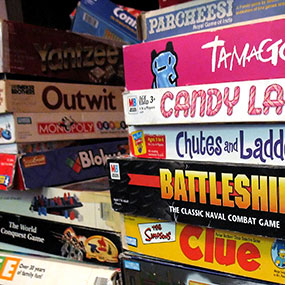 Editor's note: Rob makes some interesting points about the things video game designers can learn from board games. A lot of developers do play board games -- they're gamers all around by nature. Wonder if they ever take any clues from them like Rob would like them to? -Shoe
 With the
 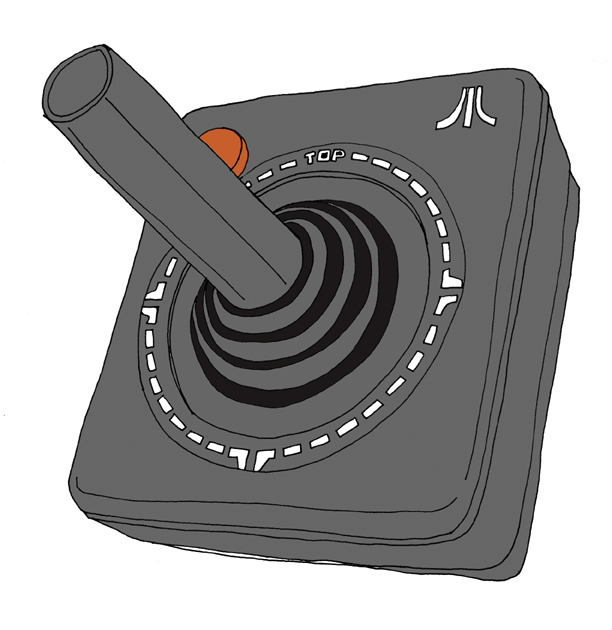 Though we mostly agree that "console wars" are lame and that arguing over which system is better than the rest is counterproductive to playing games, we just can't seem to take our eyes away from the fight. Whether it's reminiscing of the
  A zombie RPG, or ZRPG as it is known by its creators, is in the pipeline for the newly formed independent developer
 .jpg "edgelangdell") I've been keeping up with the story of
I've been keeping up with the story of 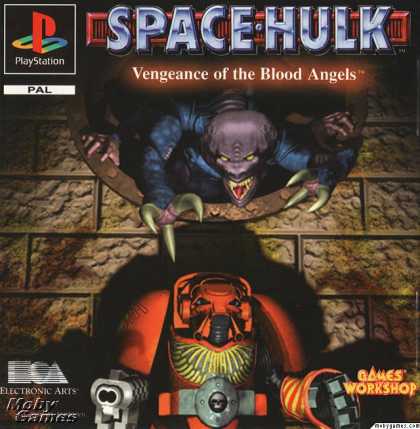
 The title says it all; below are descriptions of two of the worst games I've ever played. I was planning on adding more, but after writing up two games I'm already over 1,000 words. Maybe I'll revisit this subject in the future.