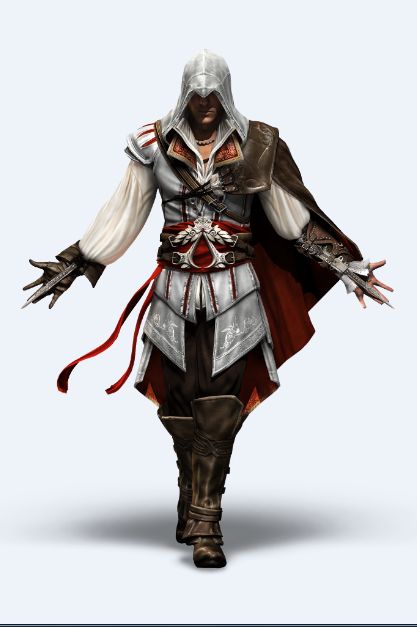
 Reading reviews for Assassin's Creed II, it might seem odd that so many players loved the game despite their lukewarm indifference to the original Assassin's Creed. The truth is, however, that it's a vastly different game from its predecessor. And not just regarding gameplay; Ubisoft Montreal has successfully engineered a game where architecture, geography, art, smithery, and history play big roles. Thus, it has done what no other game has – at least, with such grace.
The division between lovers, haters, and fence-sitters of the original Assassin's Creed provided exactly the feedback the developers needed for a sequel – after all, what is a game sequel without improvements? Gamers lauded, or at least appreciated, its innovations, but many couldn't persevere through what many deemed a “repetitive mission structure” to finish the game. And the criticism was duly noted.
Assassin's Creed II improves on nearly every shortcoming of its predecessor. To begin with, the mission structure does not force Ezio, the game's protagonist, back-and-forth from a bustling-city locale to a remote home base. Instead, the young man of the distinguished Auditore family is typically left standing where the previous mission ended. It's a refreshing and crucial change to the game design.
At that point, you can choose to embark upon another plot-related mission or a number of side missions, which are always plentifully available and whose structures vary from delivering letters to killing conspirators. There is the obvious third option, as well: run around the city, interacting with the countless citizens like a normal Italian teenager in the 15th century.
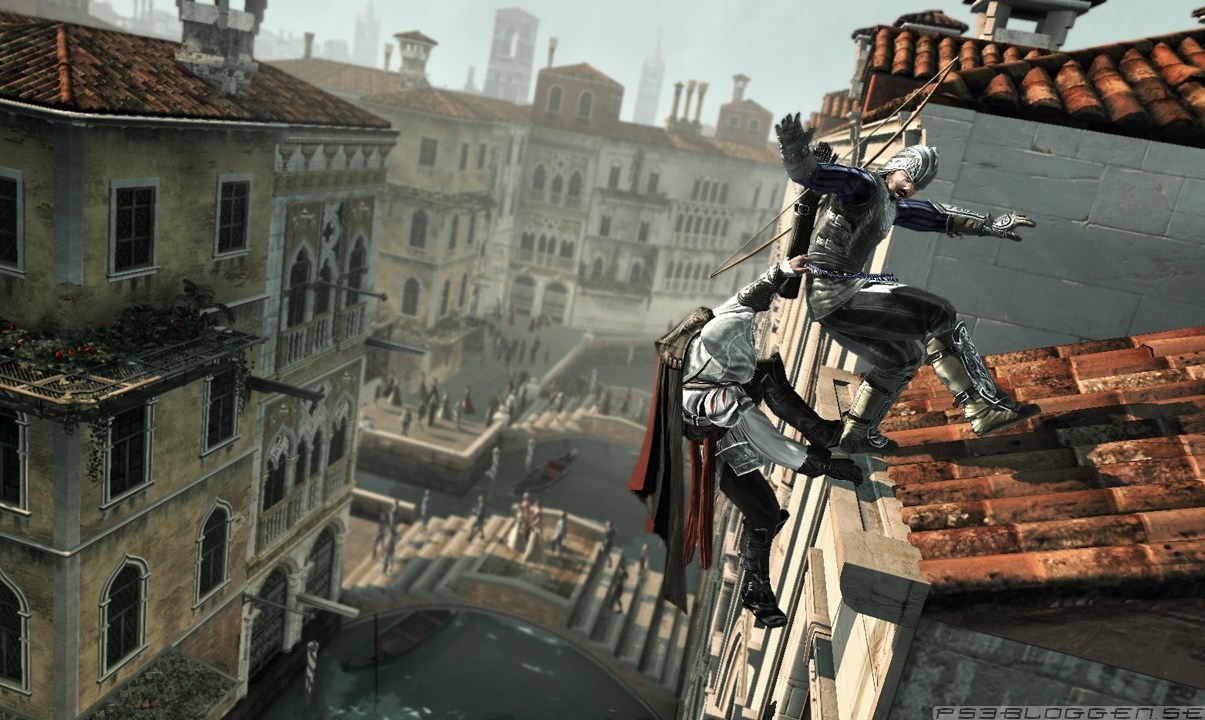
In contrast to the Crusade-era Levantine cities in Assassin's Creed, the environments in the sequel feel more like real places. You will meet an extraordinary number of unique people – plot-related or not – with beautiful clothes and diverse personalities; bard's will approach you, with annoying persistence, and sing songs praising Ezio; thieves loiter on rooftops; harlots coyly call you; and you will see preoccupied guards chasing other thieves. The architecture is gorgeous, too. This is thanks to the historic source material, and the graphical upgrades made since the original game.
In addition, the cast is rife with real historical figures. And this is why I love Assassin's Creed II so much: It's an innovator in historical-fiction games. I genuinely learned a lot about the Renaissance Italy's history, its people, politics, and places. Most of this info is found in written blurbs easily accessed via a pause menu that is far better organized than the original's. Plus, interacting with a young and inquisitive Leonardo Da Vinci is an experience that only a videogame can offer.
Exploring Italy on foot is intuitive and smoother than before. The controls, however, are still not perfect. My most frustrating moments playing this game involved accidentally jumping inches to the right or left of a platform and crashing onto the city streets, making my trek back to where I wanted to be more arduous than was necessary; or slightly side-stepping a ladder, which placed Ezio hanging clumsily from a rooftop, and letting the guards catch up to me.
If some say that the combat is still underdeveloped, then I enjoyed it too much to notice. The variety of counter-moves alone makes fighting fun and seamless. More importantly, combat is altogether more avoidable than in the original game.
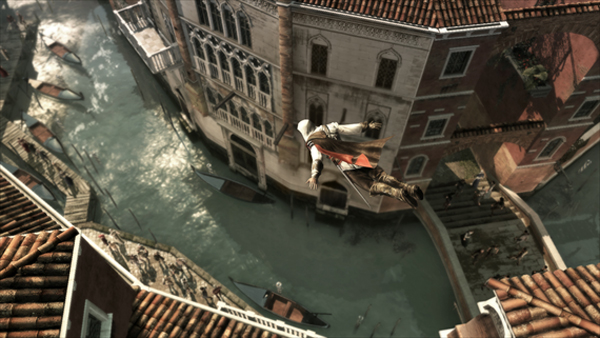
The plot – split between Ezio's and Desmond's stories – lacks the pacing of the first game. Althaïr had extended and unique conversations with his enemies. Not only did each present different contentious moral issues, but they conveyed to Althaïr the sense that he was naïve – that the story was bigger than he, and you, the player, could yet understand. That feeling is all but lost in the sequel. Ezio seems to have little patience for conversation. Also, most targets have sketchy personalities at best. Likely a product of the loose mission structure, you are no longer able to research each enemy before attempting the assassination. And as for Ezio's personality, it is sadly as underdeveloped as his targets'.
The final “sequence” (or chapter, if you like), however, quickly became one of my favorite moments in gaming. Without giving anything away, of course: The ending surpassed what I expected, stayed true to the Lost-like mystery-laden sci-fi story, and still remained grounded in history. There are more secrets, codices, and sequences that made the game deeply linked to the real world, but I would rather you find those on your own. I recommend that you play the first Assassin's Creed, sure. But it would be a far greater shame to miss out on this one.
Comments (2)
My brother says this is his favorite game ever, and although I don't think it is "best game ever" material, it certainly is one of the best 3rd person adventure games of this generation. And it is so beautiful! And it has Machiavelli!
Great review Chris!
