|
 Reading though an interview with Electronic Arts president and chief operating officer John Pleasants, several things he said have given me reason to raise an eyebrow, ever so slightly. A little background on Pleasants is revealed: he's not a game industry guy, having come instead from online business ventures such as Ticketmaster. This man is purely business. Reading though an interview with Electronic Arts president and chief operating officer John Pleasants, several things he said have given me reason to raise an eyebrow, ever so slightly. A little background on Pleasants is revealed: he's not a game industry guy, having come instead from online business ventures such as Ticketmaster. This man is purely business.
He envisions the games industry moving into a service industry -- the interview briefly touches on the topic but fails to go into the nitty-gritty of it. I think that there are some interesting surrounding issues related to a games-as-service business model.
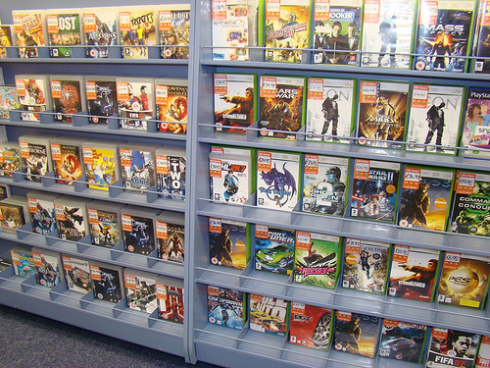
First, the key quote of the interview, from Pleasants: For anyone in software, the move is going to be like moving from Blockbuster to Netflix, record label to iTunes, Siebel to Salesforce.com. They all carry elements that are directly parallel to us. If you believe all games will eventually be services -- as I do -- then the idea of game teams that make a game, ship it, and then do something else goes away. They will now ship and day one begins when the customer gives feedback to the live service. The way you distribute will be different. The way you charge will be different. There will be more permutations in pricing. Merchandising will be much more important. Co-marketing will be much more important. You have to have persistent identification and entitlements for a user, no matter where they are or in what game they're playing. I'm not really sure that I agree with Pleasants on the statement that games will not be made by teams in the future -- a large part of a game comes from a creative vision, which I believe requires more than an executive's business feelings about a given market. I'll even jump in briefly and come down on the side of games as art (as any creation in any medium is art). Games are a medium which will always require a creative team to bring them to life. Another small thing I take issue with is Pleasants suggestion that games will start becoming service-orientated through customer service. Gamers already (whether rightly or not) expect developers to continue supporting their games in order to work out bugs and ensure the game plays as intended. This has been a hallmark of PC gaming since the beginning, and developers who offer such support are routinely rewarded with an every-growing fan-base. Just look at Blizzard's continued support of the original Starcraft -- despite the fact that a sequel will be released shortly -- throughout the ten years since its initial release. But those aside, the more interesting thing about Pleasants' quote is his implication that games will be moving more towards a digital distribution model as opposed to physical media. I believe that each has its benefits and drawbacks, and these are aspects of the topic that are rarely discussed. The obvious about digital distribution is its convenience. No longer do gamers have to go to a physical space and hold a physical copy of a game in his/her hands. Services like Steam, Impulse, GamersGate, and Direct2Drive have already proven such methods of distribution possible, if not growing in popularity. I'm not too familiar with GamersGate or Direct2Drive, so my focus will be on Steam and Impulse. Both services have slightly different offerings when it comes to your rights as a consumer, with Steam being on the more restrictive side. Games are not transferrable to other accounts, thereby making it nearly impossible to return or resell a purchased game (Impulse does allow users to resell a game but it comes at a price.) Steam requires games to be connected to the internet for the most part, but it is possible to play offline with some effort. Installing a purchased game on two home computers is possible, but Steam will make it difficult to play the game on both computers at the same time. The digital nature of the media makes it easy for publishers to associated a unique CD-key with a unique online account, which makes all of the above possible. Physical media, in contrast, does not have these kinds of limitations (at least for older PC games.) The ability to borrow, lend, and resell purchased content, as well as make copies for personal use, have been respected consumer rights since the early 20th century. Recently, the games industry has been attempting to emulative the restrictions inherently possible in digital media through the use of Digital Rights Management (DRM) software. This began with the introduction of unique CD-keys, disc checks, and finally, the most restrictive forms of DRM that required an internet connection and/or limited the number of installs through a token system. As an example, gamers reacted angrily when EA attempted to put such restrictions on Maxis' Spore, causing the publisher to abandon the internet connection requirement but retain the limited installs. Gamers were also miffed that the game did not allow for multiple user accounts -- another form of DRM that requires each unique CD-key be associated with a unique online user account. Such a restriction meant that two gamers in the same household would have to buy the game twice to get the same experience. With such a strong reaction from games, some things must be at odds here. These systems were developed and employed under the guise of combating piracy, but the jury is still out on that one. One thing we can know for sure is the fact that these systems effectively end the second-hand market. And this is what the games-as-service business model is all about. EA has even gone as far as calling the second-hand market a "critical situation." Michael Capps, president of Epic Games, even dreams of locking certain content in games so that the second buyer will have to spend extra cash to be able to play the whole game. If games are services, there is no way for an individual to express his/her first-sale doctrine rights as a consumer. The ultimate end of this strategy is to make all games like Blizzard's World of Warcraft, by which I mean instituting a subscription-based business model. Don't believe me? EA is exploring the option of having the PC version of their Tiger Woods games, PGA Tour Online, make use of a subscription-based model. Other developers are instituting small fees for content that used to be released for free -- downloadable content (or DLC, as it is now known) of things such as maps and character costumes. What's next? Charging for patches? From Pleasants quote, I cannot be sure that the answer would be no. There's a good chance that this whole strategy against the second-hand market could backfire. The more active gamers are typically young and have a lot of free time but little expendable cash. Used games offer an opportunity for these young gamers to try out more types of games, and ultimately, became gamers for years to come. Take away their used games and they might just pick up another hobby, robbing the industry of what could have been a life-long customer. Update: Gamasutra had an article yesterday that I missed detailing Pleasants' digital business model strategy and reafirming EA's committment to a service-based model. Of note are EA's free-to-play MMOs and the addition of micro-transactions (a topic of particular interest for me, but I'm yet to collect my thoughts.)
|
