While some see massively multiplayer online games (MMO) as a way to waste an afternoon, others rely on the genre to feed their families. For the past decade, a new industry has boomed in popularity on the Silk Road: gold farming, the practice of playing a massively multiplayer online role-playing game (MMORPG) solely to attain in-game currency to sell to other players.

In the business hub of gold farming, China, there is an estimated 100,000 "professional" gold farmers who rake in $200 million USD each year. It's not surprising given the formidable success of games like World of Warcraft and how loosely the Chinese government has handled this situation.
This massive problem made
headlines in May when Chinese prisoners claimed they were used as gold-farming slaves instead of doing hard labor. If they didn't meet their designated quota, they were severely beaten.
Brutality in prisons is one thing, but this is just downright cruel. The gold farming done would make the guards an estimated $767 to $930 USD per day. Technically, the practice is legal in China because the supposed ban
implemented in 2009 doesn't apply to in-game items -- that includes virtual currency. Gold farming is recognized as a legitimate business in the country and in South Korea, where it is taxed.
Thought to have started in 2001, Korean Internet cafes became a hotbed for the illicit activity. When World of Warcraft launched in 2004, the business slowly seeped into China and quickly grew in popularity and profitability. Now the industry is worth $200 million USD annually and increasing each year. China harbors the largest online population globally at
485 million Internet users, so I'd say the profits rise quickly.
A
MMORPG is highly reflective of how society operates, and prices will fluctuate by how much gold is being traded between players. A high influx of currency disrupts this flow and causes prices to drop drastically, thus eradicating potential profits. (For a fun fact:
MMOs are often
studied by sociologists to see how society will react in different situations; it's fascinating stuff, check it out!) And China's refusal to dignify gold farming as a problem (and recognizing the business legitimately) is to blame. Blizzard can only close accounts being reported by players, and a
subscription base of 11.4 million is a lot to manage.
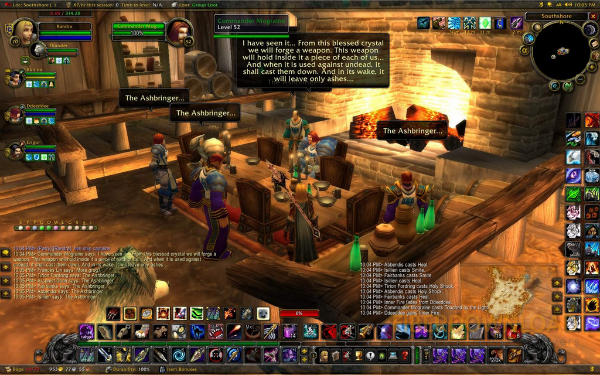
Disastrous effects on the game economy aren't the only detriment. Through illicit means like botting, spamming, or keylogging, players' personal information is also at risk. I've been hacked before, and it's not a fun experience. It was early in my World of Warcraft career, too, and part of me wanted to quit entirely (glad I didn't, though). That's why Blizzard introduced the Authenticator, a random number generator used to log in. But gold farmers often spend many sleepless nights stealing accounts just to try and put food on their tables (or not get beaten to death).
Though prominent in
MMOs, the business affects other services as well. Last year,
Zynga sued PlayerAuctions.com for unlawful sales of in-game currencies over the company's popular Facebook games
Farmville and
Mafia Wars. Capitalizing on this,
Zynga later filed a patent to officially sell in-game currencies offered by the company. The developer set a precedent for social-game makers, and around the same time, Disney and EA picked up their own social studios.
Zynga is now looking to file an IPO (initial public offering), so the move really helped them out economically.
China may be the hub for gold-farming, but not all players from the country partake in the activity. It's a common misconception by English-speaking players that all Chinese players are in fact gold farmers, which is purely false. Back in 2006,
Eurogamer ran a
story on such a case. Tales of Warcraft, a now-dormant Mandarin World of Warcraft site, had 7, 000 claims of discrimination from English speakers. Many accused Chinese players of only playing for commercial gain. That's not the truth, though.
Gold farming will exist as long as MMOs do. Right now, nothing can be done to stop its success, but as the genre evolves into something more interactive, I believe we'll see some innovative ways developers handle this issue.
Got any thoughts? Shoot them Blizzard's way.

 Home
Home