BEN GIFFORD
COMMUNITY WRITER
Default_picture
Followers (1)
Following (0)
LOCATION
Mentor, OH
Ben Gifford is a freelance writer and critic for Game Chronicles. He is a graduate of Cleveland State University and is pursuing his Master's in Applied Communication Theory and Methodology. His thesis examines the state of video game criticism and seeks to help define critical game theories.
TWITTER  Ben_Giff
FACEBOOK  -NONE-
WEBSITE  BG Media Review
LINKEDIN  Ben Gifford
XBL  dredgman
PSN  dredgman
WII   -NONE-
STEAM  dredgman
BEN GIFFORD'S SPONSOR
Adsense-placeholder
FEATURED POST
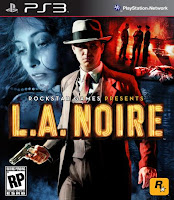
La-noire-cover-art
Pixel Perfect's review of the crime thriller, L.A. Noire.
Thursday, May 26, 2011 | Comments (4)
POST BY THIS AUTHOR (1)
COMMENTS BY THIS AUTHOR (4)
"I also agree with this author in his notion that more game should be inclusive and offer adaptive ways to play games for players of different skill levels. What he fails to understand is how casually describing something like this as "girlfriend mode" IS inherently demeaning and sexist. Now to be fair, it's not just this author. It's not even just a man thing, as many women have also become accustomed to this sort of mentality that pervades our society.

Bend Studio made a very laudable attempt to be more inclusive with Uncharted: Golden Abyss, where most of the action could be handled through touch and motion instead of traditional controls. As far as I know, no one ever referred to that as "girlfriend mode." Instead, the developers described the controls as geared toward casual gamers.

See the difference? A statement like "girlfriend mode" is condescending and dismissive. Whereas casual gamers are defined as casual be having less skill and/or preference for the types of games that appeal to the "core" gamers.

Some may feel the public reaction to this has been too harsh, but it's not just what Hemmingway said. There's a thought process that goes along with words like his. As long as we continue to think this way, misogyny will continue to exist in some form or another."

Yesterday
"People are always going to look for mascots. I think it's just human nature. It's the same reason we look for friends at parties: familiarity.

With each new console launch, people ask "Where's my Mario? Where's my Master Chief?" It's just something that gamers have come to expect. Certainly it can be abused, but some heroes and mascots are treated better than others. Certainly Sonic is a fantastic example of what NOT to do with a mascot, but others have kept strictly to high-caliber games.

Think about it, gamers begin to worry when they haven't seen a mascot in awhile. They get ornery. "I hope Samus is alright," or "Luigi's Mansion?! What is this? Where's my f**king Mario game?!"

I don't think it's any coincidence that a lot of Nintendo characters have come up in this comment. Nintendo seems to do a particularly good job of creating likable, lasting mascots and keeping them in mostly high-quality games."

Wednesday, August 10, 2011
"That U.K. study is hardly comprehensive. While I have yet to play Dead Space 2, the demo did little to make me expect anything different from Dead Space 1.

I can think of a few other games that should have been included, namely F.E.A.R., F.E.A.R. 2, and Silent Hill: Homecoming."

Thursday, May 26, 2011
"I would agree. It's fine that Cole Phelps has his own distinctive personality. What detracts from the realism is that he will sometimes yell and raise his voice out of nowhere."
Thursday, May 26, 2011