Home
Home

Gavin makes a good point. Sure, we can have more realistic characters and sound effects, accurate portrayals of weapons and vehicles, and real-world settings, but are military games missing the big picture?
To accurately represent warfare, games must engender a sense of collaboration toward an overarching strategic aim, not focus on the tactical weeds of individual effort.
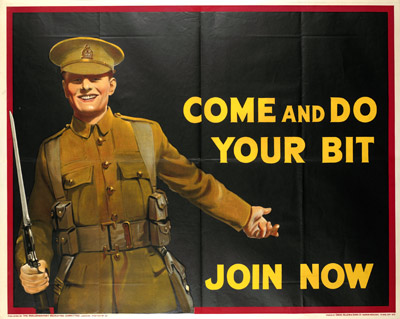
Despite occupying a significant proportion of video-game content, military titles of all genres fail to depict warfare accurately. First-person shooters are fun and exciting but ridiculous. The game pace, number of incidents and body counts familiar to FPS fans are to modern conflicts as Rambo movies are to guerrilla warfare: a cartoon depiction. According to The Evolution of Weapons and Warfare by T.N. Dupuy, the average number of daily battle casualties per 100 troops in conflicts worldwide in 2011 is three. How does that compare to the attrition rate of 2010’s Medal of Honor? Players are divorced from the actions on-screen and are prone to taking extraordinary risk to achieve objectives. Without the fear that normally comes with danger, games simply can’t recreate the true feeling of being under fire. Even if players could somehow achieve empathy with their on-screen character, the way FPS single-player campaigns are designed results in players being constantly harried and channelled to follow pre-scripted actions to progress the story.
Real-time strategy military titles are engaging, but outside of a despotic society, no one person has so much control over the macro and the micro as is permitted by the genre. Even games like Civilization, Age of Empires or Command & Conquer, which incorporate the economic and societal elements of war, cannot give any player a faithful experience of commanding forces at any level. Although RTS games allow players to make the mental leap from the tactical to the strategic, the sheer scope of the faculty entrusted to them is unlike anything that would be experienced by any individual within any military or governmental organization. To return to the emotional level, players simply don’t, and shouldn’t, care about the hundreds or thousands of units sent to their digital graves in pursuit of the overlord’s aims.
These are examples of the "army of one" mentality of video games. Even in multiplayer-focused military games, the individual is king and players are out to clock up kills and demonstrate their prowess. The number of stakeholders in any military operation, not to mention a full-blown war, is mindblowing. From troops of all spheres of warfare to logisticians, planners and propagandists, politicians and media outlets, the list is endless and all have an input towards the effort. I’m not suggesting here that any game could simulate the complex nature of a conflict so accurately; I'm just highlighting the stark difference between the reality of such operations and how they are represented for our entertainment.
Video-game warfare is largely land-centric, and it is for this reason, coupled with the individual nature of console ownership, that games don’t make the paradigm shift necessary to depict armed conflict as the collaborative effort that it actually is. One branch of warfare that is under-represented in games, but which by its very nature requires a collaborative approach, is naval warfare. Sea power is by far the most influential of military might. Navies can legally position aircraft carriers 12 miles off any coast on the planet and influence the area for hundreds of miles around the hull. Submarines can deny access to logistically vital sea-lanes by the mere suggestion of their presence, and marines can be landed on any beach by amphibious units with little or no notice. The nature of naval operations means that fighting units -- ships, submarines, and aircraft -- cannot be operated individually and require cohesive teamwork to effect such formidable and versatile weapons. However, the largely individual nature of gaming precludes this vast and intriguing sphere of warfare from being fully explored.
Indeed, the most notable recent example of naval warfare in video games is that of Eidos’s Battlestations: Midway. The battle of Midway is a master class in the employment of naval air power and escort warfare. The world shaping exchange between the US and Japanese carrier fleets influenced the tide of the second World War and gave the US the foothold it needed to press its advance across the Pacific. The game representing these events was woefully below par; it laughably reduced the encounters to single-player, ultimate-control farces with one person effecting the navigation, gunnery, and command of naval units all at once.
The mantra of naval warfare -- and indeed that of land and air warfare -- is that each individual is a cog on a wheel: a small but vital component in the machine. Everyone knows their job, and together they combine to fight the war as directed by those in command, who are in turn guided by the strategic aims laid out by an appropriate authority. Perhaps the only video-game genre that could even attempt to replicate the intricate and complex essence of military operations is massively-multiplayer online games. If players can make the mental shift away from the weeds of individual effort, and appreciate how fulfilling their role correctly -- not for personal glory, but for the collective aim -- can have a huge impact on the outcome of a conflict, then they would be much closer to understanding the reality of military effort than they would by running and gunning their way through a restricted shooter map.
As intriguing an idea as this is though, I doubt it would be a viable project. It can be argued that an accurate representation of the human mechanics of warfare is not the aim of these games and that escapist entertainment is the main goal. If players want to test their hand-eye co-ordination while enjoying an exaggerated -- albeit entertaining -- storyline and revel in impressive graphics and sound, then the current crop of military titles meets this. However, if players want to experience war in accurately reproduced combat situations but without the physical dangers inherent in military service, then the selection of war games available fails to provide. The dichotomy is that any game that could accurately simulate warfare would be exactly that: a simulation. It would most likely be used to train military personnel and not to entertain the gaming public. After all, is a more accurate understanding of the mechanics of war actually what gamers want? Probably not.
Gavin Lowe is a staff writer for the UK based web publication Game Kudos, and keeps his blog at The Gaming Gentleman. He also tweets now and then from @GamingGentleman.