Don't expect much from the Wii U's tablet controller

Default_picture
Wednesday, December 12, 2012
EDITOR'S NOTEfrom Jason Lomberg

Based on Nintendo's shady history with gimmicky controllers (e.g., the Power Glove) and gimmicky systems (Virtual Boy), Mike concludes that the Wii U's tablet controller is -- to put it kindly -- a huge mistake. What do you think?
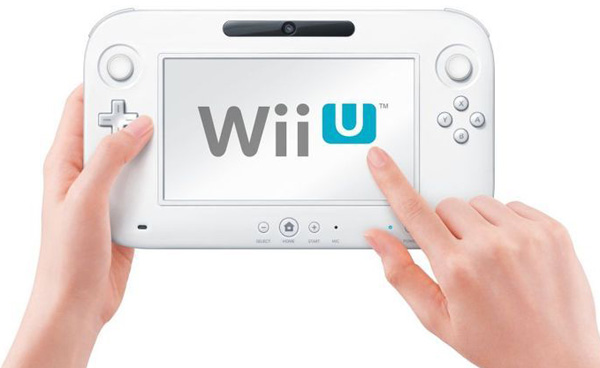
Wii U controller

If you’ve been following Wii U launch coverage, you’ve probably read a sentence like this:

The Wii U, successor to Nintendo’s blockbuster Wii console, presents several intriguing possibilities for interactive entertainment, thanks to a tablet-style controller, the GamePad.

Reviewers are extremely intrigued by the thrilling potential of this tablet. They shouldn’t be. We actually already know what game developers will do with it -- not much.

Since the days of the NES Power Glove, gimmick controllers have promised new frontiers of immersion and interactivity they could not possibly deliver. The mighty 8-bit mitt purported to “track the position of your hand in space” with “3D sensors.”  “Now you don’t just guide the action. You’re in the action,” the ads hilariously lied.

 
This early example of motion-sense technology made an infamous appearance in the 90-minute Nintendo commercial, The Wizard. Its functionality -- as portrayed in the film -- was ridiculously inaccurate.


Nintendo’s Virtual Boy console set the industry standard for chicanery when the futuristic virtual reality of its marketing clashed so violently with the migraine-inducing monochromatic hellscape of its games. But the main reason to doubt the Wii U’s paradigm-shattering potential is this: Nintendo’s been pushing the tablet’s basic ideas in one form of another for about a decade.

Mindful observers will recall the GameCube’s GBA connectivity, which introduced  “asymmetric gameplay” with a game called Pac-Man Vs.;  the Wii U launch showcase, Nintendo Land, features not one but two barely disguised versions of Pac-Man Vs. It takes balls the size of late-stage katamaris (of the Damacy variety) to promote your “revolutionary” controller with a ten-year-old game, but then this is a console with a 2D platformer for a killer app. How Will U Play Next? Like U always have.

Sega’s Dreamcast, always blazing crude trails, also had a playable screen in its gamepad. But Nintendo is borderline-obsessed with offering “second window(s) into the video game world.” The Big N has been making dual-screen handhelds since 2004. Developers mostly use window 2 for maps and inventories. Like the Wii U tablet, the DS and its follow-up, the 3DS, had touchscreens, but the portables pioneered no genres or playstyles. (Zelda got new controls.) Touchscreens only revolutionized casual games.

Which brings us to the Wii Remote. The first Wii was so popular and successful -- a bona fide cultural touchstone -- that people have convinced themselves its controller didn’t suck. It did. With the nunchuck accessory (usually necessary), it wasn’t even unique, just split in two; it needed more face buttons and a second analog stick. Inputs mapped to the motion sensor ruined games like The Legend of Zelda: Twilight Princess; enjoying Donkey Kong Country Returns or New Super Mario Bros. Wii meant holding the Wii-mote horizontally, turning it into the world’s least-ergonomic NES pad.

Two of the Wii’s greatest hits, Mario Kart Wii and Smash Brothers Brawl, required a GameCube controller for high-level play. For all its alleged noob-friendly simplicity, the Wii-mote’s synchronizing, calibrating, and battery killing made it considerably higher-maintenance than old-fashioned controllers. Only its games were simple.

Wii Sports was often called a tech demo, but it was no mere demo -- it was the tech, entire. 5 years later, Skyward Sword‘s fencing fulfilled -- in a small way -- the hardware’s promise; it required a $25 expansion to play. Despite its Kinect-spawning sales figures, the Wii didn’t change the way we play games. Microsoft and Sony’s next machines will come with standard control pads. You can buy one for the Wii U, too.

After the Wii U’s underwhelming debut, games journalists (whose job it is to be excited about new products) decided Nintendo just hadn’t properly articulated the new tablet’s wonders. Nintendo favored this interpretation. “It’s a complicated device to explain in words,” a marketing director said. Maybe. Or maybe it’s not that complicated. Maybe you’re just conning casuals into blowing $299.99 on another hideously underpowered, flimflam system.

At least Link will be in HD.

 
Problem? Report this post
BITMOB'S SPONSOR
Adsense-placeholder
Comments (39)
Default_picture
December 12, 2012

Okay.....
I have a Wii U and I actually love the Gamepad. It feels comfortable, the second screen is not unobrtusive, and playing everything on that second screen is great when you don't wanna sit in front of a TV. Do I think people should rush out and get one right now? No. But you won't be sorry that you did though. (And its 300-350-not 399.99)

The Power Glove was just licensed by Nintendo, they had no say in its design and concept. And they admitted they rushed out the Virtual Boy. So two bad gimmicks undermine Nintendo's history of actually innovative ideas in the hardware space?

Default_picture
December 13, 2012

Yeah, I knew Nintendo didn't make the Power Glove, but I don't think the editor did. They added stuff about it I didn't write.

The MSRP should have been $349.99, you're right. That was a typo.

And N's gimmicks don't undermine its history of innovation at all. That's why I never said that. Their gimmicks do undermine their gimmicks, though.

Default_picture
December 13, 2012

Gimmicks undermine their gimmicks? I don't even....
Are you just trying to say that the tablet controller won't lead to many good experiences for hardcore gamers? Or that it won;t change the way games are played? I fail to see how these are bad things. I like playing games with controllers, buttons, and any tactile input. Just because someone uses something familiar doesn't mean they're not trying something new. I mean there still has to be some level design and concepts actually being tried to (assuming you're talking about new games). Tech means nothing if developers can't do anything amazing with it and an innovative game doesn't need fancy tech to create an amazing experience.

And for all the talk about hardcore gaming, Nintendo knew that its pointless to always draw from that well, something they learned from the Gamecube. Which is why they made the remote anyway. they knew people who didn't play games a lot would never actually enjoy picking up a standard controller with all those buttons. And they wanted something intuitive.

In the end, it comes down to the games. If a game is made and can produce an amazing experience, who cares what the input method is. 

And if people get excited for the Wii U and speculate how it can innovate and change the way games are played, why are you taking that away from them? It's their job. 


Default_picture
December 14, 2012

Mike, saying that Nintendo was "involved" with the Power Glove does not imply that they designed it. They did, however, approve this peripheral and attach their reputation to it. For all intents and purposes, Nintendo owned its success and failures (but mainly the latter).

Default_picture
December 14, 2012

Yeah Ken, it IS a bad thing that the controller won't lead to good experiences for hardcore gamers. Nintendo's asking us to buy a full-priced underpowered instantly-obselete console based on the notion that it will indeed "change the way games are played." You and I both know that's bullshit. Hence my objection.

And it is absolutely not the job of a journalist to get excited for no reason. Their job is to be skeptical advesarial watchdogs who provide  context.

Default_picture
December 14, 2012

Okay, Jason, but you do say the Power Glove appears in a Nintendo "commercial." To imply a noted hardware developer made a commercial for the Power Glove absolutely implies they designed it.

In actuality, Universal made a product-placement-heavy film that featured, among dozens of other products, the Power Glove.

The real question is why you ruined my katamari joke.

Default_picture
December 14, 2012

The "Nintendo commercial" line was a joke which referenced the fact that the NES -- and its attendant peripherals -- had a starring role in The Wizard. I love the film for its cheesy nostalgia, but Nintendo had an unprecedented share of the marketplace in the mid-to-late '80s, and you wouldn't see a movie like that today.

Most gamers are familiar with this half-serious observation that The Wizard served as a de-facto 90-minute Nintendo commercial, and I doubt many would assume -- from that inference alone -- that Nintendo designed the Power Glove. To infer much of anything from The Wizard -- which can hardly be taken seriously -- is a mistake.

Lighten up, my friend.

Most gamers are also familiar with the infamous catchphrase at the end of this clip. But the main reason I included the clip was to demonstrate how ridiculous its portrayal of the Power Glove's capabilities were, when in reality it wasn't nearly as responsive as the film made it out to be.

I added an explanation to your katamari joke because not everyone has played that game. It's incumbent upon a good journalist (or editor, as it were) to make sure his readers aren't confused and to provide all necessary background information.

Default_picture
December 14, 2012

@ Mike
Also, from where do you infer that the journalist's job is to "be excited about new products"? Where does it say this?

Default_picture
December 14, 2012

I personally never said journalists have to be excited for it, I said people. And the context both journalists and people are excited for it is based on their impressions from playing the thing. 

Every story I read about Wii U up to launch has talked about how good the controller felt. In fact, I've read stories that said how awesome it was to play Black Ops II on the Gamepad. But again, like I mentioned earlier, fancy tech is half the job-games still need great game design and a good concept. You just can't spec your way into innovation.

And I think you missed how I said I don't care if 'the way games are played' aren't changed because I like the current format of tactile inputs. I like those buttons and sticks to interact with the game.

Default_picture
December 14, 2012

@Kenneth
I think there's been some confusion. I saw what you mentioned about people being excited for the Wii U. My comment was directed at Mike, who inferred in his article that journalists must -- as a condition of their employment -- "be excited about new products." In reality, it's the journalist's job to produce compelling content that gets the reader excited ... not to neccesarily get excited about the product, itself. A fine distinction, to be sure, but an important one.

I've ammended my comment to eliminate any confusion.

Default_picture
December 14, 2012

@Jason

I agree most people wouldn't take the commercial line literally. I only said you implied Nintendo made a commercial for it (although I'm guessing most people think N produced the film and designed the glove). So since nothing can be inferred from The Wizard, why insert a clip as evidence to support the argument?

If you don't know what a katamari ball is, I doubt the word "damacy" will clear things up. Add a link or something (and I actually only mentioned this line to lighten the tone).

As for game journalist's job, that's a big topic, but succinctly, the ad-revenue-and-access-dependent business model causes writers to internalize the values of the people who pay them to play video games. I have no doubt they do their jobs with professionalism and integrity, but if they were more critical/skeptical thinkers, they wouldn't have those jobs (did you see the euphoric coverage of the 3DS?).

What does it mean to get the reader excited? Is positivity a requirement?

Default_picture
December 14, 2012

@Kenneth

I like the current format too! And I like the tablet better than the friggin' Wii-mote, that's for sure. But only Nintendo die-hards (like you and me) should buy this thing, because it won't have GTA V, it won't have the new CODs, it won't have any of the cool new non-Nintendo games. If they were selling this for $199 (w/ harddrive) I'd have much less of a problem with it.

Default_picture
December 14, 2012

It does have the lastest COD, which was well received! Assassin's Creed III was a launch game! Darksiders 2 is there! A badly thought out port of Arkham City is there! They have a not crappy eShop with indie games! The 'hardcore' games are there! Stop conflating 'not having a specific game' with the console won't have hardcore games.

Furthermore, don't lump me as a die-hard Nintendo fan, like its the only brand I play. I game on the iPhone, PC, PS3, 360-I even pull out the Dreamcast from time to time. I play games where they exist and where they are good.

Default_picture
December 14, 2012

@Ken

Do you think Wii U will have Assassin's Creed IV? Will it have Arkham 3? It's a fine current-gen console, but this gen is over. This machine is underpowered. Nobody wants to buy watered-down ports so developers won't make them. You know Sony and Microsoft will make new consoles one day, right?

"Die-hard" doesn't mean it's the only brand you play.

Default_picture
December 14, 2012

@Mike

The Wizard was a cheesefest not only because of the preponderance of NES games but because of the ridiculous ways the gameplay didn't match the action or the tech didn't correlate with reality.

You mentioned that "Since the days of the NES Power Glove, gimmick controllers have promised new frontiers of immersion and interactivity they could not possibly deliver." Even if we're to believe that Nintendo had zero involvement with the production of The Wizard -- a very dubious proposition -- the film acts as a defacto ad for Nintendo and its peripherals (even if Nintendo didn't design the peripherals in-house). The Power Glove's silly portrayal in the movie creates a perception that the actual product couldn't possibly deliver. It's not even close.

Again, sir, your inference about journalists is based on hearsay. Have you worked in any capacity as a journalist? Your description of journalists who subconsciously absorb the PR superlatives and general excitement is the unfortunate result of individuals with lax morals. But I've never worked for an editor or publisher who encouraged me to "get excited" about a product, thereby giving the company free publicity. I would doubt most outlets have this sort of expectation of their writers, freelancers, and assorted staff.

A reader gets excited from content that either challenges his assumptions, devises a new method for looking at something, provides compelling analysis, or various other permutations of "exciting content." Highly negative stories can be just as popular as fawning ones.

Default_picture
December 14, 2012

I hope the Wii U doesn't get annualized sequels. Yes, Sony and Microsoft are coming out with powerful machines, but will they be affordable enough and will it not be costly to develop. If the answer is no to both, then they can keep their pricey updates. The indie market will suffice for me.

Default_picture
December 14, 2012

Sure, I've been nationally published even, but who cares? My article you published contains more journalism than 99% of Wii U coverage (that's not saying much).

It's bizarre you're so indignant, seeing as 2 months ago you wrote this: http://bitmob.com/articles/my-journalistic-integrity-is-not-for-sale

Pretty much what I described.

Of course, you also wrote this deeply shameful ad copy: http://bitmob.com/articles/six-non-game-gifts-for-your-favorite-gamer

Tell me, Jason: did anyone have to "encourage" you to get excited about that powermat or those headphones? No. No one had to encourage you. Why do you think companies give reviewers free stuff?

Let's see if you have the "temerity to defend (your) actions, enabling the culture of corruption." I bet you do!

Default_picture
December 14, 2012

Mike, please tell me what is "deeply shameful" about a holiday wish list for gamers? You're implying -- without much subtlety -- that I chose the items on that list purely on the basis of who sent me a review copy, dismissing the possibility that I might criticize a product that I receive for free (for review or otherwise). How you came to such a conclusion, I'm unsure, but if you want evidence to the contrary, I suggest you check out my work in Electronic Component News (or some of the games I’ve written about here). I developed such a reputation for being critical with review samples that I've stopped receiving them.

In fact, the disclaimer at the top of the list you reference is meant to forestall such implications and remove the appearance of bias by disclosing such information.

Your article does, indeed, contain thoughtful critical analysis and serves as a good conversation-starter, which is why I promoted it, and I'm not sure why you took such offense from the start. This entire debate really has nothing to do with the argument you're presenting in the piece (which I happen to agree with), which is why I find the whole situation so bizarre.

If you're saying that journalists should provide critical analysis instead of acting like cheerleaders, you'll get no argument from me. Games journalists, in particular, often fail to live up to the standards of media professionals. But nothing in our job description suggests that we have to "be excited" about anything in particular. Rather, a general lack of standards leads to such a situation.

Default_picture
December 14, 2012

I agree you're a good journalist, based on the articles I've read and your willingness to have this (extremely long) discussion. But like you say, your colleagues often fail to live up to these standards. You and I disagree on why this happens.

It doesn't need to be in the job discription. Every one of those hacks in the enthusiast press thinks they're a paragon of integrity. The standards that are lacking all favor the advertisers. This is just institutional analysis. A business dependant on ad revenue can't antagonize advertisers.

I mean, you say right here companies stopped sending you swag because you criticized them. So you know first-hand how this works. If you're overly critical your job becomes more difficult. It can be pretty easy for less-conscientious journos than yourself to convince themselves to be a little "fairer" next time. And if you don't someone else will. This happens in all sorts of ways. It's how you get press events full of cheering yahoos.

(You must be a little ashamed of that wish list, c'mon. Was it your idea? Did you request the stuff? Did being free play any role at all in what got reviewed? How many other headphones did you sample, for example? Again, this doesn't make you evil or corrupt -- I'm sure you genuinely liked everything on the list -- but this can't be why you got into journalism)

Finally, this discussion (not initiated by me) has a lot to do with my argument. I link to several highly-representative non-critical articles. If the gaming press had done their jobs I wouldn't have written this piece.

Default_picture
December 12, 2012

This article nicely collects every flimsy argument against Nintendo's innovation that has been raised over two decades, perhaps in hopes that the sheer volume of complaints will suddenly lend them heft they don't actually have.

The article skirts around the real value of the Wii U gamepad, which is the fact that the functionality is baked into the system. That was never true of the Power Glove or the asynchronous gameplay that the GameCube had the potential to offer when paired with multiple Game Boy Advance handhelds. And of course, that's a key point that renders much of the discussion in this article moot.

The Virtual Boy failed, but Nintendo tried to make it a success and thus it's hardly a sham. The Wii Remote didn't facilitate deep core games, but it also wasn't intended to, so that winds up being beside the point (even though it was clearly very important to the person who wrote the article). And the $25 price quoted to play Skyward Sword as it was meant to be played must be factoring in shipping and sales tax. Most people didn't pay an extra $25. By that point, many people already had a Wii Remote + in hand because they were available in stores with that added functionality built in. The comparison to the VMU in the Dreamcast also isn't followed up on, which is just as well since such comparisons don't hold water. Presumably, the point was to say "And SEGA did it first, so why does anyone think this is a big dealm, anyway?" but that's absurd. The VMU didn't function as a core component in any gameplay. At best, it let you play mini-games that looked awful and mostly consisted of a few squares moving around. You couldn't play the same game on a separate screen, or interact with a touch interface, or any number of things. The Dreamcast did a lot of things well, but the VMU screen wasn't one of them.

The result of all that despearate work in the case of this argument is a disappointing read, to say the least. There's an authoritative tone throughout and obvious conviction behind each point, with careful word choice that has the potential to be engaging if it is ever turned toward a less preposterous argument. It's just a shame that the points being made don't hold up to even cursory scrutiny.

Default_picture
December 13, 2012

How does the tablet's baked-in functionality differ from the DS? What will developers be able to do?

The Virtual Boy's marketing was a pure sham. I'm sure Nintendo didn't want VB to stink, but that's irrelevant.

The Wii-mote's uslessness is absolutely not beside the point. It's the whole point. Hardcore gamers won't get much out of the tablet, and no one should drop $350 to play casual shovelware games.

Everything you write about the VMU is correct. That's why I called it "crude" and only mentioned it in passing (It did do things like find items for you in Skies of Arcadia).

Default_picture
December 12, 2012

Right. The Wii certainly didn't force Microsoft (Kinect) and Sony (Playstation Move) to respond (expensively!) to their motion-controls focused console. And, with the increasing number and quality of games for tablets, there certainly isn't any place for a touchscreen connected to a console, and it's not like Microsoft (Smart Glass) is planning on doing the same thing with literal tablets.

Plenty of good points were made by Jason and Kenneth (above) explaining the flaws of this article, so I won't repeat them. I will say, however, that asynchronous gameplay seems to be the direction Nintendo and Microsoft are going (which will force Sony to go that way as well). And, with multiplayer becoming more and more of a focus and requirement for games, I fail to see how more multiplayer options would be rejected by developers or consumers.

Considering that the Wii U has sold over a million units already, while it's trailing the original Wii's numbers, that was expected and it's still firmly in the "success" category for Nintendo. Microsoft and Sony will take note, and I expect Smart Glass and whatever Sony's doing will boast similar numbers.

Default_picture
December 13, 2012

"Right. The Wii certainly didn't force Microsoft (Kinect) and Sony (Playstation Move) to respond (expensively!) to their motion-controls focused console."

That must be why I referred to the Wii's "Kinect-spawning sales figures."

Who said there isn't any place for a touchscreen connected to a console? I never said that. It's just not that exciting a development for gaming. Is "you might have another multiplayer option" a huge selling point for you?

The Wii U's sales figures have nothing to do with my argument. I'll certainly buy one myself, once the franchise insallments start rolling out. But there's no reason to believe this tablet is going to do anything interesting.

Dcswirlonly_bigger
December 12, 2012

It all depends on how much developers actually care. The Wii remote probably had potential, but not enough developers cared to support it. If enough developers care enough to support a control scheme, they'll eventually start making great game that take advantage of it in great ways. This is basically what happened to the DS despite its rough first few months. Now touch screens are pretty much a standard on handhelds despite what doubts people may have had about the DS initially.

It all just depends on what kind of developer support the Wii U gets.

Default_picture
December 13, 2012

I don't really disagree, but Nintendo is maybe the BEST developer, and they cared a lot about supporting the Wii-mote.

The tablet will enhance a few games, like most gimmick controllers do.

Dcswirlonly_bigger
December 14, 2012

I meant third party developers. Of coruse Nintendo is always gonna supporr their own control systems, but the DS for instance was ultimately legitimized by the number of 3rd party developers who made compelling games or it. The GamePad's usefulness will utlimately be decided by how much third party support the Wii U gets.

Dcswirlonly_bigger
December 14, 2012

I'll add that I think the Wii Remote's ultimate flaw was that it tried to replace the current conventional control scheme instead of add to it.

Over the years Nintendo has done most of the innovation in building the modern console game control scheme. They may not have invented these things, but they did popularize the D pad, modern face button orientation, shoulder buttons, force feedback, and alalog sticks. The DS became the first popular game platform to use a touch screen. Even Microsoft has referenced the Gamecube's Wavebird in explaining why they shipped 360s with a wireless controller at launch.

The thing is, all of those additions added to what was already there in order to eventually build what we use today. The Wii Remote sort of tried to start with a clean slate by not supporting standard control schemes as well, and it ended up alienating a lot of developers. The Wii U GamePad doesn't do this.

Just judging by the success of the DS and the prevalence of touch screens today, I don't see why the GamePad can't lead to good new game design, even for core gamers.

Default_picture
December 14, 2012

I totally agree Nintendo has done tons of awesome innovation. But they couldn't do much with the Wii-mote or the DS in terms of game design. The DS had third-party support, that's what makes it great. My concern is the underpowered (but full-priced) Wii U will not have that support.

Default_picture
December 16, 2012

The way I see it, it's basically making the Wii U the console equivalent to the DS. The Dual screen setup works well for a lot of games on the DS. For others, the feature may not be used at all. Some games add on gimicky features to make use of it. But, in the end, it all depends on the games and how they use it. Once developers realized that they didn't necessarily have to implement touch controls on DS games, and could simply use the bottom screen for maps, stats, etc., it was a non issue, The DS and all its subsequent iterations have sold increibly well and have has come spectacular games. 

Default_picture
December 19, 2012

I agree the tablet will enhance a few games. I just can't see the Wii U winding up with a DS-like library of titles. The DS wasn't so underpowered. It's like a dual-screen GBA going up against the PSP.

Default_picture
r h
December 26, 2012

The wii motes suck? They weren't used to its fullest, but they don't suck. Even after Sony and Xbox released PSmove and Kinect, respectively, there is still some features they can't touch. Audio feedback from the controller and the controller memory. Most games made minimal use of the sound ( even smash bros.) and the controller memory is something largely ignored (almost no one needs their own button config. except at tournaments).  The audio feedback could have been bigger though, Red Steel 1 (although being a horrible game) still put more into that feature in 2006 than most games did in the following 6 years. Its multiplayer "killer" mode would have been a dream ...on gamecube, or even on later titles.

Anyway, the wiimote technology is actually ok, it was just never utilized beyond waggle and punishes early adopters with Wiimote plus, made available at the same price.

Default_picture
December 30, 2012

Oh man I totally forgot about the tinny static-y audio feedback. Annoyed me in every game I heard it in. Never played Red Steel, though. I'll look into how they used it.

I guess by "suck" I meant the drawbacks outweighed the advantages. 

Default_picture
r h
December 30, 2012

Thanks for the reply. Yeah, the feedback wasn't all that great but just a little is enough for some games and can even add a layer of gameplay that does not exist on competing devices. Its not surround sound Doby 2.0, but its something.


I remember renting Wii party just for one of the mini games that makes use of it, never really found the game so its a real shame. The game itself was horrible, but those hidden features should have been well developed in BETTER games. The term that comes to mind is "stiff neck", if applied to the Wii U tablet this generation then we can see the most creative uses on the most poorly received games and traditional controls on more PC applications (much like last generation). Zombie U may either be an exception or proof that things may change.

Default_picture
January 01, 2013

Yeah, I hope so. My feeling is Nintendo (maybe the best game developer) couldn't do anything with the Wii-mote and they were really trying, so the tablet will just enhance a few games and that's it.

The rumble pak was N's best gimmick, now standard on all controllers. Just a subtle bit of immersion, nothing Earth-shattering, and it's great. I'll be elated if the tablet delivers something like that.

Default_picture
r h
January 01, 2013

But that's just it, the Wii-motes aren't dead. Even gamecube controllers are the standard for one of the Wii's biggest games, Wii motes could still prove its worth regardless of motion control. Monster hunter 3 tri proved it for curious gamers but I speak from personal experience with Monster Hunter- it may not relate well to others. Another concept to consider would be how the wii motes are implemented in Call of Duty: Black Ops 2 for the Wii U. Hopefully the precision does add to the game.

Default_picture
January 02, 2013

Fair enough, but I will be amazed if anyone ever does anything spectacular with motion sensor controlls. They were in arcades for years and years before the Wii, the Wii-mote dissapointed and Sony's Move was a joke. I've lost what little faith I had in the tech.

Monster Hunter 3 is generally regarded as one of the Wii's best games, but my understanding was the controls were terrible even with a regular controller.

Default_picture
r h
January 02, 2013

I am a bit biased since I put so many hours into the game. I used the wiimote nunchuck combination and turned motion control off, though it IS USED when applying tilt (changes which greatsword attack is used). The set up allowed users to combine items and browse items WHILE MOVING, which was a huge boon for those who were curious enough to try it out. I never tried it with a classic controller, but I had a great time with the wiimote nunchuck combo, just had to be mindful about how I was gripping the controller and added more control to it.

Default_picture
January 16, 2013

I am truly influnced by the technique used in to run  nunchuck,,so furiously..


http://www.highpointetours.com/post/category/mexico

Default_picture
February 20, 2013

so many thanks to share your ideas with me, you know, I pay close attention to this controller recently


http://www.gw2goldsale.com

You must log in to post a comment. Please register if you do not have an account yet.