My journalistic integrity is not for sale

Default_picture
Monday, October 29, 2012

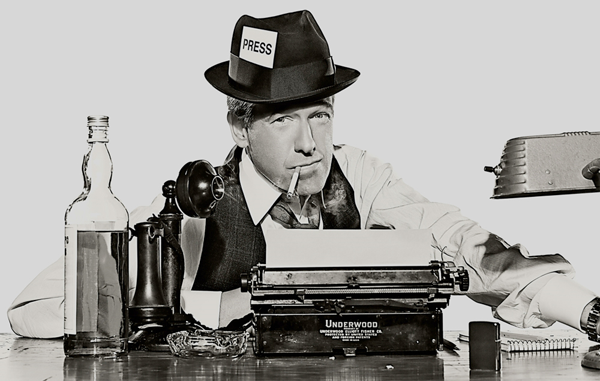
Old-time reporter

The GMAs fiasco is an abomination -- not just for the act itself, and what it says about games journalism, but for how the guilty have actually doubled down. This cavalier embrace of quid pro quo is entirely foreign to me, being of a traditional journalism background. As the editor for an electrical engineering trade magazine, I wouldn't last a day with such lax journalistic integrity.

The journos at the Games Media Awards (GMAs) who tweeted a hashtag in exchange for a PS3 have cast a renewed -- and unflattering -- look at games journalism. They’ve exposed a culture that tolerates -- and even encourages -- quid pro quo, that increasingly blurs the lines between advertorial and editorial, and that which has flimsy standards, if any.

Accepting freebies in exchange for tweeting a hashtag is not a form of advertising, as some have suggested. It’s graft, pure and simple. It’s selling one’s integrity -- and any pretense of unbiased objectivity -- for personal gain. I could never do this.


In my field, we deal with many of the same moral quandaries as games journalists, and the opportunity for graft is always there. Since our industry is 100% ad-supported, the temptation is to pander to clients.

We get regular offers to fly us around the country (or world) for preview events. I've gone to a couple of these press junkets and they pamper us, put us up in the finest lodging, and serve us the most exquisite food.

We deal with friendly, personable (and often highly attractive) PR reps whose job includes making me -- and those like me -- happy. A colleague of mine refers to them, accurately, as “sirens.”

These PR reps lavish fancy gifts upon us (especially around Christmastime), cater to our every need, and do whatever is necessary to ensure that we leave with a favorable impression of their client.

Four years ago, when I was making my bones in publishing, I went on a European press junket that involved a tour of the Ferrari data facility, four-star restaurants, and a day to explore scenic Bologna, Italy. Value to the reader? Zero.

Nowadays, I don’t accept gifts or go on press junkets unless it’s an important industry event -- and in most of those cases, my company foots the bill. I only accept review samples if I plan on reviewing it. The hardware, software, or peripheral must be necessary for the performance of my job.

But when are freebies or swag ever necessary for the job? How could they not unduly influence our judgment, and if not, give the appearance of bias?

I work in a culture that wouldn’t tolerate the blatant quid pro quo that transpired at the GMAs. Accepting a gift like a PS3 in exchange for selling my integrity would get me fired. Despite all the temptations that PR reps and salesmen lay before my feet, we have safeguards in place and a way of doing business that precludes outright graft.

You’d never find a parallel within my industry to E3, where “journalists” (those on the floor, anyway) compete to see who can collect the most swag. Christmas gifts (i.e., unsolicited presents) are acceptable, but we never request freebies or enter contests sponsored by the same vendors we’re supposed to objectively cover.

And if one of my colleagues suffered a lapse in moral judgment -- and rest assured, many have -- he wouldn’t have the temerity to defend his actions, enabling the culture of corruption.

I also come from a traditional journalism background that encourages critical evaluation and a healthy division between editorial and sales. It’s the media’s job to report the news dispassionately, objectively, and without the appearance of bias.

But the GMA fiasco -- and the culture it has exposed -- embodies the stereotype of the “enthusiast press”: fanboys (and girls) who treat their subjects like rock stars and consider freebies the “cost of doing business.”

A couple years back, GamePro alumni AJ Glasser wrote a highly influential piece, “No Cheering in the Press Box,” that discussed this broken culture. She described the infamous Project Natal press event, where games journalists became elaborate props in a Cirque du Soleil performance. And when Microsoft gave a free X-Box 360 to everyone who attended their press conference, the journalists dutifully clapped like trained seals.

Glasser notes that “By behaving like fans at press events, we invite the developers and publicists to treat us as fans and not as professionals.”

Is it any wonder that international gaming corporations treat the press like extensions of marketing? When the media acts like fans and journalists negotiate away their integrity for free toys, it condemns the entire profession.

The more responsible outlets (such as GamesBeat) will disclose to the readers when they receive free hardware or software -- even if these items constitute a necessary job function. Absent those assurances, readers could rightfully assume that journalists -- whom they depend upon for unbiased information -- are bought and paid for. And for good reason.

If games journalists act like extensions of marketing, then they become superfluous middlemen. Without an ounce of integrity, a games journalist is nothing more than a privileged fan.

 
Problem? Report this post
BITMOB'S SPONSOR
Adsense-placeholder
Comments (14)
Default_picture
October 29, 2012

The contest for swag at E3 bothers me. Those things should be left for events like PAX where the gamers and fans can get that stuff not paid journalists. I can't stand watching a video at another website and seeing an editor wearing a Last Of Us t-shirt. Part of me knows that a t-shirt alone can't make a critic give a game a better score, but it brings doubt into my head.

I like how you brought up the "No Cheering in the Press Box" article. I sure hope that the cheers we hear during the E3 press confrences where Sam Fischer is stabbing a terrorist is actually PR people not journalists. Some of my complaints feel petty, but I do feel like video game journalists are treated more like fanboys than they are journalists. 

Default_picture
October 29, 2012

99% of this fanboy perception is the fault of the journalists themselves, who act more like giddy fans than professional media. It's sad, really.

Default_picture
October 29, 2012

Good piece, Jason.

Default_picture
October 30, 2012

This is just another issue that fuels the 'Games journalism isn't real journalism' debate on the negative end. Instead of looking like professionals, these people accepting things for their support are doing nothing but perpetuating the myth that the games industry, in general, is made up of immature children and those who wish to make a living off a hobby. 

But, that's the rub, isn't it? Game companies don't give things for free and expect a negative reaction. I felt backlash from a game developer in the UK once when I was given a full version of one of their games, only to give it a scathing review. I later heard back from them, passive-aggressively mentioning that they had sent me the collector's edition code and not a late-cycle review code. 

I did the email equivilant of a shrug and told the development lead that it didn't change the fact that his game was bad. Whoops.

Journos in the games industry need to hold themselves to higher standards before anyone outside the industry can be expected to. A great example was the quandry Penny Arcade went though many years ago about accepting sponsors from games/developers. I can't remember when, or the details, but it's something that reminds me that it's very easy for those in the system to be wide-eyed about getting paid to work around/with a hobby they love. 

Default_picture
October 30, 2012

Funny bit about that "collector's edition code" statement. My first thought to that was "so instead of sending me a code of a potentially unfinished build, you sent me a code for the game that you are directly releasing to the general public. How does this help your case?"

Default_picture
October 30, 2012

" ...it's very easy for those in the system to be wide-eyed about getting paid to work around/with a hobby they love." Couldn't have said it better myself. And isn't that exactly what is wrong with gaming journalism? 

I feel there are too few steps in the transition from an amateur reviewer, who most likely reviews and writes about the games that they are only the most passionate about, to a professional that critiques and examines the industry objectively. Because of this, you still get quite a large proportion of 'fanboys' in the mix and they are the ones that are targeted by PR people and give inaccurate feedback. 

Unfortunately, breaking into the industry can be so much more difficult if you stick to your morals. Like you described, companies don't like negative press so if they provide you with a code and you review it poorly, they cut off your supply, blacklist you and it is terribly difficult to access news and releases from then on.

I fear that because the general public allows this to be the norm in journalism, this means that they are quite happy with sensationlised, hyped-up drivel as their reference for information. 

Default_picture
October 30, 2012

Sad part, there are quite a few `gaming journalists` that think she has done nothing wrong even now. Brings the industry down a peg as a whole unfortunately and this legal proceeding is an absolute sham. MCV should be embarrassed that they have allowed this to continue to this point. Her subsequent actions have only condemned her deeds.

Default_picture
October 30, 2012

You're absolutely correct, and that sickens me. The culture of corruption is so endemic that those who point out the blatant graft are the crazy ones.

Default_picture
October 30, 2012

So what happens now? How does it change? Or can it even change? With even more cases just like this cropping up, the already questionable opinion on the journalistic integrity in the gaming industry keep getting lower. Don't get me wrong, I want to do this for a living as well, but in true Matrix fashion "not like this...."

Default_picture
October 30, 2012
It changes by changing attitudes. It changes by rearing a new generation of games journalists with more traditional journalism backgrounds. We need fresh blood for whom the journalism comes first and then the games, rather than the other way around. A good number of games journalists approach the profession as educated fans, rather than critical, analytical investigators. It's no wonder that when a rogue journalist dares ask "tough questions", which in any other field are rather tame, he's immediately struck down and condemned. Meanwhile, far too many have slippery morals (or none at all) and don't mind outward displays of fandom (i.e., no cheering in the press box) as long as they pledge that it doesn't effect their objective opinion. But others notice, especially the PR reps, who in turn treat games journalists like fanboys. I'd exhort games journalists to hold industry figures accountable, hold their feet to the fire, and give no appearance of bias.
Default_picture
November 01, 2012

Even to the non industry employee, the giddy fanboyness of some of its journalistic representatives is apparent. 

Getting the new blood is one way, but that isn't easy when you have jobs like this with little turnover and identifiable dinosaurs holding onto the select few positions with a vice like grip.

The tough questions are another thing. On one hand, I understand not trying to rock the boat as you don't want to burn a bridge which could be harmful to your career, but some interviews are so soft and fluffy I could sleep on them..............or through them. So many opportunities for hard questions in interviews with top employees in companies and they aren't asked. Is it fear? Is it fanboyism? I don't know, but I wouldnt' do that.

Default_picture
November 01, 2012

To your point about low turnover and dinosaurs, I think the free markets will solve this problem. Either games journalists reform their ways or the public's trust in their self-appointed media representatives continues to erode, to the point where the profession implodes.

It's certainly not easy to build a friendly, cordial relationship with PR reps and then turn around and crucify their clients (or pan one of their products). I've become friendly with a number of PR reps, but it takes a professionalism bordering on mania to flip that around and ask the tough questions. I've found it helps to mentally quarantine the PR reps from the companies they represent.

I would certainly never accept freebies or unsolicited gifts, even from those I regularly correspond with.

Default_picture
November 01, 2012

Thanks for the conversation Mr. Lomberg.

Default_picture
November 01, 2012

I'm surprised more people like this. Games journalists get uppity when you call them out on it, but any intro ethics course in journalism will have these scenarios outlined in black and white - it's not professional, it's not ethical and it's not justifiable.
There was a comment on getting backlash from publishers/developers, and I'm surprised people have experienced that. An IGN editor did an AMA on Reddit once where he addressed that very question, saying that people in the industry are generally very tight-knit and backlash like that is rare. Additionally, I've done a couple of reviews of content that was provided to me, and truth be told, they were low-production titles that got mostly overlooked on the Playstation Store because they weren't very good, and I reviewed them that way. I've received nothing but warm thanks from the PR company that has worked with me on these for the publicity at all.

You must log in to post a comment. Please register if you do not have an account yet.