Home
Home

Like Michael in the past, I haven't given free-to-play games much thought. But his examination of why this model works has definitely piqued my interest. What do you think of freemium games?
Looking at the current gaming marketplace, it’s amazing to see the changes we’ve made over the last five years through our spending habits. Where $60, boxed retail games were the norm, now digitally distributed titles are the way to go for gamers who want convenience and easy storage. Likewise, the “freemium” pricing structure -- play for free, pay for perks and customization -- is increasingly becoming more prominent, with multiple companies looking to capitalize on this piecemeal method of consumption.
A lot of people, however, aren’t totally sold on the concept of freemium gaming. There always seems to be a catch, especially when the tendency is for developers to lock away from gamers content that would normally be accessible to get them to pony up extra dollars. Similarly, most freemium games don’t offer much in the way of a game experience comparable to a retail product, relegating them to the status of novelty games that cater to an extremely specific niche audience.
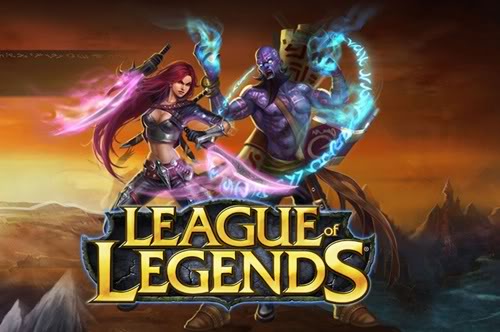
Honestly, even as it becomes more and more commonplace, the freemium structure isn’t something I thought could work. That is until I was persuaded to try League of Legends. After seeing how developer Riot Games approaches the concept of a free-to-play game with paid perks, I’m confident that the model can work so long as developers follow suit and attempt to hit these simple-yet-critical tenets of freemium game design.
Offer a quality product
Free doesn’t mean cheap. Sure, most gamers won’t pay -- statistics are conflicted, but the general consensus is that only 5% of gamers put money into freemium products -- but the people who do are funding your continued success. If you’re going to put out a freemium product, you need to make it valuable to your paying customers.
Riot Games took this concept to heart when they designed League of Legends. To explain with wondrous acronyms, LoL is a MOBA (multiplayer online battle arena) game, a genre made popular by DotA (Defense of the Ancients), an extremely loved Warcraft 3 mod that most connected gamers have at least heard about in passing.
The genre consists of players directing their individual champions across a standardized battlefield made up of three “lanes,” pushing A.I.-controlled minions (“creeps”) back, and fighting the opposing team’s champions and defenses. The goal is to defend your lanes until you can make a sufficient push to destroy the enemy’s base.
So, how does a simple real-time-strategy hybrid based on a free mod justify its existence? High production values are key. From the main login screen to the interface and in-game graphics, the overall presentation and atmosphere of League of Legends smacks of quality and effort.
The models and assets might not be on par with a Crytek game, but at no point does League of Legends resemble Farmville, Mafia Wars, or any of the other (relatively) low-cost productions that similarly demand your disposable income incrementally. League of Legends feels confident like Riot doesn’t need your money. Paying for low-cost freemium games always feels like charity; paying for League of Legends feels like an investment.
Sampling leads to sales
When you begin League of Legends, you have nothing. You’re a Level 1 Summoner, and without any Influence Points (the game’s soft currency earned from playing the game) or Riot Points (hard currency purchased with real money), you don’t get to choose which of the 80-plus champions you want to bring into battle.
Many champions cost at the equivalent of $7.50 USD each; how do you get somebody to take a chance on a new character that they might not take to? The solution is to allow them to try without ever implying that they need to buy.
Every week, Riot offers a free rotation of ten champions that every player has access to. The selection is generally made up of easy-to-use characters, some more interesting choices for accomplished players, and a recently released champion. And while two players on the same team can’t pick the same champion, there’s enough time in the week to test drive each of the free champions in both player vs. player and player vs. A.I. games.
While it may seem like Riot is shooting itself in the foot by giving away so much free content -- and realistically, it’s possible to live off of these free champs and never buy anything -- the ability to sample the wide range of character options does lead to sales.
Are you completely enamored with Ashe, the frosty archer? If you play well with her and want to keep using her after the free period is over, there’s a definite impetus to purchase her from the in-game store to unlock her forever in every game mode. Sure, you could play for a few days to earn the Influence Points necessary to unlock her, as she’s a low-cost champion, but for newer or more complicated champions, paying $7.50 USD or so far outweighs the amount of grinding necessary to own them forever.
The first hit is free; then, it’ll cost you. It might seem greasy, but it works. Since the product is of such high quality, feeling bad about the purchase after the fact is rare since players get to sample Riot's a la carte content beforehand.