


Stayed Awake All Night
Bioware's strides in the RPG space are arguably one of the more compelling reasons to look forward to their efforts with every release. Although some might argue that these have been detrimental to the essence of elements perceived to be important to the genre, it is difficult to deny that they do isolate the element of “role playing” into a very specific function within their design philosophy.
On the most basic level, players are cast as an important character in their worlds and play the role of saving it, but Bioware's approach has also set out to introduce a new generation of role-players while entertaining veterans with its storytelling expertise. They want to challenge the accepted notions of what an RPG is and with ME2, they've made a compelling argument as to how the medium can not only weave together a cadre of storied threads but also make players care for why they are a part of it.
Console gamers whose first exposure to an RPG may have been on the NES or, even more recently, an Xbox 360, are unlikely to engage old school adventurers in debating the finer points in why the succubus Fall-From-Grace in Planescape holds more personality in her pinkie than Sephiroth's brooding ever will.
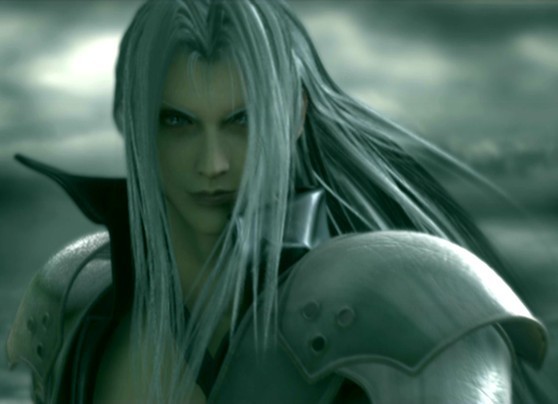
Whatever.
That's not to say that they can't, but that there's not much of an impetus to actually go and find out why those games matter when consoles have delivered JRPGs by the boatload to the West even though they were only a portion of those actually available in Japan. Relying partly on shops such as Working Designs in the past to bring even a few of these gems over to the English world, it's not as if the console space has had to endure the often spotty releases seen on the PC during the nineties.
The last several generations of JRPGs have also established certain expectations and accepted conventions; ones that no longer call for the kind of statistical soup that older CRPGs would force players to wade through before taking their characters out of the generator. One only needs to look at an example such as how well received select titles from SSI's Gold Box series were on the NES compared to the continuing success of Final Fantasy and Dragon Quest. It could also be considered one of the factors that continue to kick wide the divide between the PC and console worlds in as much as why no one can reasonably expect CRPGs to compare, feature for feature, against the PnP tabletop medium.
Bioware's early console work drew from experience earned during their efforts with Baldur's Gate and Icewind Dale. It would eventually come to integrate their storytelling focus with the faster pacing of the venue. Given the combat heavy focus of JRPGs in general, focusing on streamlining combat expediency was eventually brought into combat systems featuring a semblance of real-time to avoid feeling the grind weighing down the experience. It would be an approach that would also be reflected in later titles that eventually incorporated elements such as visible mobs and improved encounter tools and combat mechanics.
Mass Effect 2 reflects these expectations, refines them, and has taken important steps to draw in a greater audience by taking risks that normally should be left behind with the genres they originated from, such as shooter elements. They've also taken the TSR/Wizards of the Coast route in exploring their IPs with novels, online comics and recorded dialogues (Knights of the Old Republic MMO), and a PnP iteration of Dragon Age, expanding the coverage for players drawn in by the worlds they've crafted. After all, it's worked for Halo. The franchise of Mass Effect is more than simply in creating a game that tells a good story. It's sitting by the 21st century's version of a digital fireplace and listening to the tales spun next to it.
Mass Effect Galaxy had come out for iPhones as a top-down shooter prequel to ME2.
ME2 also continues that emphasis in holding the story as the lead with gameplay mechanics acting as the supporting cast. The game is here, but a book covering other aspects that lie outside of it is also on the shelf. Meticulous dungeon masters also know that to suspend the disbelief of their players, they need to make their worlds feel coherent and alive and Bioware continues to get better at it by featuring in-game elements such as an encyclopedia in both Dragon Age and Mass Effects 1 and 2.
Although they aren't the only alien in the system to include one (JRPG Xenosaga sports one as an example), including it encourages their players to fire their imaginations from within the medium. More recently, James Cameron's mega-blockbuster, Avatar, had done the same thing with a book designed as a dossier describing its world. When the original Dune film was released in 1984, material was handed out to audience goers in order to help them understand the world that they were about to experience.
But at the same time, their gameplay 'simplifications' can also come off as 'dumbing down' the experience. Some were unavoidable when it came to translating potential complexity into streamlined usability stuffed into a control pad - the awful inventory system of the previous game being just one example. However, other changes have also improved the sense of investment in a world as opposed to simply killing the way through to the next encounter. While there is combat and some loot in Mass Effect 2, it is only a tangential part of the vast sense of galactic exploration and storied immersion afforded by its setting.