Separator

Do Games Need Their Own Oprah?

100_0005
Thursday, October 28, 2010
EDITOR'S NOTEfrom James DeRosa

I'll cut everyone off at the pass and say that I don't think Mike meant to elevate gaming to the same level of societal importance as the civil rights of minority groups. Rather, it's merely an analogy to illustrate that all cultural movements benefit by having a widely recognized ambassador that interacts with the presiding popular culture.
Oprah

Last year, during a discussion on civil rights, segregation, and racism in my U.S. History class, a Hispanic student of mine became agitated. I could see that a question was forming in his head, and like any good teacher should, I invited him to share his thoughts.

Without missing a beat, he told the class that while it was a good thing that African-Americans were making progress with regard to civil rights, he felt that the public doesn't widely recognize the contributions of Hispanic-Americans to U.S. history. His statement gave me a momentary start, but I instantly recognized it as a credible and understandable observation.

While reminding him of the contributions of Cesar Chavez and Ritchie Valens, I indicated that in order to get into history books, such a cultural figure must have the support of a movement from within the greater Hispanic community as well as society in general. When he asked what I meant, I simply stated that things won't change on a large scale until we have someone like Oprah who can direct the flow of culture as a whole. He seemed satisfied and let the class continue.

This got me thinking. Gamers need an Oprah Winfrey, too. Gaming culture is an extremely lucrative business model -- especially as sales of software and hardware, film and TV content, and hobbyist toys and apparel soar ever higher. Even in the face of dominating commercial success, we still see a backlash of people who do not take take the hobby seriously. The image of a gamer remains an adolescent male obsessed with violence and living a sedentary lifestyle. While the members of the community know that stereotyping in this way is at best a misconception and at worst a damaging accusation, the majority of the non-gaming population still sees the hobby in this light.


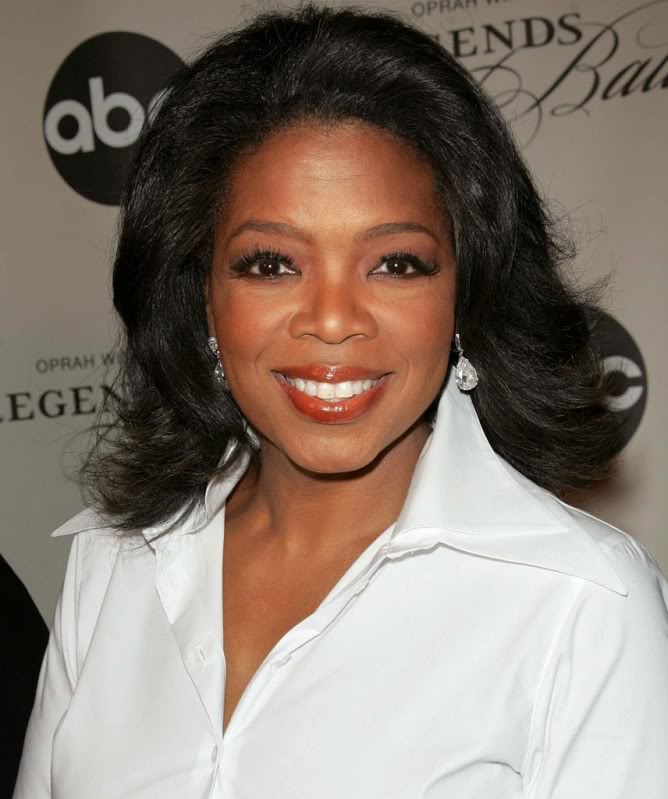
So, to the point, you may wonder what the heck I am talking about when I say that Hispanics need an Hispanic Oprah and that gamers need a gamer Oprah. Oprah Winfrey, the immensely powerful and influential talk-show host, is constantly promoting issues of African-American interest and bringing attention to the community through the use of television and movies. Oprah consistently advocates for the recognition of African-American interests while simultaneously navigating the pitfalls of the media as a whole. She avoids placing blame on or expressing bitterness toward other groups.
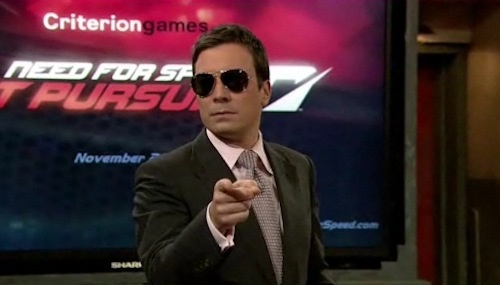
I believe a person with the widespread credibility that Oprah leverages could open up the way the broader populous see gaming culture. This could be a developer, a celebrity, or really anybody with a voice that receives significant attention. Jimmy Fallon sometimes features the lifestyle on his talk show, but it often seems gimmicky and uninformative. Curt Schilling is bringing his love of games to development, but his status as a minor sports star limits his reach. Developers like David Jaffe are more than willing to create interesting discussions when they share their thoughts on the condition of the industry, but his audience is probably even smaller than Schilling's.

Who would you like to see carry the banner of video games? Do you think that a celebrity would best? Or would you like to see developers become more vocal about portraying the hobby in a positive light? How would you bring gaming to a wider audience and increase its cultural credibility?

 
Problem? Report this post
BITMOB'S SPONSOR
Adsense-placeholder
Comments (5)
Alexemmy
October 28, 2010

Hmm, I think Jimmy Fallon is the biggest thing we have to a Gaming Oprah right now, but the gimmicky feel you mention is probably only there because he's a well known name with a talk show that is talking about games. Since games still aren't broadly accepted by the mainstream, it feels cheesy and gimmicky every time he talks about them.

I don't know if one person can really help champion the type of games we like to play. I think that the Wii, and even Move and Kinect are gaining some amount of acceptance, appearing on shows that non-gamers enjoy, including Oprah. I'm sure that things like this will help breakdown staunch game haters and ween them onto games in general.

October 29, 2010

Jimmy Fallon fits the role for now by pure exposure, but I don't think he is genuine enough (as far as games go. I think we really need someone inside the industry to become big enough. People like Tim Schafer, Will Wright, or CliffyB. Those charismatic guys who aren't afraid to put their faces out there. If you compare it to comics, gaming needs it's Stan Lee.

Picture_002
October 29, 2010

James, I hate to cut your attempt to cut things off at the pass off, but aside from Mike's possible overselling her impact on African-American issues while selling Oprah's other activism short, ignoring what she's advocating ignores while video games will never have an "Oprah." She's uniquely linked to much of what she's an advocate of primarly because she probably wouldn't be famous without it. That local tabloid talk show she was doing frankly didn't explode her into what she's become until it started taking some major issues.Taking nothing away from her talents, but she's in many ways a product of her issues which grants her that credibility. Her brand is many ways is that advocacy of social problems, even if she's as often talking about not very important issues. Which is also why Oprah isn't met by as many celebrities with the same brush off so many give the Bonos, Sean Penns and Brad Pitts even on the same very important societal issues. I've seen many a person give them the "no one cares what you think, go [perform whatever art they perform]"and that same person listen intently as if Cronkite because it's what people perceive her doing primarily. It's take some years of those other celebrities pushng their issues for many to take them as seriously as they do now.

Oprah is in a rare air of pop culture figure (and person that owns enough of her own avenues into media) that few people have ever stepped into. If a sitting president were to step onto her show, chances are it may boost that person's favorability rating. Oprah taking a trip to the White House probably can't elevate her in any sense past where she is.  So games will likely never have an Oprah-like ambassador as few things on the planet probably will for the lack of people of her ilk and influence.

Video games have plenty of ambassadors in the popular culture already as it is. The medium isn't without plenty of athletes, entertainers and others in the popular culture that play and talk about playing games. But their celebrity isn't inherently linked to games in a way they can be a Oprah-type ambassador with Oprah-like impact. Many of these people aren't paying the bills and staying relevant pushing games; they are doing that by whatever made them famous in the first place and more of their media runs are concerning their projects than their gaming. Frankly, for their appreciation of video games and the culture behind it, I'm not sure any of these celebrities (nor anyone else) find the lack of cultural and societal shine on video games the crime the vocal, online minority like to paint it as.

And remember for all the angst about gamer stereotypes in the media, we're still in a society were there are still prevalent racial and gender stereotyping in spite of all of the progress of various civil rights movements over centuries. That it took jazz decades to be considered by musical scholars as a legitimate musical artform and not just "noise at Negro nightclubs accompanying immoral and criminal activity." As a person that grew up on both gaming and hip-hop (which are about the same age), I've watched both travel similar paths of social disregard, scapegoating and slow eventual acceptance. I'm an advocate for patience, even with ambassadors. The time will come.

Img_20100902_162803
October 29, 2010
I understand your point, but I am not sure why the first three paragraphs were not cut. The advice given to the student was a bit misleading and inaccurate. Maybe I am reading it out of context, but the diminished role of minorities in American History is not because of a lack of an "ambassador" but due to the ignorance of conservative school boards.
100_0005
October 29, 2010

@Juan: You're thinking about that part differently than I was. Oprah is not the reason that we have a focus on African-American history in schools, but we do have people constantly reinforcing the positive achievements of this group. The explanation is such that there is no national outcry about curriculum not including Hispanic-American achievements, and until there is, we won't have it. All of these things were discussed with the students at the time.

You must log in to post a comment. Please register if you do not have an account yet.