
I Want More Zombies: Why the Undead Are Perfect Video-Game Enemies

Robsavillo
Friday, October 29, 2010

No hesitation.

When "infected" humans (zombies for all intents and purposes) broke into a house to assault Jim and his new friends with a surprise attack in 28 Days Later, that's what Selena knew. Her friend Mark showed signs of ravenous bites on his forearm post-confrontation. Although he pleaded for her to wait, she hacked him to pieces before he could finish the sentence. His blood sprayed all over her and the back wall.
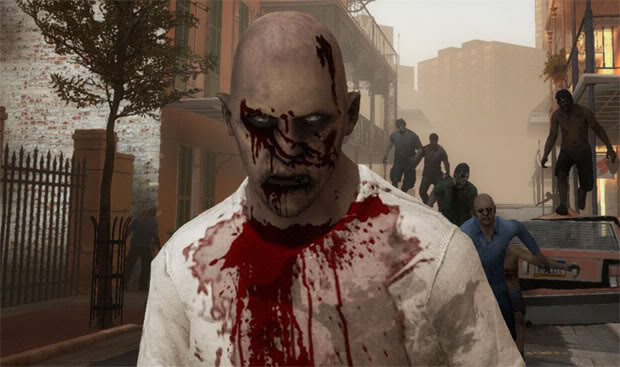
Left 4 Dead

Zombies in film are about dehumanization. They are a vessel -- sometimes a metaphor for death (Night of the Living Dead) or a commentary on our materialist detachment from one another (Dawn of the Dead) -- through which we turn humans into "other."

This industry is no stranger to that sort of superiority assertion: For a recent example, look no further than Electronic Arts's backpedaling from Taliban to "opposing force" in multiplayer matches for Medal of Honor. In many ways, such characterization of your enemies as "other" is entirely necessary for us to accept the murderous toll we will inflict upon a virtual world.

And that's why zombies are the perfect video-game adversary.


We've slaughtered parades of nameless, faceless enemies: demons, soldiers, fantasy clichés, invading aliens...the list goes on. Think about these individuals you've put six feet under: Can you recall their reasons for charging the battlefield? Why did they fight you? Sure, you might know the motivation of their affiliated organizations or superiors, but you haven't the slightest idea what drove them to individually take up arms against you in the first place.

Not all titles rob the humanity from non-player characters. I think about the sequence in Heavy Rain where FBI agent Norman Jayden must decide whether to shoot a overly religious man, Nathaniel, who Lieutenant Blake believes to be the Origami Killer. Jayden is clearly conflicted after just having rummaged through the suspect's home looking for clues and coming up empty.
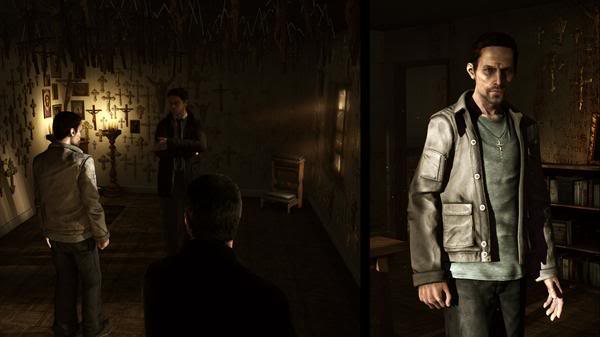
But what if Nathaniel was a zombie? Jayden wouldn't need to worry about anything he'd learned in his search of the apartment: that Nathaniel appears mentally disturbed -- obsessed with pills and Christ -- to the detriment of his own well-being. Rather, he'd know that he couldn't possibly reason with a shadow of a former person. He has but two options: shoot or be killed.

We don't need to know why a zombie chases us down back-alley streets. Instinctively, we know that the undead will stop at nothing in order to tear our flesh and consume our bodies. The reanimated (unless you buy into the later, crappy Romero films) don't even think! They're mindless -- drawn only to the scent of blood. At a literal, physical level, mass genocide of decomposing former humans makes perfect sense in a video game. We can more easily frame their "murders" as self-defense without any feeling of guilt.

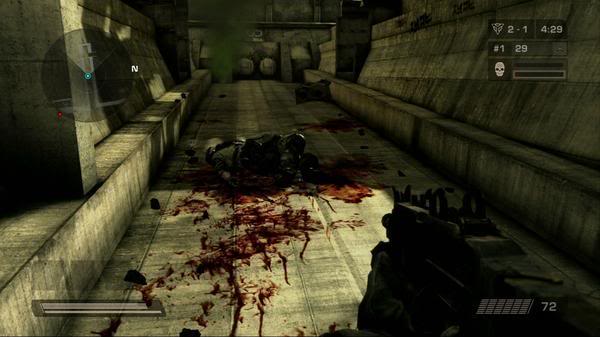
And this is necessary, because we subconsciously use video games to excite our most carnal desires. We pull the strings of virtual sociopaths as we rack up kills in the most gory fashion possible. Zombie films are among the most violent and blood-soaked of the silver screen, which is a perfect parallel to the ways that game technology has advanced. From the shattered limbs of stock street punks in Soldier of Fortune (2000) to the stagger-inducing wounds of masked Helghast troopers from Killzone 2 (2009), we revel in their expertly animated deaths.
On a metaphorical level, zombies embody the concept of a slow, creeping Reaper. They are cigarettes, fatty foods, alcoholic beverages, and unprotected sex. We're agile enough to outrun the unintended side effects of such things for quite some time, but eventually our indulgences catch up to us. That's when the undead horde swarms our last stand in the farmhouse just as we run out of shells -- so overwhelming that we cannot escape.

At their most basic, games are about not losing (i.e., dying); they are about surviving to the end. So every shotgun blast to the decomposing face is a notch against the threat of death. Killing zombies is the very essence of this medium.

As tired of them as you may be, these reanimated monstrosities are here to stay; because like the Nazi, they represent an adversary perfectly suited for the style of ultraviolent games we love to consume. They provide us a justifiable excuse to reign an exquisitely grotesque onslaught of murder onto our fellow humans, but they also embody the exact state of being that is the antithesis to victory.

 
Problem? Report this post
ROB SAVILLO'S SPONSOR
Comments (7)
Picture_002
October 30, 2010

I just can't agree. I mean, I completely agree zombies are easy-to-use and justify video game fodder. But that's also why I'm so tired of them. It's lazy, lowest common denominator decision-making in my opinion. Zombies, for me at least, are becoming in new exploding barrel. A convention used just for the sake of putting something simple and easy to understand without making something actually interesting.

The nameless, faceless, uninteresting cannon fodder is something I'd like to see less of. I want to see more zombies in in shooters and action games like I want to see more goblins and ghouls in RPGs. If this is an industry full of creatives, I'd like to see them actually start being creative instead of the high school kid that somehow thinks buying a mass produced t-shirt at Gadzooks makes them look like an individual.

(Did I just date myself with that?)

Anyway, yeah they are here to stay. Heck, they have their place. But actually wanting more of them? I can't co-sign that sentiment at all.

Robsavillo
November 01, 2010

Unfortunately, I think nameless, faceless enemies will continue to be our primary obstacles for a long time to come. They provide us justification for the moral disconnect required for the types of murderous games a significant portion of consumers enjoy. If for that reason alone, I'm OK with the zombie as an enemy because the developers aren't trying to hide their dehumanization in any contrived way.

I'd love to see violent games take a more humanizing approach: e.g., enemy soldiers who cry out in pain -- for hours, perhaps -- after being shot in a first-person shooter. Maybe these soldiers could recall a loved one, lament on a broken promise, or plead for mercy -- anything that could turn them from cardboard cutouts into something closer to reality.

But I fear that few people want to actually play that game, and that's why we'll continue to see fodder for the foreseeable future.

Picture_002
November 01, 2010

Maybe few do. Maybe just fewer. Maybe some developer or publisher just doesn't (understandably) want to take the possible PR hit of taking it there was it would probably get more and more sensationalized the more  anyone tries to humanize it enemies.

But -- and this is extremely easy to say not having and company and families' incomes at risk with a wrong decision -- I feel so many potentially interesting (I don't know if it's better, but I feel it would be more interesting) if publishers were more willing to stick out their necks a little and do it.

But of course going for those humanizing elements also calls into question the how-tos and all that other stuff. Doing things tastefully and in such a way that isn't just offensive.

Shoe_headshot_-_square
November 01, 2010

Really excellent analysis! I'm tired of zombies, but you make great points here.

Brett_new_profile
November 01, 2010

That Heavy Rain example is bizarre. You really want to take the moral ambiguity out of Heavy Rain? Zombies work great for mass slaughter (a la Dead Rising), but at this point they feel like shambling cliches.

And really, do people know the individual motivations of enemies in real life? Does a soldier in Afghanistan really know the motivations behind a Taliban fighter planting an IED?

I'd rather developers try to explore those motivations than fall back on the zombie cliche.

Robsavillo
November 01, 2010

Not at all, Brett. I'm merely contrasting Heavy Rain's nuanced and less utilized approach to violence with the vast majority of our violent games. Making Nathaniel a zombie is just a way to show how most of these games dehumanize the opposition out of necessity.

Films like [i]Apocalypse Now[/i] and [i]Saving Private Ryan[/i] explore the personal and intimate nature of war through their use of violence -- I don't see why video games can't do something similar.

Maybe my critique wasn't obvious enough, but because zombies are such a parallel of video games [i]is[/i] my issue with the way violence is portrayed in the medium.

Scott_pilgrim_avatar
November 02, 2010

At the same time, I think some games have successfully humanized zombies in small but compelling ways. The Ravenholm chapter of Half-Life 2 really creeps me out because when I light a head-crab zombie on fire, it screams in pain. The ending credits of RE4 show a rural community frighteningly consumed by a monstrous plague, giving you a glimpse of their lives before that tragedy. And I can't help but feel bad for the humanoid inhabitants of Boletaria mindlessly trying to steal my soul as theirs were stolen from them in Demon's Souls.

Granted, none of these examples feature zombies in the traditional sense, but they're excellent indicators of what can be done with the archtype for dramatic effect. I'd love to see more of these types of zombies.

But even a fanboy like myself has to wonder why Scott Pilgrim vs. The World: The Game features a "Survival Horror Mode," haha!

You must log in to post a comment. Please register if you do not have an account yet.