


ETHAN GACH
COMMUNITY WRITER
Default_picture
Followers (2)
Following (1)
LOCATION
TWITTER  ethancgach
FACEBOOK  Ethan Gach
WEBSITE  Gaming Vulture
LINKEDIN  -NONE-
PSN  GachAttack
WII   -NONE-
STEAM  -NONE-
ETHAN GACH'S SPONSOR
Adsense-placeholder
FEATURED POST
2guys_1title
Black Ops 2 sounds interesting, but is Treyarch trying to make the franchise something it can never be?
Monday, May 07, 2012 | Comments (0)
POST BY THIS AUTHOR (3)
Geek-news-smithsonian-video-game-exhibit-of-the-day
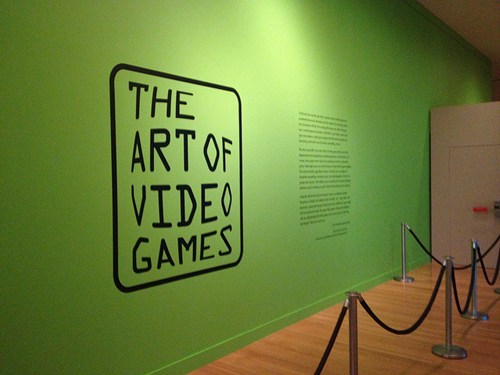
If you consider all video games to be art, it renders the category meaningless and demeans the medium in the process. We need to be more selective about what deserves that label.
Keiji_inafune
Keiji Inafune keeps going around saying Japanese games are crap. He's been doing so for a few years now. But what are his reasons for saying so, and why do we still care? More importantly, why haven't game journalists press him with hard-hitting questions to qualify his accusations?
COMMENTS BY THIS AUTHOR (12)
"on't think I said anywhere that Call of Duty wasn't art (did I?) but rather was using it as an example of a product that is silly (i.e. dumb). And reading themes into a game is different from the game being a vehical for something else. Is there a point to Mario's aesthetics outside of fun and whimsy? Did its creators make it with an eye to a larger, deeper issue? And yes, obviously words are different because they have different meanings...not the other way around. You're poit was that the difference in meaning was a subjective one. Clearly that is not the"
Monday, May 07, 2012
"words are different. They mean different things. Definitions matter. As for videogames having been crafted to be more then there function, do you have examples? Isn't the function of many games to be fun? And in those cases how do they go beyond that fun"
Monday, May 07, 2012
"I'm not sure that the distinction between art and entertainment is a subjective one. After all, we have to different words. This seems to imply that they are two different things. Othwise, if there was 100% overlap, one or the other of them would be redudant.

Is pop culture art? Or is it pop culture? Again, all art is part of culture, but not all culture is part of art. 

You speak of brilliance, which makes me think we are on the same page. Even if we disagree as to which games are more artistic or complex, we agree that some games can be more artistic or complex, therein admitting of a standard by which to judge and hold what is produced in the medium accountable.

I'm less concerned with anointing any game "art" than I am with defending the existance of a standard by which we can all agree to argue about where videogames succeed and where they fail. 

The nihilistic abyss I fear is one wherein people say with regard to videogames "to each his/her own," and as a result no one stands up and holds the art from to account; praising it when it achieves something, but even more importantly criticizing it when it does not."

Sunday, May 06, 2012
"Thanks for the link...intersting take."
Sunday, May 06, 2012
"h regard to your second paragraph, quotes? Where am I saying those things. I feel you have misinterpreted me, but without seeing what gives you rhis idea I'm likely to think that you misread me. I'm not trying to close down discussion. I'm trying to open it up. And discussion requires justification. For example if God of War is art there need to be reasons why put forth in suppport of this position. My entire piece is about how uncritically accepting that all videogames are art, and that all art is equal, serves neither the videogames nor their audience. With regard to authorial intent, I cite them not out of an attempt to proclaim authorial intent as the only important, or most important consideration, but rather to suggest one reason why the games that are of viewed as critically engaging happen to come out of situations where there is more control over how the object is crafted. If you don't think authorial intent is important though, you'll have to explai"
Friday, May 04, 2012
"logies for the format. Can't seem to get it to space pro"
Friday, May 04, 2012
"The weird thing about the constant call back to classic rhetoric is that it ignores the constant evolution of art/commerce.”

Is my piece rife with call backs to classical conceptions of rhetoric? Please point them out.

“that’s ultimately all it takes to be art.”

Why is no justification needed? Why does calling it that make it so?

“The U.S. government once ratified a document that listed blacks at 3/5ths of another human being—and people thought that sounded about right.”

Now it doesn’t so things have clearly changed. Are you denying the possibility of progress on these issues? Because clearly there has been progress, at least narrowly conceived.

“That may seem tangential, but the point is simple: We once had a legal document that devalued the humanity of an entire culture—and many of those injustices continued into the modern era. We’re not going to agree on what is or isn’t art, and any consensus, no matter how warm it makes us feel in our tummies, is going to revoke or ratify the art or works of another.”

And this seems the whole point. We HAVE made moral progress, maybe not fast enough, but it’s happening. If we look at other disputes in other fields, what’s to think that progress is any less possible there? Pointing out disagreement doesn’t prove that’s in any way necessary. Even with regard to the question of “what is art” there are a handful of schools of thought, with some in better repute than others, as well as a lively, and rightfully so, fringe of other views. And while this landscape of ideas is bound to change, the fact that it exists in no way indicates there can’t be, at the very least, better and worse answers to these questions.

“But hey, even if I’m wrong about my definition, and Battleship the Movie is somehow art too—I’m not going to argue for or against it by using the voice of scholars that would have mistaken a film for sorcery.”

Have I done this somewhere? Quotes? I’m not sure what you are trying to engage with, but it doesn’t seem to be the above essay."

Friday, May 04, 2012
"on't believe I saif those things but maybe I'm missing them...could you quote me where you take me as arguing that? And I don't see where anything I'm suggesting is at odds with art as social or cultural discourse (negotiating meaning, value, and interpretation between author, audience, individual, etc.). The bit about establishmentarian elites is me summerizing a view that some seem to hold...not mine. Perhaps I didn't make the clear enough in the"
Friday, May 04, 2012
"Couldn't be more curious about this title. I've been looking for something to co-op with the roomates for a while now, and documenting that experience would be even better."
Tuesday, May 01, 2012
"asn't trying to pick on Chris in particular. I admire all the work you guys do over at Game Life. I'm also not privy to the logistics of the interview in question (e.g. was time set aside, was it between events, in the moment, etc.) so perhaps it was not a situation that was conducive to a more detailed set of questions. It's more so that Inafune has been saying this stuff for a while and usually without specifics that either prove his point or offer critical but constructive advice (back to basics is not a strategy...it's a slogan). And Chris's interview happened to be the most recent published piece and representative of the exchanges that get reported on this topic. I stand by the claim that none of his questions challenged Inafune (and the opening he made with Nintendo was left without a good follo"
Friday, April 27, 2012
"First, thanks to Rob for bringing attention to my post! Second, Rob basically summarizes my thoughts when originally writing it. I should probably make it clear that while I'm skeptical of Inafune's argument, I don't outright deny it. I just think it's not so cut and dry. And to give press outlets the benefit of the doubt, this probably has as much to do with sensationalism as it does with wanting to deliver a cathartic pat on the back to Western audiences. Gaming development in North America has really come into its own and is thriving, innovating, and doing a lot of interesting things (especially in the indie space). So there is something nice in a legendary Japanese developer making this point for us. But I think something is missed in taking the easy narrative here i.e. Japanese development has become decadent and languished as a result while the up and coming West has worked hard, learned from their peers across the Pacific, and has now overthrown them in global importance. That narrative isn't completely wrong, but the emotion surrounding it has, I think, caused it to become an accepted fact rather than a still evolving and much more complicated story. This is one of the better pieces I've seen on the subject (http://www.1up.com/features/japanese-games-breaking-west ) and it does a good job of (somewhat) addressing the question: why must regional developers strive to "dominate" the global marketplace?"
Friday, April 27, 2012