Jenova Chen is wrong: "Dumb" games are good enough for adults, too

Default_picture
Monday, May 21, 2012
EDITOR'S NOTEfrom Rob Savillo

Danny takes issue with Chen's recent claims in an interview with Gamasutra about the state of video games today. Is what's currently on offer good enough for you, too, or do you yearn for something more, like Chen does?
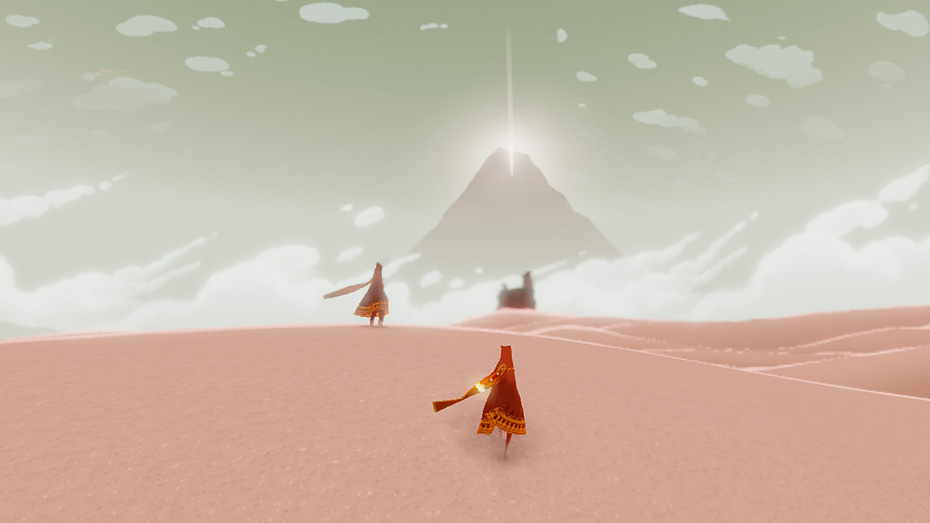
Journey

In an interview with Gamasutra, Jenova Chen, co-founder of developer Thatgamecompany, revealed one of his gripes with games:

My biggest complaint for computer games so far is they are not good enough for adults.

Oh?

For adults to enjoy something, they need to have intellectual stimulation -- something that's related to real life. Playing poker teaches you how to deceive people, and that's relevant to real life. A headshot with a sniper rifle is not relevant to real life. Games have to be relevant intellectually. You also need depth. You have the adventure -- the thrill of the adventure -- but you want the goosebumps, too.

I get where he’s coming from. In fact, I feel I’ve learned more about myself through playing a few games. But I didn’t learn anything that could help me in real life from playing Flow and Flower. I don’t think I’ll learn very much when I play Journey, either. It may help me nonverbally communicate with in-game players, but it’s quite a stretch to assume it’ll help with the rest of my life.

And that’s okay.


Phil Fish once referred to Fez as a "stop and smell the flowers kind of game." That’s how I feel about Thatgamecompany’s titles. I play them to have a good time -- the same reason I play any other game. If I learn something useful, then great! If not, then I don’t feel I wasted my time. Games don’t have to be revelatory.

To put it simply: I like making my way through Braid, but shooting someone’s head off in Gears of War 3 is pretty satisfying, too.
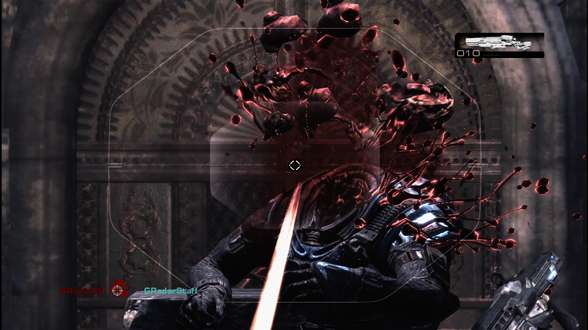
Gears of War 3

It seems this is lost on Chen when he explains his plans for the future:

Can games make you and another human learn something intellectual and relevant from each other? Can games make you and another human experience an emotion that's deep enough to touch adults? I'm working on all of that. Making emotional games and making them intellectually relevant -- making games where people can connect and come together.

Kinect Sports brings people together. Mario Kart 7 brings people together. Draw Something brings people together. You know which triple-A blockbuster game will undoubtedly bring people together? Call of Duty: Black Ops 2.

These games won’t supply any epiphanies, and it’s easy to dismiss them as juvenile, but players will feel everything from loss-induced ragegasms to absolute euphoria. They’ll "experience a powerful range of feelings": one of Chen’s goals. They’re the same range of emotions that people receive from watching big sports games together, and those events aren’t very intellectually satisfying, either.

There’s nothing wrong with wanting mentally stimulating games. Except I wouldn’t play many of them if that’s all I were interested in. Furthermore, I’d be ignoring a lot of great "dumb" games that greatly influence the medium. Resident Evil 4, Mario 64, and Crysis were just entertainment to me; however, there is no doubt that they’ve contributed to gaming. I’d miss out on many titles if I ignored them because they didn’t personally connect with me.

Marvel vs. Capcom 3

As an adult, I don’t look to games for insight. I don’t mean to insult Chen or the medium. I welcome such insight when it’s provided. It’s just closed-minded for him to assume that some kind of personal depth is required to satisfy an older audience. In an interview with PlayStation Blog, he’s admitted to losing interest in fighting games:

But as I get older, what’s the point in pulling off another infinite combo?

Plenty of adults still enjoy fighting games and maintain many of the same interests -- not limited to games -- that they’ve had since childhood. They don’t have poorer taste for it. Nor is it a sign of immaturity. You can apply the sports example to this as well. My point is: In an industry that simultaneously offers Marvel vs. Capcom 3 and Dear Esther, who says we can’t enjoy both?

Looking at games for their practical value diminishes them. They’re no longer art, creative forms of expression, or even entertainment. They become mere products.

Adults can share emotions and connect with each other from all kinds of game experiences, which includes witnessing Aeris’ death in Final Fantasy VII and scoring the last-second flag capture in the latest first-person-shooter. Triple-A games can connect with players just as well as the indie releases. To ignore them because they allow players to shoot at each other would just be, well, childish.

 
Problem? Report this post
DANNY CONCEPCION'S SPONSOR
Comments (7)
Mikeminotti-biopic
May 20, 2012

Well said, Danny. I think fun is justifiable enough for fun's sake.

Robsavillo
May 21, 2012

"Looking at games for their practical value diminishes them. They’re no longer art, creative forms of expression, or even entertainment. They become mere products."

This sums up my issue with your column: I think you're misinterpreting Chen. He's not asking that games provide some type of "practical value" or applicable knowledge. He's instead interested in games that have something to say, i.e., that reveal some sort of truth about the real world. 

One could argue that, yes, "dumb" games too have something to say about the real world, but most often that message is muddled (see his thoughts in that interview about how a game can have a coherent voice), an afterthought, or a mere echo of their contemporaries. I think Chen would like to see games talk about other things (and specific to his example, something other than killing).

In other words, I don't normally shoot people in the head with a sniper rifle (well, I don't ever), so I simply cannot connect to a game that features shooting people with a sniper rifle as its primary language (i.e., how I interact with the virtual world). But a game about human relationships that features a prolonged and intimate scene of a father bonding with his sons -- that I can relate to. Not to say that one is necessarily better than the other, but I think Chen would say that designers have greater protential to create engaging games when they explore more typical, real-world scenarios.

Default_picture
May 21, 2012

Absolutely. But he's reducing the entire FPS experience to shooting someone in the head. Moments like that can make emotions rise. They won't be life-changing or anything, but you can find satsifaction in the little things, like making the shot.

If it's in multiplayer, I'll be glad my team won. A small sense of competition is sometimes all that's required.

EDIT: I just don't think games *have* to be insightful for me to enjoy them. Nor do I think realistic scenarios are the only way games can do the job. Deus Ex and Mass Effect let me kill plenty of people, and I still got something from those games.

Default_picture
May 22, 2012

I find it extraordinarily difficult to relate to the bombastic, 'save the world' scenarios presented in most games. And if I have trouble emphathizing with my virtual avatar, then I become, in effect, a mere spectactor and not a participant,

IMHO, the best games provide a highly-personal, accessible scenario (like a father bonding with his sons, as Rob mentions) that allows the gamer to connect with the protagonist. I can't get that experience in your average FPS. Granted, going to war and being in combat is a potent experience, but most people have no basis upon which to relate to it (apart than playing other first-person shooters).

Default_picture
May 21, 2012

I think Chen was trying to push game developers to create more emotionally rich experiences. I didn't take his comments as a critique, but as an attempt to push the industry forward. I agree with him: There's a limit to how many games in the same mold people are going to enjoy - at a certain point, innovation is necessary. I, for one, found his comments refreshing. Gaming is the youngest of all the entertainment media (music, literature, film, theatre, etc.) and it's still in its infancy. Game developers need to be ambitious and aim for new experiences that we've never seen before.

Default_picture
May 23, 2012

Hmm, I am not sure I agree with you Davor. Because in the main, the games that sell truck loads are clones of Call of Honor Modern Combat. That stuff shifts Bulk Carrier sized amounts of units. And even games that don't sell as much as usual - I am looking at you, Medal of Honor Tier 1, sell enough copies that one of my local second-hand shops had half a dozen copies of it on their shelves. Battlefield 3 was worse. (more copies, not poorer selling).

Default_picture
July 16, 2012

With the rapid advacement of games in the past decade, there is has to be a change in coming. Maybe it will be in the way we interact with our games(ie. advacements in new technology), or possibly advancements in the "meat" of the games them selves with better Artificial Inteligence and more plot(or life lessons as metioned). Either way, video game publishers have been in a rut releaseing series of titles with little advacment just to keep the doors open. To sit down on a mindless day and play a game of war is great. I enjoy it on occassion too. It can be a great get away. But I think Chen was right. An innovation in an all around richer experience would be nice. Do you think certain genre mixes could accomplish this innovation while still keeping the sancitity of an MMO? Maybe just in campaign mode? 

You must log in to post a comment. Please register if you do not have an account yet.