Home
Home
Our latest Bitmob Roundtable features a crew of community members breaking down the much-beloved, much-maligned genre of Japanese role-playing games. Join us!
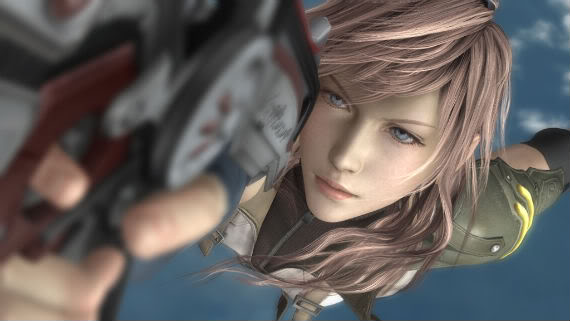
Bitmob: So the genre as a whole is struggling, but are the games themselves truly worse now?
Daniel Feit: I don't want to say worse, but they've become more familiar than ever while becoming niche at the same time. Everyone has an image of what a JRPG is like whether they play them or not...and they're probably right.
Jonathan Oyama: Many of them are still great. They just don't get as much of a rep. Oddly enough, many of the lesser-known franchises are a lot more popular. I think it has a lot to do with that cartoonish, anime look. I'm not a fan of Disgaea, but it still gets a huge following at anime conventions. And Record of Agarest War has a devoted following too.
Daniel Feit: That anime look is a double-edged sword. It makes Japanese games look distinct from Western games, but it also pigeon-holes the genre by making all Japanese titles look alike.
Jeremy Signor: Also, keep in mind that there used to be an anime boom, but not anymore.
Daniel Feit: Anime went from reviled to cult appeal to almost mainstream, but I fear it's back to reviled in the eyes of Western marketers. We've regressed to the point that Japanese box art needs to be Westernized again.
Jeremy Signor: Look at the box art for Shiren the Wanderer for DS. It's 'tude-filled!
John Michael: I immediately thought about Kirby's evil eyes.
Daniel Feit: I'd like to think the success of Catherine, while it's not an RPG, at least suggests that you can still sell something with an anime-style cover.
Jeremy Signor: I'd like to put forth the opinion that a side effect of fewer JRPGs coming here is the fact that the ones that do are mostly good and interesting. The mediocre ones tend to stay in Japan for the most part.
Daniel Feit: Unless those mediocre ones have a name attached. Anything named Kingdom Hearts gets translated, quality be damned.
Jeremy Signor: Even just talking about this year alone, Radiant Historia was my favorite game of the year next to Portal 2. And then you have stuff like The World Ends with You, the Shin Megami Tensei games, the Etrian Odyssey games, and others. Most of that stuff is niche, but if you're into that niche, it's a very good time to be a fan.
Jonathan Oyama: They have a much more unique storytelling style. We're thinking so much about graphic styles, but if Persona 4 didn't have such a dense amount of interesting dialogue and character development, it probably wouldn't have gotten as popular as it did.
Jeremy Signor: I talk about Final Fantasy 13 being pragmatic, but I don't say that as a bad thing. Persona 3 and 4 and other niche JRPGs are limited because of their budget, but they make the most of it by leveraging those limits in interesting ways.
Jonathan Oyama: The menus of those games look really classy too. Compared to the Final Fantasy 8 days, these menu systems look really stylish.
John Michael: My perception is a little more bleak, I think. I don't do much handheld gaming -- I own a rarely used DS -- so all these games look pretty good, but I prefer big experiences on a big TV.
Jeremy Signor: I tend to enjoy the experiences no matter what platform they appear on, and I love playing on handhelds, but I imagine a lot of people feel the same way as you, John.
Bitmob: So let's close with this question: What do each of you want to see from the genre going forward?
Daniel Feit: More than anything else, I want Japanese publishers to accept the inevitability of the Internet. I understand the domestic crowd loves disks in boxes, but that's an expense we could all do without. There are systems in place to create smaller, cheaper games with no physical media to ship. Once you remove that cost barrier, your niche title becomes that much easier to sell. I'd argue that's even more important than embracing a wider audience, if only because cutting costs would in turn make every game less risky.
Jonathan Oyama: I want to see if Nintendo and Sony are actually willing to take more risks with the RPGs on their systems. I'm especially concerned about Nintendo. A handheld Dragon Quest 9 and Shin Megami Tensei is nice, but the publishers need to find a better way to integrate online features in a similar manner to Demon's Souls. And I'd like to see if they're actually willing to try more daring things, like releasing the Operation Rainfall games on a new system. They did a great job in making Sin & Punishment a killer franchise. Nintendo could definitely do the same with Operation Rainfall if they market everything properly.
John Michael: I'm playing Xenosaga right now. I want more of that. It was a risky move to plan a six-game arc, but they went for it. Go for broke, Final Fantasy: The Spirits Within style; just inject a little less suck into that risk. I don't know if it will pay off, but there is always room in the genre for creativity. If a game is great and is flashy, it can find a North American audience.
Jeremy Signor: I would like to see more JRPGs play around with their conventions. The old notion that they're all the same doesn't need to apply to the genre. You can have something as linear as FF 13, as open as FF 12, or large in scope yet small in real estate like Persona 3/4. There are so many ways to stretch the definition that haven't been tried. I want more of that.
But there's one thing I want that I think we can all agree on: More JRPGs, period, for as long as we're fans of the genre.
 1
2
1
2