Home
Home

Bitmob: Paul touched on something I want to go back to: the idea of what game designer Clint Hocking calls "ludonarrative dissonance." This is when the actions the player takes stand in direct opposition to the character's motivation or the path of the pre-written story. Paul's example of Nathan Drake, the likable, roguish mass murderer, is a good one.
To some extent, this is an issue in almost every video game ever made. How can games overcome this? Or should they even try? Is it possible to work around it instead?
Michael: You can't, and you shouldn't. If games were about giving the player total freedom, they wouldn't be games. With infinite possibilities for narrative comes zero structure. The goal, then, is to write a tight enough story that even if players don't agree with what they're doing, at least they're having an emotional response to it. Caring enough about a story to call it dissonant means that at least the writer touched something in you.
Paul: It's certainly a tricky proposition. Games will always suffer from narrative dissonance by virtue of the fact that they're interactive, but the more we see developers experiment, the more we'll know what works and what doesn't.
Lasse: Games are taking great strides to overcome this by putting the narrative in the hands of the player. Mass Effect is the primary and best example of this. While you aren't given absolute freedom to do as you please within the world that has been created for you to experience, you do have some say in who Commander Shepard is and what actions he or she takes. The Nathan Drake scenario won't happen in Mass Effect because the player determines the outcome of who Commander Shepard will be.
Kate: I'll be honest and admit that I never felt a disconnect in Uncharted because it never felt "real" to me. Sure, Drake mows down legions of bad guys. So did Indiana Jones but he did it more creatively, they were Nazis, and it was during the war, so I don't think any of us felt dissonance watching him.
Interestingly, though, I actually chafed against the constraints much, much more in Mass Effect, and I think in part that's because of the freedom. I often felt like the option my Shepard would realistically take wasn't available, or I felt like I was being pressured one way or another. And I had many moments where I'd pick something to say, and then be shocked at what words actually came out of Shepard's mouth.
It's even worse in L.A. Noire. In what world does "doubt" mean "verbally assault this lady and then accuse her of being a murderer"? I expected him to challenge her on something else entirely!
Michael: You start to reach an uncanny valley of dialogue the more choices you offer. It actually becomes less realistic in the same way digital characters look less realistic after a point once they look so real that they appear rubbery.
The solution would be to surpass the valley by offering total freedom, but as I said before, I don't think it's possible or advisable.
Jeffrey: The only way to really offer total freedom is basically to make an MMO that operates entirely based off of players' interactions with other players, or design fully realistic A.I.
Bitmob: Jeffrey, that makes me think of Jason Rohrer's Sleep is Death, which I still haven't tried but would like to. For those unfamiliar with the game, it's basically an experiment in collaborative storytelling, where a player and an architect react to each other's moves and end up telling a narrative jointly. I also think of the way a Dungeons and Dragons dungeon master can direct a cohesive adventure while still allowing a large degree of player choice and reacting to those choices.
Kate: Every story has rules, right? Some are a little more off the wall than others, but there have to be boundaries, or the human brain doesn't buy it. If you're a DM and you're leading a medieval-era party through a dungeon, the first guy to say that his spaceship comes in and blasts the monster is so very fired.
I guess the closest you get to total freedom in storytelling is an improv troupe, and even then they have boundaries they need to work within, or it's just not funny. Gaming's no different.
Lasse: I think an improv-structured game narrative might be an interesting experiment. Maybe Tim Schafer could take a crack at it.
I agree that total player freedom is probably too much of a good thing. A game should be a directed experience, where the developer creates a world and situation for the player to experience and then sees how that player reacts to it. The player should be able to influence the storyline, not build it from the ground up.
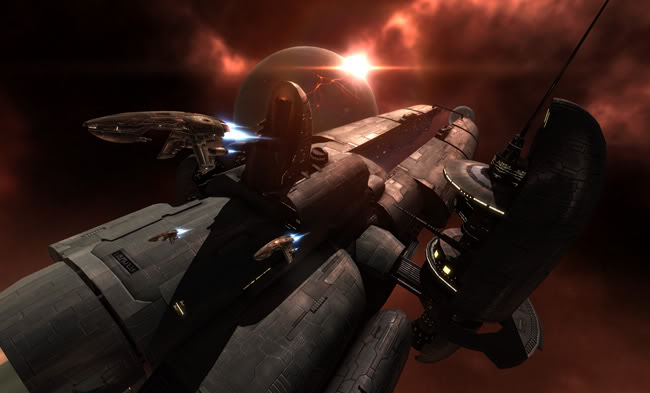
Jeffrey: I think Eve Online is currently the big dog when it comes to player freedom. We've all seen the stories about what goes on there, and it's telling that this is both inspiring and terrifying to most people. Having freedom can be liberating, but in that structure, it is also giving other players freedom to take away yours.
Paul: I think there's something multiplayer games, both competitive and cooperative, offer that single-player games do not: There's a "meta-narrative" that emerges when people are interacting in a game space, and the story of your experience when hanging with a friend shooting zombies in Call of Duty: Black Ops -- or asking them to get off your lawn in Plants vs. Zombies -- becomes the story for you as much as the one the game itself offers. It's the same thing that occurs when people play board games or outdoor sports; the stories of what happened or how it went down matter just as much as the final score.
Bitmob: Here's one subject I want to broach before we wrap things up: the use of dialogue. Writing in games isn't exactly well respected; in fact, it's usually pretty laughable, whether the script is a translation or not. On the other hand, games like Shadow of the Colossus tell detailed, affecting stories with a bare minimum of dialogue or none at all. Is better writing a red herring when it comes to the search for better narrative?
Kate: If you're going to write a game like a movie, then your dialogue needs to be passable. But, like film, our modern narrative games, particularly the big-budget titles, are a visual art. Smart developers use camera work, lighting, environment design, character design, and other visual cues to tell as much of the story as possible, even in a talking-heavy game.
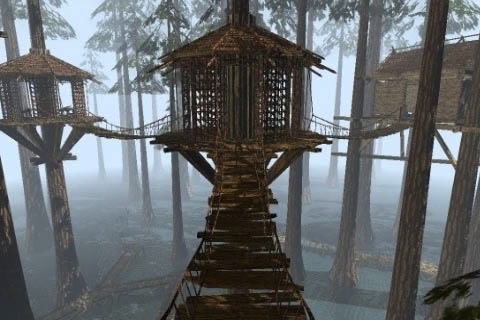
Some games are better off keeping mum, though. Shadow of the Colossus is a great example. My mind goes back a decade to Myst; that's a franchise that lost its way when the silent scenery stopped speaking for itself and instead got filled with chatterboxes.
Paul: I'm a huge fan of the "less is more" aesthetic that's made its way into quite a few game narratives over the years. Part of it is the rise of indie developers, who don't have the luxury of working with a full-time writing staff. I love me an epic story, but I also enjoy seeing what game designers can come up with when they're working with limited resources.
Lasse: One of the things that jars me out of a game experience quicker than most is poorly written and delivered dialogue. On the other hand, well-written dialogue has a way of immersing me deeper into the overall experience. If video games are to evolve as a storytelling medium, developers need to be investing in top writing talent, especially as they face the challenge of increased player participation in the narrative.
Kate: I personally adore stories in which the player needs to piece together what's going on -- a number of old-school adventure games fit this model, as well as some more modern titles. And as such, I do tend to like some minimalist narrative; vague doesn't have to mean "no framework."
That said, it's personal preference, and obviously no two players are going to like all of the exact same things. Variety's the spice of life, right?
Thanks to all who participated. And if you like these Roundtables and want to join in on the next one, keep an eye out -- we'll do it again soon!
 1
2
1
2