Home
Home

Editor's note: Frank continues to take up the cause of video games in this latest edition of his series. I already see widespread use of educational games in public schools, but I think Frank is correct when he suggest that we could use a larger penetration of this software in the console space. Unfortunately, I think most major console developers are more concerned about making money than they are about educating our children. - Jay
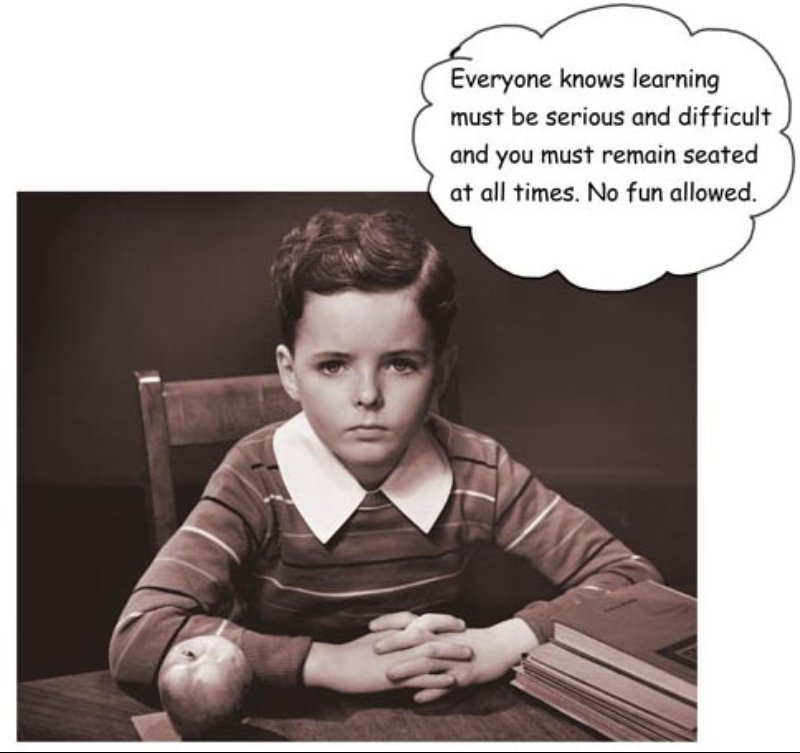
Video games often become the scapegoat in today’s society. From school shootings to the fattening of our children, gaming makes an easy target for talking heads and supposed "experts" to point at and blame. These people see games as something foreign and dangerous. Many also believe that playing video games is an activity of no inherent value.
That is why I created this series. I believe that games are, by nature, an activity designed for entertainment. I also believe that games can be, and in many cases are, more than just an empty diversion designed to whittle away the hours.
This episode of “Can Video Games Make the World a Better Place” focuses on what I consider the least correct slight against my beloved hobby -- that they have no educational value.
Many gamers might not know about the company Leapfrog or its console, the Leapster. It is a rather cheap ($69) system which can most often be found in the toy section at big-box retailers like K-Mart or Wal-Mart. With games like Scooby-Doo! Math Times Two! and Disney Princess: Enchanted Learning selling between $5 and $25, the Leapster is a cheaper alternative to the DS. While its marketing-heavy lineup might still be selling your kids on movies, shirts, and other products to wear, the system and games are cheap, easy to use, and educational. This makes the Leapster an inviting gaming alternative for parents.
A large number of sites popped up on the Internet recently that offer a wide variety of free-to-play educational games. If you search for the term “educational games” on Google, you'll get around 44,700,000 hits. You'll find many sites similar to funbrain.com, which offers up flash-based gaming on subjects like math, reading, and grammar.
Primarygames.com also features educational games, but it offers more variety and more subjects than funbrain.com.
Sites like the nobelprize.org’s educational game suite award prizes to educational games and provide a list of previous winners of this prestigious prize.
 On the console side, games like Brain Age and Big Brain Academy carved out their own niche for a while and were even quite successful. Despite this success, titles such as My Healthy Cooking Coach or My Stop Smoking Coach With Allen Carr have mostly reduced the console and handheld space to instructional games. More legitimately educational games like My Chinese Coach and My Spanish Coach assisted some people with learning a new language. However, for every truly educationally valuable game out there, 50 games in the profitable (but rather useless) Imagine series found their way on to the already crowded retail shelves.
All of these examples show that games can teach the player while they entertain, but you can find numerous other educational titles, especially if you search online retailers such as Amazon for PC releases. While I found good evidence that the number of educational games available is growing, I do believe that developers are largely ignoring educational games and not releasing enough on the systems that could do the most good with them -- the major handheld and home consoles.
I'm happy that the sites listed above and devices like the Leapfrog exist, and I applaud Ubisoft‘s attempts in this area. However, these efforts are simply not enough. Most of the games that exist on the home/handheld consoles are instructional games or tools that reinforce previously learned information. They are, for the most part, not truly tools created for teaching.
If you allow me to get on my soapbox for one moment, I would like to say that I believe that if a company like Nintendo was to create a line of inexpensive teaching-based games it would do worlds to help remove the stigma that games have no value to gamers education.
I don't want to see every game designed to be educational. Sometimes a game should just be fun for funs sake. However, this does not mean that there isn't a market for games that are not made just for fun. As a matter of fact, Brain Age sold 19 million units. This speaks volumes about the demand for games with educational value. It's just a shame that no company (other than Ubisoft and its sometimes misdirected attempts) really followed up on this success with any type of true dedication in the console space.
Games get blamed for many of the ills of our society. While many gamers like to shirk off these accusations, I believe that it is worth taking the time to bring attention to the many positive facets of gaming that help to assuage some of these problems. Gaming, like almost any other hobby, can become a negative force in the wrong hands. Still, I believe that gaming has the potential to change the world for good and, in many ways, is already doing so.
To find out more about how video games are making the world a better place, read part one, Can Video Games Make the World a Better Place? (Re-Mission and Folding@home), Can Video Games Make the World a Better Place? Part 2: Creativity, Can Video Games Make The World A Better Place? Part 3: Charity, and Can Video Games Make the World A Better Place? Part 4: Body Movin'.