Home
Home

Looking for answers to questions about diversity in the industry, Antonio found Jerry Lawson, a video game pioneer, and walked away surprised by what he discovered.
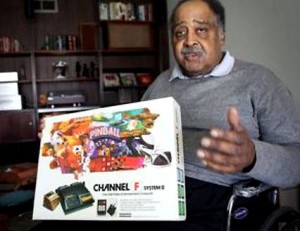 "Does the video game industry have a problem with diversity?" I asked myself this question when I had recently realized that everyone I saw or read who talked about video games were not minorities. The question had some personal weight to it, as I myself am black. Where are the black developers or the Latino developers? Do they exist? Out of curiosity, I Googled "black pioneers in video games" to see if someone of my race had influenced the industry in some way.
I found Jerry Lawson.
In a world with respected names like Nolan Bushnell and Ralph Baer, here is a black engineer who made important contributions to the video game industry. He developed the Fairchild Channel F, the first game console to use cartridges, and he created one of the earliest arcade games, Demolition Derby.
Sadly, he died in April 2011 at the age of 70. Video game websites like 1UP and Joystiq covered his death and his accomplishments but only in a few hundred words. But thankfully, Benj Edwards of Vintage Computing had extensively interviewed Lawson in 2009.
I read the interview with much interest as I had never heard of Lawson and his accomplishments. He seemed like a great person. Lawson's descriptions of the technology he had worked with were lucid. A mere layman like myself easily understood the military electronics Lawson had worked on for jets, for example.
But I was more impressed -- and amused -- when he told stories about people's reactions to his race when they met him in person. I love Lawson's response to one woman's surprise. She had only heard Lawson's voice on the radio. Based on that voice, she had a mental image of a blonde white guy. Lawson explains, "I said, 'Well, I don't go around telling everybody I'm black.' I just do my job, you know?"
This story has helped frame my perspective on minority video game developers. Lawson didn't wave his race in people's face. He had attained great triumphs in a country plagued by racial conflict, but just as he said, Lawson's work with video games was simply a job. Lawson recognized the disadvantages of being a black engineer, but he didn't let that rule his life. He saw himself, I think, as an engineer who had came up with a great idea.
And that makes me wonder if indeed a lack of minority game designers in the industry is a problem. I'm all for diversity -- the more the better. I read that including minority developers in the industry will help curb the stereotypical depiction of minority characters. I like that idea.
But I'm not totally convinced that that will fix the problem.
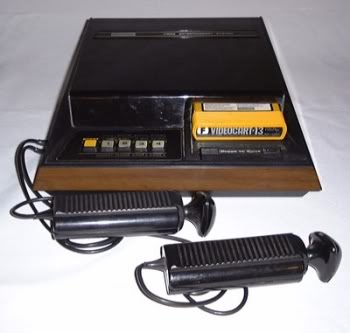
Lawson almost explictly describes what the video game industry bases its success on. He explains that not everyone who help others get into a career will be black "'cause when you start to get involved in certain practices and certain things you want to do, you're colorless." Those are powerful words. If the video game industry is -- or at least should be -- colorless, then creativity drives the medium.
Is race in this regard extremely important to the industry? If developers and publishers were actively barring minorities from working in the field because of their race, that's a major problem. Should developers explore a different section of culture other than gangs and criminals in video games? Absolutely. But I'd rather have a group of creative caucasians than a racial mix of uninspired game developers. A change in creative thinking will kill the stereotypical depiction of minorities.
But if there is a dire need to have minorities participate in the industry, people should try to spark their interest. When I was a kid, I wanted to get into game development, but as I got older, I fell in love with writing; I just lost interest in video game development. Lawson got into science and engineering because he was interested in it thanks in part to his mother. So, if I don't see a lot of minorities in game design because they have other interests, I'm not losing sleep.
I look at Jerry Lawson as a guy who came up with a creative and practical idea. Let's demand more creative game designers and make a change in creative thinking.