


I'm also playing Red Dead Redemption here and there...and I have to agree with Richard's assesment that the game's world feels rather stiff and lifeless. I'll go one step further and add that Red Dead's nothing more than a series of minigames stitched together with an unyieldlingly linear narrative structure that detracts from the few interesting mechanics like honor and fame. Too bad Rockstar didn't learn any of the lessons that Richard argues come from 2006's Dead Rising.
Dead Rising will turn five later this year, and that feels odd. I still remember watching the trailers and thinking how amazing it will be to finally play an open-world game with zombies. It’s ironic looking back now because despite being about dead people, it feels strangely alive.
Developers are doing some amazing things in that genre: You're given the freedom to do anything and go wherever you want. Yet something is missing. At the moment, I’m playing Red Dead Redemption; although it’s a great game, I find myself getting bored.
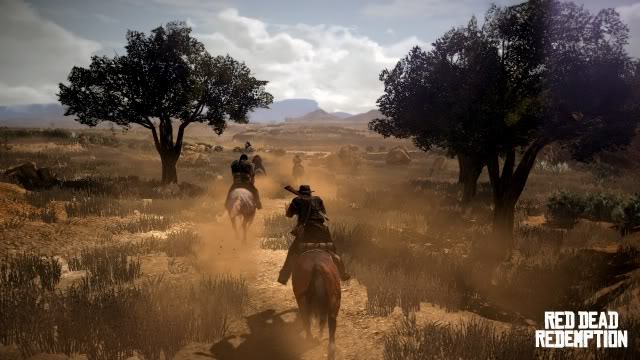
Sometimes it feels like the world is set up just for my own adventure.
I’m finally able to play a spaghetti western, but it feels empty; days pass and people walk by, but nothing really changes. It just doesn't feel real. These games give the illusion that you're in a living world, but the only thing you can truly interact with is the story missions.
Dead Rising fixes this because it understands that sometimes less is more.
There are fewer shops, but you can go into all of them and pick any item you want. There are fewer people, yet you can communicate with all of them. It makes the game more real because you can interact with everything. It’s not like Grand Theft Auto 4, where there is a huge city but most of the buildings are inaccessible.
A more interactive environment helps set up the world because it's more believable. Some games add day cycles to make them feel more realistic, but -- again -- nothing really changes. Dead Rising actually uses time as a game mechanic. If you can’t keep up with it, then don’t expect it to sit around and wait for you.
In the context of the game, it’s a brilliant move. After all, you’re a journalist trying to uncover the truth of what’s happening. You don’t get anything done by sitting around; you have to go out and do it yourself.
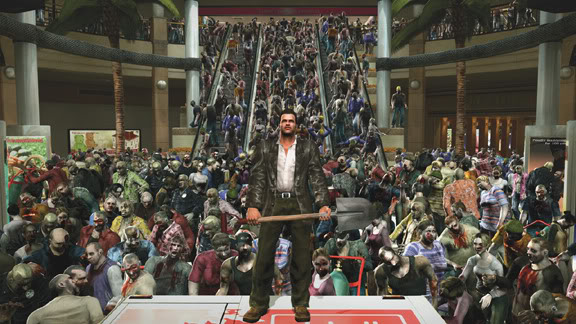
Actually, there’s lot of little touches in Dead Rising that link back to journalism. Aside from photography, you have things like Otis and Jessie acting as your informants and scoops going across the bottom of your screen as if it was rolling news and uncovering the truth. It’s quite clever.
As you replay the game, you become more ambitious by fighting more pyschopaths and saving more people. Maybe you fail to rescue somebody because you undestimate how long it takes to defeat Adam the clown. It adds a sense of unpredictability, which heightens the experience because it’s not scripted.
I don’t expect every game to mimic this. In some ways, these features are special to Dead Rising; most free-roaming games lack the focus that linear games have but offer the sandbox dynamics that those don’t. Dead Rising offers both, which allows players to have a focused main-game but also gives them the freedom to do things their own way.
The fact is that although Dead Rising does some interesting things with the free-roaming dynamic, it would be unfair to not mention what also made it great: zombies.
I love a good zombie story, but there’s no denying it’s an oversaturated genre. People know there’s a market for it, and it’s become unoriginal because they can put out any zombie game and it'll sell. I certainly don’t blame people for getting bored with it, but I do believe there is still potential for some great things.
Look at the reactions to the Dead Island trailer. It’s critically acclaimed, but it wasn’t really about the zombies. It’s a very sentimental video concentrating on a family facing their inevitable deaths. Shamefully and regardless of the trailer's success, it doesn’t look like Dead Island will be like this at all.
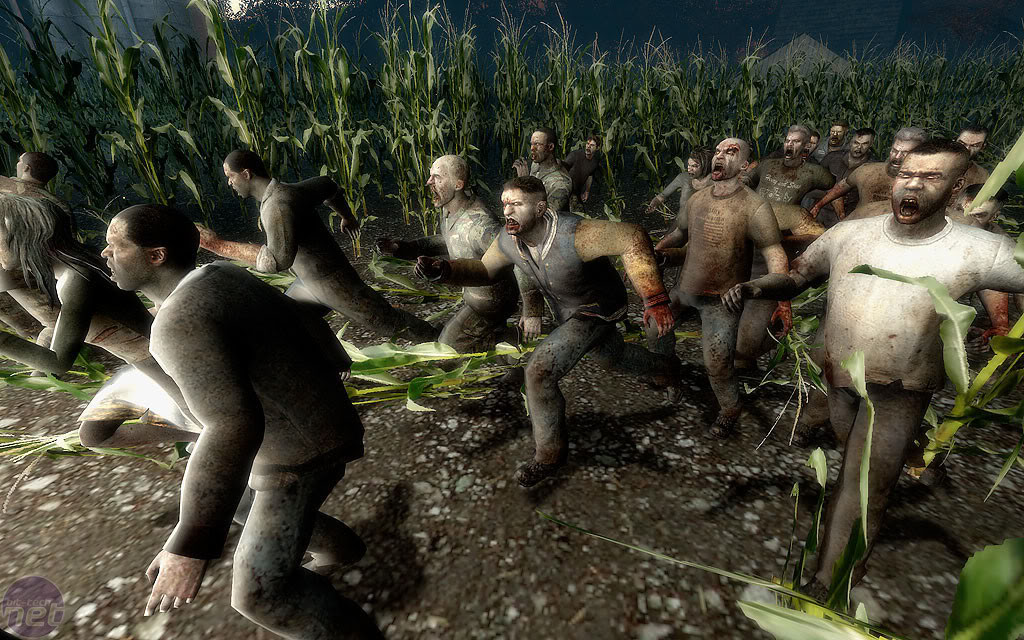
Is this a metaphor for the mindless consumers who buy zombie games? No.
Ironically, a good zombie story isn’t really about the zombies -- it’s about how people react to a world without a functioning society. Every good zombie story does this; The Walking Dead shows us how bad things can get in a world without rules, and George Romero‘s Night of the Living Dead is about the confrontation between people who are under the stress of something they don’t understand.
This is what Dead Rising does. The story is pretty much a satire on the zombie genre because the creatures are a mistake from the mass production of meat. Yet it has serious aspects to it: Frank's pursuit of the truth and how far a man will go to get revenge.
The psychopaths cover other human elements. They’re the people who have gone crazy under the stress of losing their families; they give us a deeper insight into the outbreak with their short stories. It’s incredibly effective but adds in some fun by satirizing western stereotypes. On the other hand, the survivors are the people who can’t cope and who need rescuing.
That’s not to underplay the undead. They’re the cannon fodder -- and you can kill them in some really funny ways -- but there’s more to Dead Rising than just the reanimated. And that’s the key to any good zombie game.
Dead Rising represents an interesting concept of what happens when you develop a seemingly real world in every aspect. There are lessons to be learned about making a better experience by making the player play by your rules.
Yet it’s been almost five years since Dead Rising's release, and as far as I can tell, the only game that’s influenced by Dead Rising is its sequel. The market is changing by making games more accessible. This isn’t a bad thing, but it’s opposite of Dead Rising’s philosophy where it’ll throw you out to the wolves and expect you to fight for yourself.
The people of the world, as could be expected from the modern culture of news saturation, soon let the Willamette incident fade from their minds.