Why good writers won't save games

Default_picture
Wednesday, February 08, 2012
EDITOR'S NOTEfrom Jason Lomberg

In a good companion piece to David Graham's Good writing is the future of gaming, Steven argues that narratives should be driven by in-game actions. What do you think is the best method for delivering video-game stories?

The video-game story does not happen through text. It does not happen through movies or radio drama (I'm looking at you, BioShock). The video-game story occurs between the controllable actions of the player and the reactions we create onscreen.

That's why you can't bring in a world-class writer and expect a top-grade story. You don't bring in a marine biologist to fix your toilet...you bring in an honest-to-god plumber. These wordsmiths create poetry with ink and word documents...not player experiences. All you're left with is a tedious lecture on dolphins and nowhere to pee.
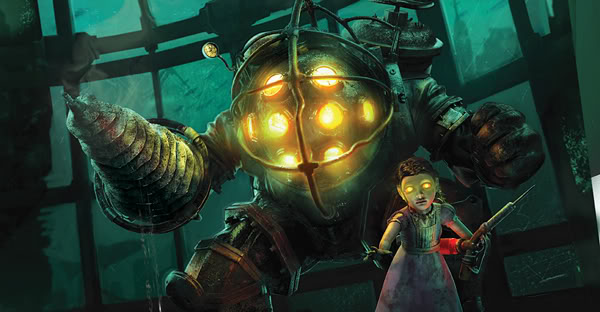
BioShock

Yes, there is fantastic writing in Uncharted and a great atmosphere in games like Bioshock, but it's only when a player impacts the narrative using in-game actions that the video-game story can begin.


Mass Effect is great science fiction, but it's not great video-game storytelling. It's cool that you can make a myriad of decisions...how you make them is decidedly less satisfying. The game presents you with, at best, a "choose your own adventure" forged from multiple paths and dialogue options. Mass Effect doesn't tell you a grand story; instead, it presents you with a mish mash of short puppet theatre in the form of in-game cut -scenes, text-based backstory, and pre-rendered movies, dropped like bread crumbs to lead you through the game.

You're watching a movie, listening to the radio, or reading a book. How do these actions contribute toward a video-game story?

Think of games in terms of a lamp post illuminating a patch of concrete on a dark street. The lamp light doesn't tell a story; it doesn't express a message. But it creates a space in the darkness for something to happen...a stage for us to tell our story. At best, the game story provides us with the motivation and the tools to disrupt their virtual world.
Where does a video-game story occur? It occurs when decisions are made through in-game actions, not dialogue trees. When Commander Shepard has to choose between saving teammates and the game takes us to one location over another, we are part of a good video-game story. When we make a choice in a dialogue tree and witness a cinematic, we are not.

You begin experiencing story when you pick up the headmaster's pet and throw it off a cliff in The Legend of Zelda: Skyward Sword. You create narrative when you take a box in Deus Ex: Human Revolution and hurl it at a homeless man. You assert your will in the world, and experience the world's reaction. Bioshock's story does not occur when you find an audio log, but it happens when you pull the trigger of your shotgun and watch the light and shrapnel shred an enemy to bloody pieces. The players' actions and the resulting reactions in the game world dictate where the true narrative takes place.

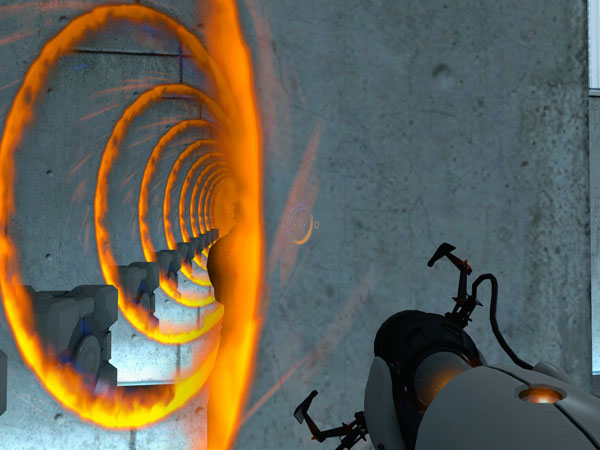
Portal allows you to break out of the game world using our actions. Subverting the game's narrator using the tool of the Portal Gun is a great way of telling a video-game story. Reaching the hidden warp pipes in Super Mario Bros. 3 by using the skills we've learned so far is when Mario's story ends and ours begins.

We don't need more writers or even better ones. We need more opportunities to have our actions matter. Don't boil choices down to canned responses or mistake movies for immersion. Give us the tools to disrupt the world and watch a great story come to life.

 
Problem? Report this post
BITMOB'S SPONSOR
Adsense-placeholder
Comments (24)
Default_picture
February 07, 2012

Very nice point you made, Steven. The universe details that go into games are extremely memorable and effective, yet they are underappreciated. When people clamor for better stories in video games they ask for better dialogue and plots, but overlook the gameplay actions and universe details.

Default_picture
February 07, 2012

Thanks! I'm trying to think of more examples of meaninful gameplay actions but it's hard, can you think of any games that make your in-game actions meaningful, or impact the story?

Avatarheader
February 07, 2012
I somewhat disagree. I loved Mass Effects story and the fact that my choices affect the world. Much like *spoiler alert* when you are conversing with the Rachni Queen through the asari corpse. Learning of a second tangent to the Rachni story and choosing their fate is pretty powerful stuff. I still haven't forgotten the cutscene when I released the queen and wondered if I really knew what I was doing. There was no throwing boxes or shooting a gun, there was just me, forging my own story by my possibly dangerous but merciful choice. That's what stays with me.
Default_picture
February 07, 2012
Mass Effect 1 *spoilers* setting The Rachni queen free is still one of my proudest moments as Shepherd. And it was a great cinematic, but what would've made it a true videogame moment is if the queen had been encased in glass and to set her free, instead of a y/n text option, you had to shoot the glass until it shattered. I should also mention that mass effect does exactly this when you have to physically run to the teammate you want to save at the end. So much better than a dialogue tree.
Avatarheader
February 07, 2012

Ah I see your point. You want to see a greater degree of interactivity in things that are basic (eg. dialogue trees) rather than a complete reinvention?

Default_picture
February 08, 2012

Yeah, like we need dialogue trees to have conversations, and I like the ways mass effect does dialogue, but once we make "the choice" i wish we could actually act it out. Ooh it reminds me of *spoiler alert* when you have to deal with your Krogan teammate and the choice is whether to kill him or calm him down. By shooting him to death you have made your "choice".

Lolface
February 07, 2012

I remember the first Deus Ex where you made significant choices that weren't  dialogue options. For example, early on, you and your brother, Paul, discover that the organization you're working for is evil, so they send a bunch of Agent Smiths to aprehend the both of you. The agent's are incredibly hard, so Paul tells you to run. If you do, you later find his body in the morgue. However, you can stay and fight, and Paul will live through the rest of the game.

Although it doesn't really change the outcome of the game all that much, it was a cool aspect that I didn't discover until my 3rd or 4th playthrough, which completely changed that playthrough for me. It was also pretty cool to see this referenced in Human Revolution.

Default_picture
February 08, 2012

Yeah, yeah, instead of making the choice during a dialogue sequence, you make the choice in the game. But some games try and do both, if you choose to stay and fight, the game seals off the room so you physically can't leave. I hate that. That's not good videogame storytelling. But Deus Ex does it right

Default_picture
February 08, 2012


This is a great article. It's made me think a lot about why people play games and how certain games attract certain people. I do feel the need to write some sort of rebuttal however. In my article on writing in games, I sort of pigeonholed myself; I only talked about dialogue and story. This was perhaps an overly simplistic way but they matter a lot to me. What I didn’t mention was tone and world building with language. Full disclosure here, hopefully it doesn’t invalidate my article, but I’ve never actually seen a game script. I don’t know exactly how they work. I hope that they resemble a comic script or play but I’m fairly sure they don’t. My assumption is that in most cases a game is made, with a vague story in mind, then a writer may be brought in to fill in the cracks, round things out and make it into something of a story. I would love to be wrong about this.

Like I said, I didn’t mention tone or world building in my article and this was an oversight. Look at most screenplays or a play scripts and you’ll see that there’s a lot more too them than just story and dialogue. There are stage directions. Some of these are utilitarian and are there just to let the audience know where they are, but many go far beyond that. They set tone, mood and build basic blueprints for directors, actors, or in the case comics, artists to reference when they continue to create a world, a scene or a panel.

In screen writing, the first thing you learn is to tell a story through pictures. This is also a rule that comic writers have to follow. In most movies there are pages of text that the audience never reads and never hears. They do however see these words, they feel these words.

A little bit more disclosure here; I am a playwright, another fact that I hope doesn’t invalidate my previous article. There is nothing more fascinating to me than writing a script then giving it to a group of other artists to turn into a play. I am even more interested in finding ways to have the audience participate; help tell the story, to be a part of it.

This may be an idealistic view but I see games as collaborative storytelling. No other medium really does this, no matter how hard we try. All game participants are mutual creators. They are all responsible for what happens in a game, from the designers to the players, and I think writing should be a part of that.

Default_picture
February 08, 2012

This is a comment section man! Not another article! TLDR

Default_picture
February 08, 2012

Haha no worries man, I love your comments, and your article. And I am pretty intrigued by your background as a playwright. Maybe instead of hiring writers game developers should hire playwrights, because games probably have more in common with plays than novels.

But there's a huge difference between the mediums (obviously ;)). Yes, games use collaborative storytelling, but one collaborator is an idiot. It's like writing an incredible play, and casting only oscar nominated actors with incredible depth of emotion, except for the leading role. Because you promised the leading role to your deadpan cousin who hasn't acted a day in his life. With ten minutes of rehearsal before show time you throw him onto the stage with these professionals and expect a perfect performance.

Nope. Not gonna happen.

The other actors are the other videogame characters, able to perform complex actions in the in-game world without any input from the player. Now look at the player controlled character. What actions is he/she capable of? Take Nathan Drake for example, you can,

1. Shoot his gun. 2. Run. 3. Walk. 4. Climb. 5. Take cover.

Imagine casting a lead role to an actor who could perform only these five actions. All game participants are mutal creators, BUT, not EQUAL creators. We are severly limited in our "acting" skills.

So while games can create magnificient set pieces like a play, or set the scene with beautifully written dialogue like a narrator to a movie, in the end, our part in the story is limited by the way we interact with the world and it's characters.

Another example: I love Elena Fischer, but the only time "I" interacted with her as an "actor" in the game was when I ran into her accidently and she said something like, "Watch it Nate."

Also I think i shot her in the back as well.

Default_picture
February 08, 2012

First, your article was very thought provoking, Steven. I suppose I "felt" what you're arguing while gaming but was unable to put it into words.

Let's step away from the hypothetical and get a bit more practical with your desire for better videogame storytelling.

You mentioned that our "acting" skills are limited, so the way we interact with the gaming world is limited too (bumping into someone for instance). You seem to be arguing that we should have more ways to interact with the gaming world, but how exactly would that look? Outside of dialogue trees and cutscenes, how would we expand our ability to affect the gaming world.

Sure, shooting the Rachni Queen's case instead of choosing a dialogue option sounds interactive, but you're still using 1. Shoot a gun. The context is different, but the action is the same.

Maybe I'm wondering how we can actually expand on that list of abilities without the control scheme being convoluted. Perhaps we're not at a level technologically where we can have people affect the gaming world in meaningful ways? 

Also, throwing stuff at homeless people is ok, I guess, but I don't see it as moving a narrative along in any meaningful way, unless that homeless guy has some pretty compelling AI, and I learn that he was a Vietnam war vet, and I can sit and talk to him for hours if I want.

It's my own story, but it isn't affecting the gaming world much. Unless its accounted for by the programmers somehow, which again would point to a limit in the technology we have at our disposal. You'd have to anticipate every player action and create some sort of reaction that isn't petty. It'd have to mimic real life in a way.

Damn, that's a lot of text. I blame David for starting this wall of text that's criting everyone's eyeballs.

Shoe_headshot_-_square
February 08, 2012

I think it'd be great if a professional writer came into Deus Ex and wrote into a cutscene that your main character whips a giant vending machine at a random homeless dude.

Default_picture
February 08, 2012

haha that actually made me laugh out loud when I read it. I can imagine the writer pitching his idea, "You see, at this point in the story, the character is consumed with inner turmoil. He's leaving behind a part of his himself, bit by bit, he's losing what it means to be human. And that's when he brains a vagrant with the vending machine."

Default_picture
February 08, 2012

I would like to extend this to good movie script writers or authors of popular franchises of books are also not the way to go.  Most of the time, these writers have no idea how to work within the framework of a video game and either don't do much to help the quality of the game or pace it entirely wrong.

Jon_ore
February 08, 2012

Just a little addendum: "Bioshock's story does not occur when you find an audio log, but it happens when you pull the trigger of your shotgun and watch the light and shrapnel shred an enemy to bloody pieces. The players' actions and the resulting reactions in the game world dictate where the true narrative takes place."

It does, however, occur when you listen to the audio tape while walking through the subject's office, lab or derelict apartments, taking in what life was like for these characters in the past while rummaging through the ruins in the "present." It's not the most active part of the game's story, but it's important nonetheless.

I do take issue whenever games journalists talk about "story" as if it were another separate component like "graphics" or "controls." Story and narrative comprise many moving parts, including the player's interaction.

Default_picture
February 08, 2012

I agree, but what I think you're refering to is "atmosphere", which is definitely part of a game's narrative. But I also experience a great atmosphere like the one you're talking about in a haunted house ride at an amusement park. Like cutscenes and in-game text, it's not what makes videogames unique. I would argue the player's interactions are not a moving part in a story, but should be placed at the front and center of the experience.
 

Dcswirlonly_bigger
February 08, 2012

You make some nice points, but I think a lot of people will disagree with you. What's wrong with a choose-your-own adventure storey if it's well written, laid-out, and acted?

I think that role-playing aspect of Mass Effect and Dragon Age are actually the best parts of those games. Sure the freedom isn't total, but it's enough to make players feel immersed and involved in what's going on in the narrative. Better yet, because those decisions have some impact on what you're doing when you control your character, the story begins to actually matter in context of the game. A lot of RPGs like BioWare's games would be much poorer without their writing.

Examples you made like Portal and Valve's other games are in fact more interactive with their narrative, but they are also limited on the scope of what they can do because we haven't figured out how to make carrying a conversation totally interactive and dynamic. The solutions we see in RPGs and adventure games are the best tools we have now and I think the system is perfectly fine for the time being.

More straight, linear action games like Uncharted or Gears filled with cut scenes have another problem. Yes they have good writers doing the dialogue and the cut scenes, but those writers have to work around the game that the designers have already made, which probably isn't meant to tell a story. Naughty Dog straight-up admitted they wrote Uncharted 3 around the set pieces. The problem isn't not having good writers, the problem is that those writers don't have very much control over the game itself. I think getting writers involved earlier on and more deeply in the process might change some things.

Some of the best games in terms of narrative came from people who were simultaneously well-versed in game design and writing. The best example I can think of is Prince of Persia creator Jordan Mechner who is also a screenwriter, and I think the results show in how Sands of Time played out. Fumito Ueda is a similar example. Sadly, game design remains almost completely divorced from writing and storytelling, and I'm not sure when that's going to begin to change on the whole.

Adventure games and RPGs are probably where that kind of interaction is most apparent, even if you do end up having to pick a bunch of text on a screen.

Default_picture
February 08, 2012
I think you are right Daniel, the system of player control over the story in games like mass effect is pretty darn good, if not the best out there. And to be honest, I loved choose your own adventure books. Now if those writers would only seek to understand this new medium on it's own terms.
Default_picture
February 08, 2012

90% agreed, 10% on the fence. On that 10%: I still strongly feel a character driven story, even within a game where the player's actions with the game world *must* be part of that story, there's still something to be said for sound writing, the sort of writing you find in any top grade narrative. Characters finishing their arcs, acting according to their established personalities and the established world, etc.

Default_picture
February 08, 2012

A recent example of how good writing has nothing to do with making a game good is Kingdoms of Amalur... If any name is synonymous with Fantasy Writing it's RA Salvatore, but then the game tried to major on combat, which was alright, and art, which was colorful. The writing, while very Salvatore-ian, is not very compelling placed against the backdrop of a video game.

Meanwhile 15 million (?) people are registered to play League of Legends, which literally has nothing to do with story (unless you really want to dig).

Default_picture
February 09, 2012

Yeah I mean, I'm sure Salvatore is an incredible writer, but he's probably use to sitting at his keyboard for weeks creating his own story. Now that he's writing for a videogame, it's like there's a dozen other writers reading over his shoulder giving him suggestions.

Default_picture
February 09, 2012

I love the article. This is actually why games don't necessarily need good writers to save them. I still enjoy the ridiculous moments in Fallout 3, where I can cause as much mayhem as I want.

The game style really determines the importance of the script. For instance, the Lunar series uses a massive amount of comical dialogue. However, the player will not ever hear these jokes unless they talk to every NPC twice.

Not every game needs a great writer though. Multiplayer battlers such as Battlefield 3 have a horrible story mode. In spite of its flaws, it has an amazing multiplayer mode. I still love all the moments where I could destroy every single building just to find one enemy soldier. It engages the player by letting them experience the fight in jets and vehicles, or with big rocket launchers.

I still wouldn't mind a game with great writing though. Sadly, I can't find enough great writing unless I play a good JRPG. Or a point-and-click adventure. Oh well.

Default_picture
February 09, 2012

Great article!

With how diverse and unique video games have become, I think there's a place for Mass Effect's dialogue trees. I can't wait to see how my choices affect the story in Mass Effect 3.

But even though I don't think every video game story has to be presented the way you envision, I feel that, more often than not, following your way of thinking results in the most memorable moments in gaming. I hope that Left 4 Dead never has a traditional story tacked on to it because what makes the game so special and enthralling is that every campaign you tackle is different and tailored around the way you play the game via the AI Director. Hearing a horde approaching while you limp to the safe house with what little life and ammo you have left is something unmatched by most modern games.

If you haven't yet watched it, I suggest checking out Egoraptor's Sequelitis YouTube episode on Mega Man X. It reinforces what you've talked about.

Again, nice job!

You must log in to post a comment. Please register if you do not have an account yet.