Home
Home
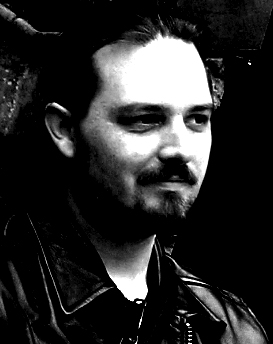
Greg Goodrich is a big guy -- 6'4" minimum and sporting a bushy salt-and-pepper beard he's worked on almost since coming aboard Medal of Honor as executive producer. Put a pair of shades on him and a backwards b-ball cap, and he's a dead ringer for Dusty, Medal's cover boy. This look apparently comes with a few drawbacks. Waiting for the kick-off on the game's first West Coast press event, his Danger Close colleagues ask if he was searched "again" by TSA on his inbound flight to San Francisco. I merely congratulate him on unlocking his Tier 1 beard.
Goodrich laughs, and admits it's coming off for charity on October 12...release day. He half-expects to wake up that morning and find his wife already shaving him.
Sitting down one-on-one with Goodrich, a few things immediately jump out. For starters, he rarely uses "I" in conversation. All credit goes to the team, and decisions apply strictly "for us." It's also clear how deeply working with Medal's military consultants -- a collection of active and retired Special Operations soldiers -- affected him. Along with delivering a great game, he wants to give his audience a glimpse into that rarified community.
"We all have a stereotypical view of what a Special Operations soldier is," Goodrich tells me, "and clearly they're genetically different. You just feel that presence. It was a long process, getting them involved, and once they were on board, man, they were fully on board. It's like anything they do, they want to do it better than anyone else. That's just a part of their mindset."
Translating that mindset into a gaming experience became a priority. "These are the type of guys who run towards gunfire, not away from it. When the world has gone to shit, their first instinct is 'I can fix it. Send me, I'll fix this.' So for us, we tried to create situations where the player gets into that mindset, whether they realize it or not." He notes in particular a pivotal, catastrophic event in the game. When it hits, "We want the gamer to think for a moment 'If I try hard enough, if I shoot straight enough, if I do good enough...I can fix this.'"
"We start with a great shooter. And on top of that we layer -- hopefully -- great storytelling with interesting characters that you care about and things that grab you emotionally, and take you on this journey with these guys."
Duck Hunt: Reloaded
Goodrich hopes that tone helps set Medal of Honor apart from a very crowded field of shooters in a very crowded Fall. It's no accident his game releases almost exactly one month after Halo: Reach and one month before Call of Duty: Black Ops.
If those obstacles weren't enough, he's rebooting a storied franchise, leaving behind 11 years of history to fight in the present. Comparisons to Call of Duty: Modern Warfare 2 aren't tough to make.
"Our competitors are very, very good at what they do, and those are great games. And for us, even though we stepped out of World War II and into the modern era, the current fight in Afghanistan, we wanted the core tenets to remain. Authenticity, respect for the solider, reverence for the material, that heartbeat that has always been a part of this franchise. I think that we all sort of knew if we stayed true to that, we'd be OK."
"OK," I say, "then I have to ask about the Taliban."
"Sure."
The PR guy sitting in on the interview stops looking at his smartphone and leans forward. He's all ears.
"Why go with Taliban instead of just a generic terrorist in mulitplayer?"
The hills are alive, but not for long.
"For us, going back to those core tenets, this is not a game about the Taliban, this is not a game about Afghanistan, this is not a game about the war. This is a game about the soldier, from their point of view. And in this fight, that's their enemy."
True enough, but I recognize the answer from other interviews Goodrich's given, and indeed, this is the second time he's used the "this is not a game about" line in this very interview. I press him slightly, pointing out that the soldier's story applies to the single-player campaign, not the multiplayer. And it's the multiplayer that puts you in the role of a Taliban fighter, gunning for American soldiers.
"Well, y'know, it's, we...." Goodrich pauses, sighs, and then goes way off-script. "It was interesting. Because...the timing was really surprising. We knew people would say, 'Well, they're calling it what it is.' We had it out there, we talked about it, we told everybody about it, and then the closed beta came out, and people played it, and it ended...and then it happened. People started talking about it."
His voice becomes a little strained, uncomfortable. These aren't happy memories.
I can snipe my house from here!
"It took us, quite frankly, by surprise, because we'd gone so long without anyone saying anything. And when it first came out, it just didn't sound like they were talking about our game. It just seemed there was a level of understanding about our product that wasn't there, what our tone is, what our intent is. I hope those people play it and see it and experience it, and understand that this Medal of Honor is no different than any other Medal of Honor that's ever been made. It's the same thing."
"But it's more present," I counter.
"Yeah, and for us, we actually talked about this. Why wait 60 years to honor these guys? Y'know? Why wait? These guys are doing this work now, and I don't care why they're there, but they're there. Let's get behind them and support them and say thank you. So that's why we did it. We want to tell their story, and do it honorably and authentically, and say thank you. Does that make sense?"
It does, even if it doesn't precisely answer the question. Goodrich's intentions sound pure enough, but it's easy to question the motives of his higher-ups at EA, who want their game to make a splash. I have no doubts the game wants to do right by those who served in Afghanistan...though it also gives their enemies a chance to even the score, if only on a virtual battlefield.
Whether one offsets the other remains to be seen.
Read my full take on the play-as-Taliban controversy here.
NEXT: Multiplayer vs. campaign, getting too close to the real thing, and Goodrich's HELL YEAH moment in the game.