Home
Home

The woes of fanboys could be heard daily on forums and comment sections alike during the genesis of modern-day online publishing but these fervent gamers have grown up, a new generation has taken their place, and their collective voice has only grown stronger.
A consumerist society encourages this practice through the method in which products are advertised. Products are not simply displayed as items for your consideration but, rather, as missing pieces in your life. Corporations spend an impressive amount of capital cultivating a level of brand recognition for their products that this cultivation has, in turn, given a distinct voice to their customers. A voice that belongs to the happy and unhappy alike: to the loved and underappreciated: to those who seek to have their voices heard.
It is with great enthusiasm that these resultant “fanboys” arrive here today. Whether it is the newest Mario, or the latest title to hit Sony’s Playstation 3, fanboys will be there to inject an avid dose of ludicrousness in the form of criticism.

What many of these fanboys forget is that these huge companies do not reciprocate the level of affection which they have bred in their most vocal fans. Like most businesses, they simply want to make money.
Will fanboys ever understand?
I honestly do not think so.
More so because it does not make sense to have witnessed the obvious prevalence of fanboyism in all forms of our commercial society and simply shrug it off as a ‘stage in life’ because even full-grown, adult males can attest to having spammed message boards in reaction to an article of news that has left their middle-aged hearts in a disheartened state. And since fanboyism isn’t something that can be diagnosed as a case of adolescence and the like, any human being should make the conclusion that individuals who partake in this act are suffering some form of delusion. Delusion in the sense that they have become so invested in an intellectual property that they have convinced themselves that supporting it will bring them some form of solace or satisfaction not permitted to individuals who do otherwise. It is simply absurd if you ask me.
On the other hand, fanboyism can be considered, in a sense, an impressive feat worth noting due to the immense level of dedication involved in the endeavor. For example, Nintendo fanboys the world over have found refuge in the fact that their purveyor, Nintendo, will give them a similar arsenal of titles to choose from upon the release of the Wii-U (Mario, Smash Bros., Zelda, you name it), however, if a Mario game, for instance, were to find itself on a console which didn’t bear the Nintendo insignia you can surely expect fans the world over to cry out in rage at the ‘travesty’ that would have befallen their beloved Italian plumber’s franchise. This would be an obvious case of blatant, unrelenting, fanboyism gone wrong. Was it ever really right? You can be the judge of that, however, you shouldn’t stray too far from the curb in your analysis.

Furthermore, it is with great disdain that I bring it upon myself to mention the insipid behavior common to practitioners of the fine art of fanboyism. Mainly in their respective forays of voicing their opinions on a public platform such as, say… the Internet. Sure a carefully crafted blog post critiquing the newest ‘horse-armor’ DLC would be a great addition to a conversation concerning the topic, however, spamming message boards with insidious comments spanning from what so-and-so will do to so-and-so’s female relatives is what contributes to the video game industry’s apparent struggle in growing up. Rather than being a medium that is composed of 18-34 year old babies to one whose most vocal members possess a heavily toned style that can resonate with popular culture to a new level - a level that has yet been achieved.
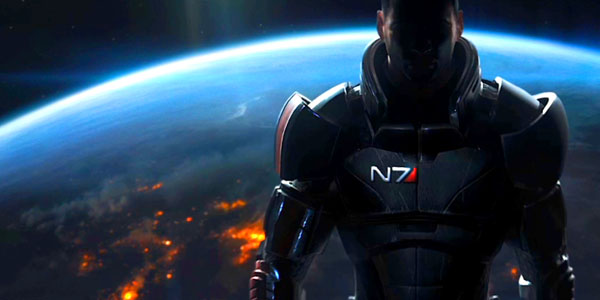
Conclusively, it should be mentioned that fanboyism is an activity that can prove to have its own benefits in the great span of things. To begin, it should be noted that the recently released Mass Effect 3 may not have had its ‘Ending DLC’ without a very vocal minority stating their opinions on what they truly believed the ending of the trilogy was and should have been. An instance, consequently, which may have set a terrible precedent in light of future triple-A releases and the pressure which developers may experience concerning the production of an ending fit for their entire audience.
All in all, it is not for me to decide whether fanboys have a firm, relevant place in the current state of the video game industry though it is awfully entertaining to see them rant over seemingly mundane topics of conversation ranging from story endings, game mechanics…