The Mass Effect series embodies narrative perfection

Default_picture
Thursday, March 15, 2012
EDITOR'S NOTEfrom Eduardo Moutinho

I can only name a handful of games that truly impacted me as a player. Mass Effect is at the top of that list. As I approach the end of the final chapter in Commander Shepard’s story, I almost don’t want to get there. I haven’t fully accepted the fact that the saga must reach its conclusion.
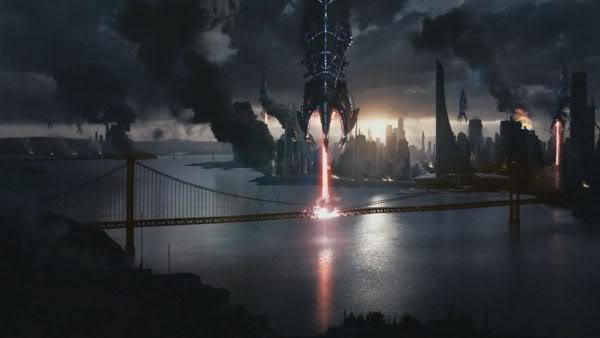
Mass Effect is a one-of-a-kind video game franchise. It’s a series that’s breaking new ground for the future of gaming.

With Mass Effect 3’s recent launch, it’s hard not to rave about BioWare’s vision of a three-part, epic-sci-fi tale finally coming to fruition.

I recently wrote a piece about Tom Bissell’s Extra Lives: Why Video Games Matter, a non-fiction book that tackles video games from a personal perspective. Bissel believes that games offer an unprecedented form of interactive entertainment, but he thinks that they need time to mature. If Mass Effect 2 and 3 came out while Bissell was writing his book, he would have changed its tone. BioWare has epitomized his vision.


Never before has a series tried to emotionally involve the player at such a deep level. The cinematic cut-scenes, heavy emphasis on character involvement, dialogue-tree selection, and even the fact that you’re encouraged to get to know your crew, all these elements combine to create an unparalleled interactive-narrative experience. To me, the Mass Effect franchise boils down to this: It’s a deeply involving, choose-your-own-adventure novel making each individual player’s journey unique.

I understand that Mass Effect has flaws. Some gamers long for the complicated menus and customization that the first entry offered. Since Electronic Arts became involved in the series, the franchise was increasingly simplified in an effort to reach a wider audience. Contrary to how most people feel, I actually like how the franchise has evolved.

As I’ve gotten older, I have less time on my hands and consequently don’t want to spend my limited hours fiddling around in menus. I just want to play my games. But I totally get where hardcore fans are coming from, and I do miss the armor customization from the first Mass Effect quite a bit. I know a simple version of this system remains in the second and third releases, but it’s not the same as in the first entry. Also, EA’s large coffers seem to have given BioWare the ability to secure top-notch voice talent, and the voice acting is one of the main reasons why the series is so engrossing in the first place.
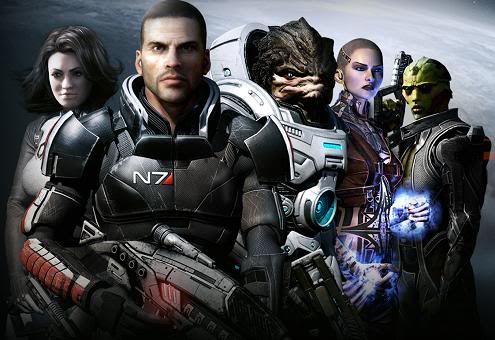
I’m most amazed by how the decisions I made in the original release -- from 2007 -- affected the outcomes of my playthroughs of the next two adventures. When BioWare mentioned that they were planning on implementing this feature years ago, I didn’t believe it at all. I figured it was just a Peter Molyneux-style pipe dream.

I know the entire face-import fiasco surrounding the latest title has caused a bit of a stir in the community. It’s almost like BioWare is punishing their longtime fans for playing the original game. For me, this really wasn’t much of an issue. I was more concerned with the decisions my character made over the course of the first two games, not his actual appearance. This is mainly because my Shepard looked rather ridiculous after being imported into Mass Effect 2. For some reason, his hair started growing into his forehead -- not exactly the look of the savior of the entire galaxy.

So that’s enough of me raving about the series, but I wanted to share why I feel that the Mass Effect franchise is one of the most important video game series of the last 10 years. It shows the potential that video games have for creating a deeply engrossing narrative, and the series itself furthered the medium in unprecedented ways.  Mark my words. Mass Effect will be the go-to example of interactive-story development for years to come.


Follow me on Twitter @Patrick_ORourke.

 
Problem? Report this post
BITMOB'S SPONSOR
Adsense-placeholder
Comments (13)
Default_picture
March 15, 2012

Ok Spoiler warning before I say anything...


Really? You're going to hold up a series that ends in a blatant literal use of Deus Ex Machina as a narrative golden standard? High school creative writing classes would grade a student down for that.

I'm on board with your points for much of the series but the inability to wrap it all up with any sort of elegance makes your claim pretty hard to protect.

Default_picture
March 15, 2012

I admit that the game's ending is a little dissapointing. When I was writing this piece, I was taking the entire series into account.

I've never reach a book, or watched a movie or even played a video game that affected me the way the Mass Effect franchise has. It actually made me care about the game's characters.

Default_picture
March 15, 2012

Absolutely. The one strength I think ME can defend indefinetely is the character development. 

Default_picture
March 15, 2012

The way that the Reapers are set up in the Mass Effect universe realistically would have meant an ending where the sentient races of the galaxy were wiped out again.  We are shown time and time again that there is no way for even the combined forces of all the races to possibly win.

I know a Deus Ex Machina isn't the most original thing but if Bioware wanted an ending that wasn't complete genocide of the all the Council species, they didn't have much of a choice.  I guess we should blame them for making such a terrifying enemy.

Default_picture
March 15, 2012

Well the problem with that sentiment is the story sets up a victory scenario that is very much NOT deus ex machina. One where the weapon is actually a weapon that they can actually just shoot at the reapers as had been suggested the whole game.

Photo-1
March 19, 2012

But... that's exactly what deus ex machina is...

Default_picture
March 19, 2012

Right... and that's bad.

Photo-1
March 19, 2012

You misunderstand. Your comment suggests that an ending "where the weapon is actually a weapon that they can actually just shoot at the reapers" isn't deus ex machina. It is, though. As soon as the Reapers attack, Liara happens to find a gun big enough to shoot them with. Whether the weapon has a valid backstory is irrelevant; it's the weapon's appearance in the first place that constitutes a DEM. The fact that that weapon has unforeseen consequences (i.e., killing all the geth as well, whom, in my playthrough, had become BFFs with te quarians) makes it if anything less DEM-ish. As in, it's not as easy as it was initially proposed to be.

Default_picture
March 20, 2012

You're misusing the concept of DEM. The weapon is introduced by a scientist that studies the protheans, after ME2 introduces the prothean archives as a vast source of knowledge that may help against the reapers.

Since these concepts are introduced in the story well ahead of the introduction of the weapon the crucible's introduction into the story, while sudden, is not DEM.

DEM has to be a sudden, irrational unforseable event that constitutes divine intervention. If the weapon had actually been a weapon, it would not be DEM. Even though the weapon is sudden it is not irrational and unforseable.


If you want to know more look up Aristotle's Poetics. He outlines this and why its bad writing or just read this http://bitmob.com/articles/in-response-to-ben-kucheras-defense-of-mass-effect-3s-endings-also-spoilers which I wrote when Ben Kuchera said the same thing.

Default_picture
March 16, 2012

Mass Effect 3's ending is absolutely fine. The only issue I take with it is the Normandy's fate (trying to remain spoiler free here). That was unneccesary and distracting. Other than that, the endings were perfect, and were a proper ending to the Trilogy. 

Default_picture
March 16, 2012

So you're ok with the complete disregard for all the plots holes? Like how the crew was even on the normandy? Like how you see people who should be dead but suddenly aren't? Sorry. I can't respect that. It doesn't seem like you've given it any thought and are just apologizing for it because you like the rest of the games. 

I love the series, not the cobbled together ending.

Default_picture
March 16, 2012


Spoiler Warning

No, I don't like the Normandy part, I said that. It’s right there. I took Ashley and Garrus with me on the final mission (terrible team, it was an emotional choice) and wouldn’t you know it Ashley managed to get outside the solar system. That doesn’t make sense; that’s silly.

But no, the ending was great, and here’s why:

The game is based around you making decisions to affect how the galaxy operates. But all of this is on done on the foreground of an endless cycle of death and destruction, a cycle that is as old as the galaxy. This current cycle, thanks to you, runs the risk of messing up the larger cycle. Your actions allow one of three outcomes. There is the Illusive man’s dream of controlling the cycle, there is the “let the cycle play out to its logical end” and combine all organics and synthetics option, and then there is the option to eliminate the cycle.

But this is the best part. The little kid? He’s an illusion. He’s a by-product of indoctrination. Yes, see the Illusive man, at the end, reveals that reaper technology was used to bring you back to life and you are then under his control (thanks to the Sanctuary experiments). People who are indoctrinated will have blurry memories (how many times did Shepard act like he had no idea what people were talking about when they were bringing up past missions?) and visions. That kid is a vision. He disappears on Earth in the air duct when Anderson snaps Shepard back to reality. The kid haunts Shepard’s dreams. The kid is there at the end. You are actually talking to the Citadel which, this is where I finally throw in my interpretation, is a reaper. The reaper gives you options on what to do, but clearly doesn’t want you to kill all the reapers. That is clear. Why? Because the Citadel threatens you with the death of all the synthetics (Geth, EDI, etc) and yourself! Yourself! You yourself will die, so says the reaper. The reaper would much rather you become one of their own (controlling option) or end the cycle by completing it (merger option).


The only option left, in the face of knowing you are indoctrinated and understanding that the citadel has the motivation to lie to you, is to kill all the reapers. And guess what you get as your reward? Your life. The ending of killing the reapers is the only way to continue Shepard’s life. Shepard lives through the destruction of the reapers, marking his passage from human, to synthetic, and back to human. Shepard is resurrected in one last gasp of air.

In the end, and this is beautiful, all of your choices lead to the same end. You don’t have a real choice in the face of an endless, mindless, continuing cycle of death and destruction. Only in throwing yourself away and reclaiming your humanity can you unlock this cycle and begin to rebuild organic life without the threat of an endless cycle that will destroy all life. The Shepard guides organic life into a new golden age of freedom.

That said, the Normandy ending is stupid. 

Default_picture
March 16, 2012

Except the Citadel can't be a reaper. If it were it'd just do what all the other reapers do. It speaks with a voice that is out side the scope of the organic/synthetic conflict. It is somehow in control or in a position to influence the conflict. If it were a reaper it'd simply further the reapers goals with out any other considerations. 


My reaction to the ending is that it is structurally divergent from the themes presented in the narrative. Sherpard DOES NOT COMPROMISE. It's something we see over and over. He always attains HIS goal and no one elses unless it suits his needs. He does this through idealism or just simply kicking ass and taking names. Paragon and Renegade respectively.


The endings, none of them, fit this. You are forced to betray your idealism or your ruthlessness. 

You must log in to post a comment. Please register if you do not have an account yet.