Home
Home

Right now, this very second, I have a computer in my pocket that can play Monkey Island, Broken Sword, and Myst.
It's sheer lunacy. If you had told my 12-year-old self that all his favorite adventure games would be available to play in the palm of his hand, by touching the screen, he would never have believed you. These titles were state of the art -- the biggest hits in the world. Now they play on a telephone.
Adventure games are back in a big way. And not just the old ones. Thanks to factors like the iPhone, the Nintendo DS, and the indie development scene, high-quality graphical adventures are everywhere.
But has the genre really changed? Or is it doomed to a second death once its novelty wears off? Here are three reasons why adventure games are here to stay, and three pitfalls they must avoid.
Embracing the episode
In adventure games, you spend all your time and effort figuring out the puzzles, but once you know how to solve them, they're extremely short. Sam & Max developer Telltale Games has figured out a perfect way around this -- episodic releases. Instead of letting players feel lost for hours, not knowing where to go or what to do, Telltale focuses each episode on a tighter chain of events, so you never get bored. The smaller doses and lower prices make for a sweeter experience.
Dishing out digitally
You couldn't do episodic content if you didn't have an easy way to get it to customers. Fortunately, Steam and other distribution platforms have made purchasing games a snap. They've also made it possible for independent developers to put their products in front of a larger audience. Could a game like Machinarium have succeeded as well as it has without the backing and promotion of Steam? Unlikely. Also, the iPhone platform is ideal for the genre, whether you're porting old titles or creating new ones.
A special blend of genres
The other problem with adventure games, especially of the point-and-click variety, is that they all play the same way. You collect items and fit them together with aspects of the environment to proceed. But more recent titles have pulled in traits from other genres. Heavy Rain and its predecessor Indigo Prophecy are essentially adventure games, but they've married quick-time events and 3D exploration to the mix. On the other hand, the Professor Layton series plays up the logical nature of its puzzles, minimizing exploration.
Pitfalls to avoid:
One puzzle, one solution
A major criticism of the adventure genre is its strict linearity. The order in which you accomplish tasks might be flexible, but there's usually only one way to achieve them. And that way is often completely illogical and non-obvious. For adventure games to continue to flourish, they need to adapt. Rather than letting a player beat his head against a puzzle he doesn't understand, multiple options to get around each obstacle would keep players engaged and increase replay value.
Tell me a story
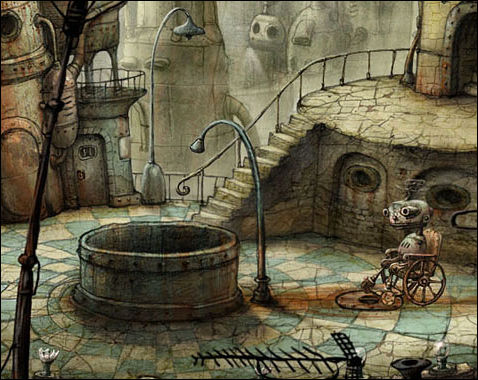
A good story is necessary to motivate the player to continue. But it's easy to get so wrapped up in the puzzles and clicking that developers neglect an adventure game's story. And a lot of older titles ignored story almost completely anyway. The genre has a unique potential for narrative, whether through dialogue (Sam & Max), action (Heavy Rain), or setting (Machinarium). If adventures are to continue to thrive, developers need to capitalize on this.
No more clone wars
A lot of people will tell you that Myst killed the adventure game. That isn't true. It's the Myst clones that killed it. The astronomical success of developer Cyan's multimedia groundbreaker made everyone think they could get in on the action. And that bubble burst quickly. The genre can't survive it a second time. Fortunately, with all the other factors in play, it's never been easier to make a creative, unique adventure.
Adventures have a special ability to appeal to gamers of all kinds, from casual to hardcore. They can tell stories in unique ways, mixing puzzles, dialogue, art, and humor like no other genre can. The future for them has never been brighter.
And that makes both my 12-year-old self and me very happy.