Home
Home

I didn't have "fun" watching Schindler's List; it was brutal, uncomprising, and raw. It was also one of the most profound films I've ever seen. Why can't video games follow suit? Heavy Rain elicits a strong emotional response from the player throughout a complex, multiplayered narrative. But I'd hesitate to call it "fun" in the same way that Mario Kart or Wii Sports provides escapist entertainment. In order for gaming to move forward as an entertainment medium, it needs to transcend its origin as a simple diversion.
What exactly should a game make you feel? Every time I jump on the unsuspecting head of a Goomba, a sense of joy sneaks into my gullet. In a Mario game, the goal is fun in its purest form, which is expertly achieved with each and every platform jumped. On the other hand, I was on the absolute edge of my worn, plush bedroom chair during certain scenes in Heavy Rain. The entire game left a deep, emotional impact on me, but I didn’t have a lick of fun.
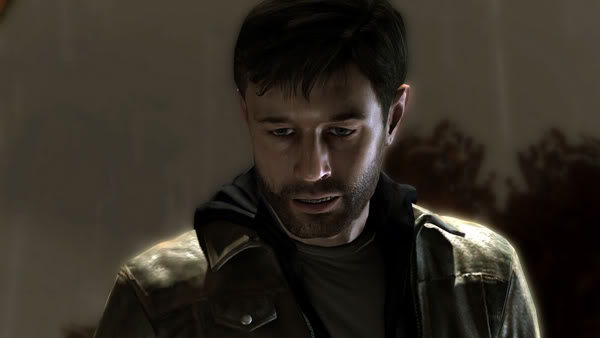
Hold the phone -- isn’t a video game supposed to be fun? I don’t sit down with the family around a Monopoly board and have deep, inspiring conversations about economics. I honestly don’t waste my time with old Mr. Moneybags at all, but if I did, I think the purpose would be to have as much fun as possible. Shouldn’t it be the same case with video games? Not once did I do anything in Quantic Dream’s thriller that even remotely resembled the entertainment value that something like Halo or God of War provides. Which makes it nothing more than a slightly interactive movie, right?
It wasn’t until a recent interview conducted by Game Spot with Braid’s Jonathan Blow that I actually stopped and thought about the concept of fun.
“I don’t like to use the word ‘fun’ too much to describe what I try to do,” said Blow. “Braid is not designed to be fun. It’s designed to be interesting and to provide the player with difficult, mental challenges.”
I played through the entirety of Braid and, to my own surprise, collected every single puzzle piece. Maybe it was the game’s uniqueness or my deep-seeded collection urge that harkens back to Banjo and his damn bird, but I just felt compelled to see everything the puzzler had to offer. That was about two years ago and, after listening to the developer himself, I realized I didn’t have any fun in that game. I was challenged and amazed by the quality of the writing, but in a traditional sense it didn’t appeal to that same part of me that giggles at a great headshot.
Braid, Heavy Rain, Flower...I would absolutely label each of these projects games, but their goals are madly different than what we’ve seen in the past. Think about it in terms of movie genres. The emotional expectation when popping in a comedy isn’t the same as a drama or horror flick...yet they’re both in the same broad category of movie. Books have genres that guide expectations, and music also falls into this comparison. You’re going to feel two very different sensations when you listen to Bees Gees and then 50 Cent.
Our beloved medium is growing, and the games are having a greater impact on us. No longer is a fun game a well-developed piece of software and a game that doesn’t tickle the fun nerve a failure. Expectations must now be set differently based on the genre, developer, and goal of the product. Not every interactive experience is going to satisfy that carnal instinct to collect loot or achieve a killing spree, and that’s more than OK -- it’s a revelation. What video games, once considered a juvenile and crass medium, can make a person feel and see is beyond that of any entertainment medium.
Recently, I downloaded and jumped into Alice: Madness Returns for the first time. I had heard of its fantastical artstyle, but I wasn’t prepared for the chilling and dark tone that it continued to layer on with each passing conversation. Every bystander leaked an original aroma, while Alice herself was so diametrically opposed to the childhood image I’ve cultivated that I became uncomfortably excited to take the first step back into a twisted Wonderland. It was unexpectedly engrossing and, not 20 minutes in, I was hooked.
Then it became a game. Not a bad game -- from what I played, the platforming did its job, and the combat seemed responsive. Yet, that unquestionable charm that violently tugged at my sleeve began to loosen its grip, and I was left with something very familiar. Why, though? Why not continue on the unique, murky road while finding more subtle ways to involve the player in Alice’s madness? Why try to inject what people perceive as “fun” into an adventure meant to terrify and excite the player?
This mishmash of ideas is a byproduct of what games are perceived to be -- a highly interactive toy that pumps fun into the brain. That’s wonderful for our tubby friend Mario and, if Sonic can manage to find some fun hiding in his deep and dusty bin of ideas, three cheers for the tired blue blur. For a title like Alice, though, a departure from traditional mechanics may have saved her from herself.
I fell in love with Heavy Rain because it knew exactly what it wanted to do and never faltered in its execution. They didn’t add a wonky third-person shooting segment or hand-to-hand combat. David Cage and Quantic Dream created a tense and distinctive narrative that benefitted from key moments of interactivity, yet it strayed away from conventional attempts at entertainment. Like Braid, it would be difficult to say I had fun chasing down the Origami Killer, but the adventure still stands as one of my favorite games this generation.
Puzzle games challenge the way you think. Dance games test how well you can move. 3D platformers? Well, it’s all the fun of collecting as many virtual items as possible while stomping on anything giving you a mean mug. As this young medium ages, it expands in every direction. What constitutes a video game is becoming more and more difficult to discern, but that outward growth will be constricted if we, as the community, hold it to this standard of “fun.”
With the dawn and explosion of the downloadable space, developers now have the wonderful opportunity to experiment with this interactive world in new and less risky ways. Taking a chance doesn’t have to mean spending years and years working on an original title like Heavy Rain. Thanks to people like David Cage, hopeful creators have seen what originality in video games can lead to.
Not every innovative title will come together to create something special. It’s a scary and competitive world out there and, more often than not, an online first-person shooter is a safer bet than a radical, interactive narrative a developer has been planning since high school. I’d rather experience the unique and heartfelt memories imbued by a passionate developer’s labor of love than a sweet triple kill in a churned-out war simulator. If you take the chance, there will always be people out there willing to buy a ticket for your creative ride.