Home
Home

Peter's article throws Sega's sad decline into stark relief. It's crazy to think that the company used to be one of the two corporate behemoths that decided the fate of an entire industry. Could Sega be any less relevant nowadays?
.png)
Yu Suzuki has confirmed what many of us thought his "promotion" was about a number of years ago: He is leaving Sega (apart from some sort of nebulous advisory role) after 28 years. Suzuki is famous for his sensational back catalogue, which includes Out Run, After Burner, Virtua Fighter, Hang-On, Virtua Racing, Ferrari F355 Challenge, and Shenmue. The developer's drawn-out departure marks the definitive end of an era: Sega has put him out to pasture alongside the likes of Yuji Naka (Sonic the Hedgehog, Nights: Into Dreams, Phantasy Star Online) and Tetsuya Mizuguchi (Sega Rally, Rez, Space Channel 5).
My first console was a Sega Mega Drive with Sonic the Hedgehog, which arrived on Christmas Day. Over the years, I played personal favorites like Sonic 2, Streets of Rage, and The Revenge of Shinobi. Like many, the Saturn passed me by, but in 2000, I got a Dreamcast, and the great games kept on coming: Sonic Adventure, Sega Rally 2, Chu Chu Rocket!, Rez , Shenmue, Jet Grind Radio, Phantasy Star Online, Cosmic Smash, Seaman, Crazy Taxi, Virtua Tennis, Space Channel 5.... The list goes on and on.
Sega had incredible creativity during this period and often experimented in ways other developers and publishers would not. What is perhaps most striking about this time is that the Dreamcast only had a three-year shelf life Japan and a two-year shelf life in the U.S. and Europe. For such a small period of time, the level of quality was very impressive.
As the GameCube ended its run and releases began to dry up, I went back and bought a Saturn (on the cheap) and got Nights, Panzer Dragoon, Panzer Dragoon Zwei, Panzer Dragoon Saga (not on the cheap), Burning Rangers, Dragon Force, and Deep Fear. Remarkably, even in the darkest period of Sega's history, they made brilliant and creative products. Panzer Dragoon Saga is one of the best role-playing games I have ever played, and I only had a chance to experience it in '05, way after its '98 release.
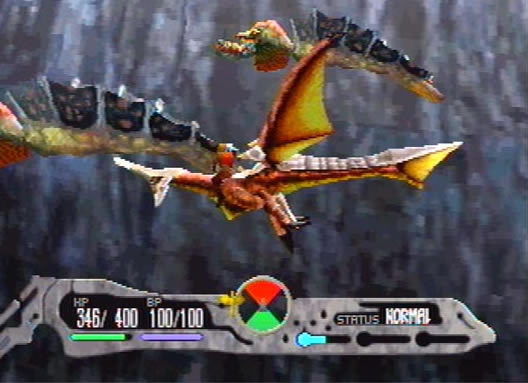
After the death of the Dreamcast, Sega vowed to become the biggest, most badass third-party publisher in history. Initially, Jet Set Radio Future, Panzer Dragoon Orta, Super Monkey Ball, and Virtua Fighter 4 suggested that the company was really going for it. But sadly, in 2004, Sega merged with pachinko maker Sammy. This led to a drastic shift in the focus of the company.
It sad to see the Sega of today. It's the company that releases Sonic games like there is no tomorrow. It's the company that unleashed the poorly received Iron Man and Thor titles upon the world. At E3 2011, Sega's lineup had very little to suggest an about-face: The company announced a new Sonic game (surprise!), a rerelease of House of the Dead: Overkill, a Captain America game (more surprise!), a Mario and Sonic at the Olympics minigame collection (infinite surprise!), an Aliens game by Gearbox Software (an outside developer), and Anarchy Reigns by Platinum Games (also an outside developer).
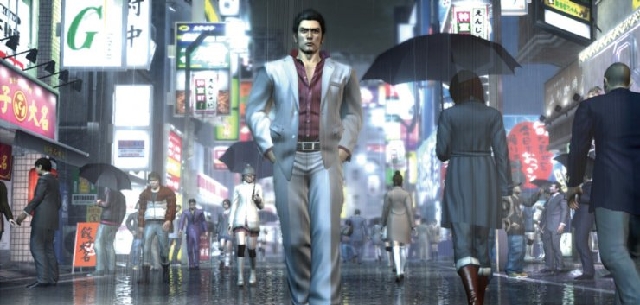
In fact, the only saving grace for Sega at the moment is Toshihiro Nagoshi and the Yakuza series. Other than that, Nagoshi's new title Binary Domain looks interesting, and the consistently brilliant publishing deal with Platinum Games continues.
Internally, Sega has fallen apart this generation. Former giant AM2's only notable releases have been Virtua Fighter 5, the downloadable After Burner Climax, and a port of Ghost Squad for the Wii. Meanwhile, Sonic Team is a shell of its former self. Studo-for-hire Dimps has made all of the good Sonic games that Sega has published in recent years.
Today's Sega is a creative black hole. The company no longer knows how to handle its own properties. Golden Axe: Beast Rider (remember that?) sank without trace, Phantasy Star Universe almost destroyed the brand, and Nights: Journey of Dreams was a mockery of the original.
Sega had the first console with robust online capabilities. The Mega CD brought the disc format to a much wider global audience than NEC's PC Engine CD. With the Dreamcast, the company pioneered the screen-in-controller concept that Nintendo is basing their next system on. And Sony's 3D push? The Master System did it back in ’87. It's obvious that not all of these innovations were successful, but it illustrates how Sega used to be a company that pushed the medium forward.
The straightforward reply to all of the above is that people simply didn't want to buy Sega's innovative products and that the company is bending to the will of the mainstream. That's fair enough, but the fact remains that the quality of Sega products is diminishing while a company like Atlus continues release niche titles to great success.
Sega has fallen way behind as a publisher, too: Activision, Ubisoft, and EA rule the world while Sega fights for their table scraps. It's been 10 years since Sega pulled out of the hardware business with the intent of making it big as a third-party developer and publisher. Unfortunately, Sega Sammy Holdings is now known more for bad Sonic games and pachinko than anything else.