Home
Home

Video Games are Art because they bear Hineinlebenshaltung
Hineinlebenshaltung is roughly translated as ‘living-into-it orientation’. The intent of Hineinlebenshaltung is to look at a piece of work naturally having a meaning or a message. Along this line of argumentation, a video game is a piece of art because it has the potential to bear meaning to a message.
Games, similar to movies, books, and so forth, depend on symbols to accentuate the meaning of their works. Many horror games, for example, draw upon basic jungian and freudian archetypes and imagery to display primality. The use of Hineinlebenshaltung, in other words, defends video games as art on the grounds that they can enact symbols and meaning, giving gravity to their work.
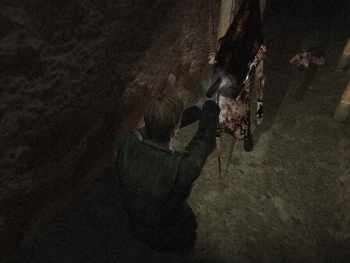
Silent Hill 2 is the most often cited example of work depending on meaning through exaggeration. James’s descent into the nether-town is plagued by monstrous beings which represent various aspects of his tortured psyche.
Video Games are Art because they facilitate intersubjectivity
This argument states that video games are art because its worth depends on the exchange of idea and communication between all involved actors. This argument draws from semiotics, working on the formula that a cohesive piece of work depends on three things: the creator of an image, the medium of the image, and the interpreter of the image.
Along this line of logic, works of art are art because they can be created with the intent of being art and are interpreted as art. Though it seems like a cop-out argument at first, intersubjectivity giving value to a piece of work drove a lot of cubist and surrealist work. Intersubjectivity is an immediate heightening of message of a piece of work beyond its physical components, which is why it’s important as a component to a piece of work.
Braid is a good example of a video game that bears value through intersubjectivity: because it frames itself in an artistic fashion, and it interpreted as being artistic, it is artistic.
Video Games are Art because they seek mimesis
This argument states that video games seek representation and imitation in the world through the lens of an artist. It takes an Aristotelian look at nature and attempts to mimic it in the way that suits a particular idea or ethos.
This doesn’t necessarily mean it depends on being realistic to be artistic. Mimesis in the context of art, at its base, argues for representation of both physical and nonphysical reality. Scenery and psychological torture are both equally viable subjects for mimesis. This line of logic dictates that art in video games are art as long as they provide an interpretation of reality according to intent and meaning. What this reality means, however, depends on the creator.
Nintendo’s Earthbound is an example of Art as mimesis: the story touches upon the subject of motherhood, and its plethora of feminine imagery mixed in with isolation and desolation paints a reality family cleavage.