Home
Home

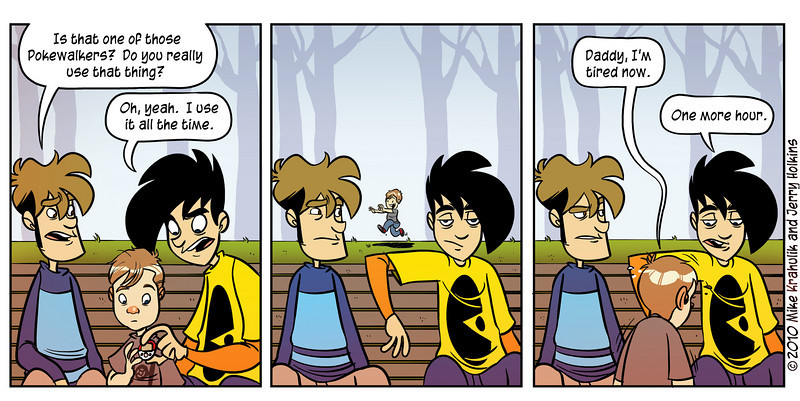
When the Pokémon Pikachu toys first launched, it was impossible to separate me from my glorified pedometer. Every step counted as I sought to earn watts to satisfy my adorable traveling companion.
Pikachu walked with me, played, napped, and generally melted my heart with each gift I gave him. I never imagined I would be without him until the day his battery died and I could not find the right screw driver to open him up to replace it.
The horror of letting Pikachu die like that caused me to slip the gizmo into a box of random junk I wouldn’t touch again until I moved out of my parent’s house.
That was years ago. My drive to walk to satisfy a digital character went dormant, but I assumed it was gone. That was until the Pokéwalker entered my life.
For the past three days, I’ve done nothing but obsessively count the steps I take. My average is 7,500 a day from Noon Sunday to Tuesday night. Now that I’ve spent the time to calculate that, I see that my compulsive dedication to earning watts for demanding little monsters is as strong as ever -- if not stronger thanks to the depth of the device’s compatibility with the Pokémon Gold and Silver remakes.
Each step brings me closer to discovering new Pokémon to catch or items to collect, and each unused watt then goes to unlock new paths to walk down. It is an endless cycle of obsession.
Before buying HeartGold, I doubt my step count was much above 2,000 a day. Doctors and health nuts alike swear by that magical number, claiming that it is the absolute lowest number of steps one must take to maintain a healthy lifestyle. Based on how I feel after three intensive days of walking, those claims are likely true.
Although the walkers work practically the same as the Pikachu 2 did with the original Gold and Silver games, the variety and payoff is much different. Grinding for items is one thing, but being able to take a new Pokémon out into the world and train it while going about my daily routine is a brilliantly addictive evolution of the gameplay laid down in those first pedometers.
Easily swapping out the Pokémon on the walker extends the longevity of the device’s usefulness. It is slipping into my routine: Each morning I wake up, load up a new path and character to my pedometer, then set out for the day. At night I transfer the day’s data over to the DS cartridge again in preparation for the next lengthy stroll.
If my new schedule persists longer than a week, this little gimmick could not only satisfy my often intense compulsive drive but also put me on the right path to building and maintaining a healthy, daily workout.
Can the Pokéwalker keep my attention long enough to completely revolutionize my health? From this moment on, I plan to track my usage of the pedometer as well as my step count each day. Video games are a large part of my life, and I strive to incorporate them into areas they typically do not fit.
Workout programs masquerading as video games rarely keep me motivated, but a good role-playing game will root me to the spot for weeks at a time. By combining simple acts of fitness with my favorite RPG series, this little device could bridge the gap between fitness and gaming for me.