

 Editor's note: Fozzy gives a quick recap of where the gaming industry has been trending toward and offers some interesting predictions on what he thinks we'll see in the next few years...maybe even weeks. Apple, games on demand, Home, motion controls...even brain waves -- Fozzy's covered it all here. -Shoe
It's been just about five years since the Xbox 360 was released and four since the PlayStation 3 and Wii first hit store shelves. Some people are already talking about the announcement of an eighth-generation console coming as soon as this E3; some say it’ll happen next year, and few say it won't happen anytime soon at all.
New consoles or not, change is always coming. With Sony repeating the message that they are “future proof,” and as expensive as their console is (or was, depending on your viewpoint), you can count on it lasting you for at least a decade. I think it’s safe to say Sony won't be announcing a PS4 anytime soon. Nintendo seems to be content with their place in the market at the moment. So if an announcement of a new console is coming soon, most will suspect it will come from Microsoft.
Some even speculate that it wouldn’t be that far-fetched of an idea if Microsoft was already planning on a next-gen console to release as soon as 2011 or 2012 with Natal compatibility....
More moving and fewer buttons
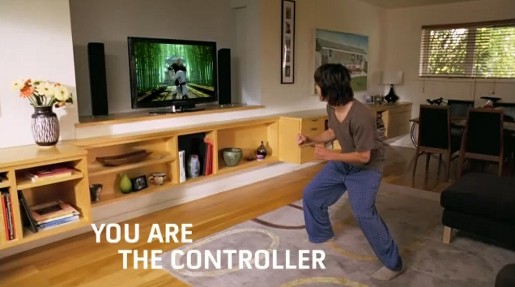
Since last E3, we have all known that Sony was coming out with their own motion-control peripheral to compete against Natal and Wii. It’s only fair to believe that the next generation of consoles will come out with motion controls just as Nintendo did: right off the bat. Though Sony took the copycat approach and did exactly what the Wii has been doing for four years -- albeit in high definition -- Microsoft has taken an interesting idea and tweaked it by taking away the peripheral and making your body itself the controller.
Right now, game developers are scrambling to think up new ideas to make the controls more intuitive and fun but not feel forced (see those few PS3 games that tried to use the Sixaxis a lot). Soon after Microsoft’s announcement of Natal, Sony retorts by telling us that it’s important for the player to have a button to press while we play our games, and I agree with this sentiment as I’m sure many others do.
Which is why I’m sort of worried about the direction we are going in terms of how we interact with our video games. While I’m interested to see the type of hardcore titles developers can think up that can successfully mix motion controlling and button mashing, I would think that a console that came out with no hands-on controller whatsoever would be an utter failure. Which is why if Xbox wanted to release a new system, they should just release one with Natal compatibility and a regular joypad we’ve all grown accustomed to.
Natal will probably be something pretty hard to adapt to as many of us are so used to pushing analog sticks and pressing buttons rather than actually having to move ourselves around without holding anything in our hands. Those who are looking forward to Natal are either very curious gamers or just people who don’t play video games period. But then again, the latter group perhaps is already looking at the Nintendo Wii and likely has no clue at all what the Natal is -- they probably wouldn’t care to spend more money on the Xbox 360 just to try it out.
Natal will not sell well at first, but as time goes by and developers think up new and fun ideas for it, it might do fine in the long run. That said, system hardware rarely sells well this far into the console generation. Sony’s Move and Natal will have to suffer a few beatings in the sales department before they ever become successes.
Downloadable content for all!
DLC has become somewhat ubiquitous. It’s kind of rare these days for a big triple-A title to release with no downloadable content to follow it within a year. Developers see this as an opportunity to keep consumers interested in their product and make sure they keep their hands on it. Too many people opt to just rent a game in order to save money; so instead of the developers giving you tacked-on multiplayer, you’re given a chance to play "missing chapters" or side quests that were not in the original title for a small fee (or sometimes even free). It's pretty obvious that developers will keep this up for the foreseeable future since many of their fans are finding DLC to be quite enthralling.
It’s odd that Nintendo has released a number of iterations of the DS recently. You might say they are releasing all of them within a certain window, so they can finally reveal their next handheld that doesn’t support DS games. But that’s just my theory -- after all, Mario creator Shigeru Miyamoto himself did recently confirm that Nintendo is working on new hardware.
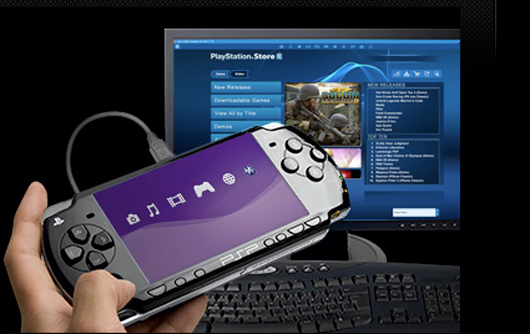
Many are saying that Sony sent the PSP Go out to die, and that might be true right now if you look at the sales numbers. But the fact of the matter is that what Sony is doing with its handheld right now is probably the right direction portable gaming needs to go, and with due time, the public will get used to it.
I support the idea of downloading games for our handhelds, and Apple shows us that it can happen and be profitable. Many developers are thinking about outright dropping their sequels and making their games subscription-based -- for instance, instead of a new Madden or FIFA every year, maybe you can buy a download with newly updated players and teams. Same can be said for music titles like Rock Band and Guitar Hero. And while you’re downloading games that you've purchased, the game publishers will give you a chance to rent games online and stream them to your handheld or home console, which brings me to my next point....