Home
Home

Reggie's series comes to a close with New World Computing, the developer responsible for the Might and Magic games, and some thoughts about the position that these CRPG classics hold. Catch up with Reggie's look at Strategic Simulations, Inc., Origin Systems, Sir-tech, Interplay, and FTL Games.
New World Computing: Explorers Welcome
1983 – 2003
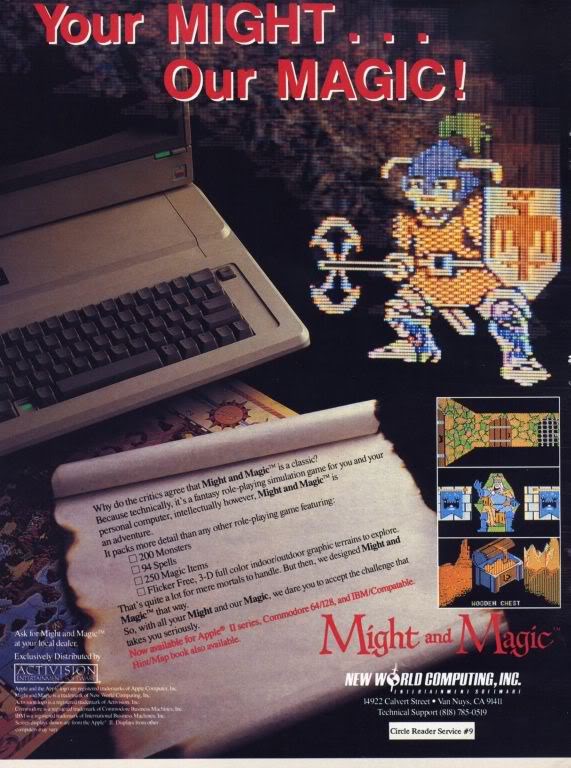
Out of his Los Angeles apartment in '83, Jon Van Caneghem's New World Computing -- inspired by Wizardry, Ultima, and their Dungeons & Dragons roots -- would spend three years programming and designing his brainchild with all of the features that he wanted to play with. The result was Might and Magic: Secret of the Inner Sanctum, and -- like the games that inspired him -- it would become one of the defining titles to toss alongside tile-based landscapes with first person, open-world exploration both above and below ground when it arrived in '86 on the Apple II.
Might and Magic came packaged in a huge box filled with 5.25" floppies, a thick manual, fold-out map, and even a pad of paper with Might and Magic letterhead for notes and mapmaking. When I didn't have an app to duplicate the floppies for play (which was a requirement I wasn't aware of) and wrote the address on the back of the box looking for help, I received written letter from Caneghem with sincere apologies along with a batch of fresh copies that I can only guess he labeled himself.
That also says a lot about the passion of someone whose living room provided the line for customer service. Caneghem was a one-man marketing and distribution dungeon master.
The success of Might and Magic paved the way for what would become one of the longest running computer role-playing game series alongside Ultima and Wizardry. And they were tough. Although they didn't penalize the player in the same way as Wizardry, the game shifted the challenge over to the mobs of monsters, riddles, towns, and its deadly wilderness, which all provided more than enough ways to die in first-person bliss.
Simply living long enough in the starting town of Sorpigal to earn coin for food, experience points, and retain an ample amount of hit points to make it to the inn to save the game only provided a light preview for what was to come. And leveling wasn't automatic: You had to pay for each character's training to upgrade them.
The Might and Magic games were also consummate dungeon crawlers loaded with plenty of random encounters to keep feeding experience to your party. Many monsters could actually be bribed to leave your party alone, or the player could opt to surrender (and be stripped of gold and food while being moved to a more dangerous area) and hope for better odds later.
The series was also known for a sci-fi arc hidden behind the scenes. Although each game stood alone in the most basic sense, each ending would reference a story of revenge and later expand to hint at a great civilization that had once ruled the stars. In later titles, this tie-in would be much more explicit as adventurers armed themselves with ray guns and skulked through the ruins of forgotten technology.
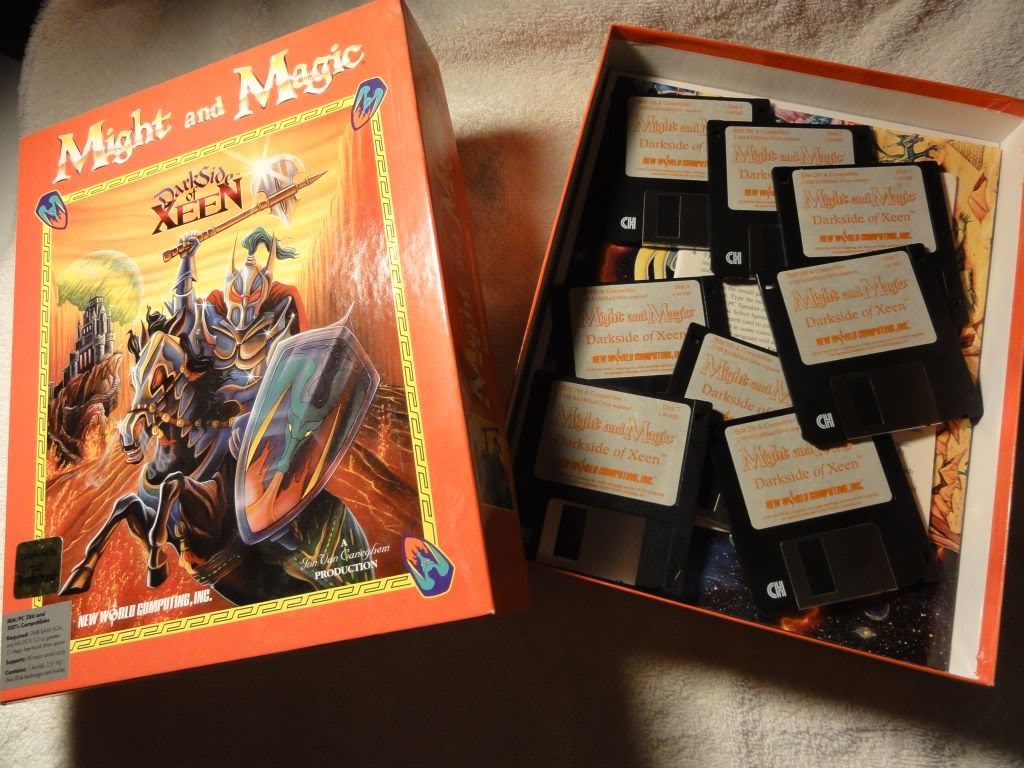
Back in the eighties and early nineties, publishers went all out when it came to retail boxes. This thing is probably big enough to squeeze a MacBook into. Or a stack of iPads.
Might and Magic 4 and 5 (later released together as Might and Magic: World of Xeen) overhauled the graphics and gameplay of the previous titles, and here NWC flexed their creative muscles with the unprecedented feature of allowing both games to be combined into one world. This “World of Xeen” opened up a short quest and a new ending that left no doubt as to its sci-fi premise. Might and Magic 5 was like the ultimate add-on. And the boxes these two games came in? Massive.
Might and Magic 6 would overhaul the graphics engine yet again by the time it arrived in '98 (and toss out the grid-based movement of the previous games for free-roaming), but the series would find itself in competition with BioWare's Baldur's Gate as well as the growing popularity of new genres, such as first-person shooters, and the rising tide of the console market. Increased production costs had also begun to eat away at NWC's coffers.
Read on to page two for the story around these new challenges and the eventual outcome of NWC's flagship series.