Separator

Games as art: Roger Ebert is right (and very wrong)

Rm_headshot
Thursday, February 03, 2011

I'm a fan of Roger Ebert. As film critics go, he's been a major presence in pop culture ever since I can remember, and his voice only got stronger when he lost the ability to speak. His writing carries weight in the world. I respect his opinions even when I completely disagree, but what I really enjoy is how he loves to salt a wound.

Several years ago, Roger Ebert declared that "video games can never be art."
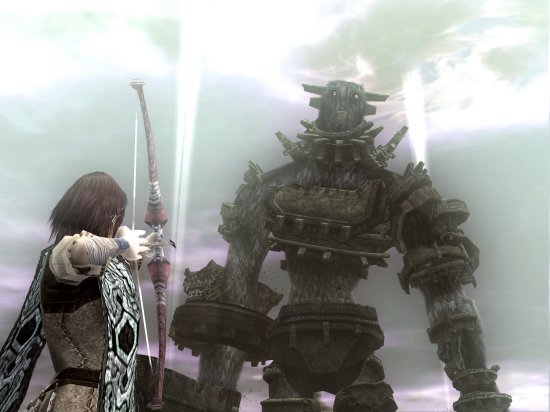
Shadow of the Colossus
I got your neo-cubist theory right here, pal.

Refinements and equivocations followed, but Ebert stands by his core statement. He's not shy about bracing it on occasion, either. Everyone from Clive Barker to speakers at TED have challenged him and been shot down by simple reasoning with a pleasant buttering of snark. Games cannot truly be art. Full stop.

Truth be told, Roger Ebert is absolutely right...and entirely wrong. I can definitively say I've experienced moments of art in a video game. Maybe you have, too.


But who cares, right?  Gamers aren't desperately hoping Uncharted 3: Drake’s Deception will qualify as high art, nor should they. Hell, many industry insiders (and people on this very site) write off the whole debate as worthless, but they're entirely wrong, too.

Here's why: Art is important, and it's treated with importance. Nobody attempts to legislate control over the purchase, rental, or public display of Shakespeare's plays, Mozart's operas, Picasso's paintings, or Ansel Adams' photography. Sure, you get people bravely trying to save responsible adults from controversial art and artists with less name recognition, but at least in this country, they tend to lose that fight. Art gets at least a partial pass to do what art does best...strive.

So for the purposes of this argument, I'm defining art as a creative endeavor expressing an idea that engages you on an emotional level in a way you might not expect but cannot deny. Art means something to you personally. It changes you. At its best, it inspires you.

Most games don't even reach for this. They're entertainments. Generally speaking, that's enough. I'll defend Raiders of the Lost Ark to the death as one of the greatest movies ever made, but is it art? I say no. A massive amount of artistry goes into making a video game, but it also creates strict rules and boundaries and makes you adhere to them. Art doesn't. Likewise, performing the basic functions of a video game -- navigating levels, completing objectives, destroying opposition -- doesn't qualify as art any more than playing a hand of poker. Indeed, Ebert argues those interactions invalidate the artist's intent. You can win a game; you can't "win" art.

Well, no. But interactive art has won acclaim for decades, all the way back to Robert Morris' Bodyspacemotionthings in 1971. Rather than invalidating the intent, consequences for your actions are very much a part of any game's vision and the player's experience of it. I'll go further: The power and intensity of those consequences can turn a game into art.


Your Blue Period ends now!

For example, Shadow of the Colossus sends you out to slaughter 16 magnificent creatures in order to save one girl's life and then, midway through, makes you seriously question whether it's the right thing to do. Short answer: no. From that point on, you're actively participating in your own tragedy. Similarly, Limbo puts you on a beautifully bleak, allegory-rich journey that subtly forces you to find meaning in its metaphors.

But BioShock's the game that kick-started the whole games-as-art debate by mining Ayn Rand objectivism to directly challenge the player's morality. Do you take the hard road and save little girls or murder them for personal gain? You make the call, not some character at a comfortable remove. I know heartless gamers who swore they'd waste every Little Sister they found, but they couldn't do it. The game got them. It changed them.

The game that got me showed up three years later. Heavy Rain opens with architect Ethan Mars horsing around with his boys. Before the opening credits roll, his eldest dies in a traffic accident and his idyllic life evaporates. Chapter 3 follows Ethan's weekend with surviving son Shaun.

These two people are so broken by grief, they don't know how to connect anymore, and it's your job to take care of Shaun for the night. Help him with his homework. Make him dinner. When you finally get the kid to sit down to eat, the camera shifts, Normand Corbeil's score drifts in, and Ethan simply watches Shaun eat in silence. This small moment, shared between father and son, is the best they can manage. It's a dim, beautiful spark of hope in the center of personal devastation.

As a father myself, that hit home.  


Suffering for your art.

Of course, that moment won't happen unless you get the food, cook it, set the table, sit down and stay there. You can just as easily shoot hoops and wallow in self pity while your son zones out in front of the TV. Which resonates their emotional distance in a different way.

Aristotle maintained that good art imitated life. As an interactive medium, games can also strive to make you responsible for what you experience, and that's why you will never feel anything merely watching someone else play a video game. These are first-hand experiences, or they are meaningless.

So games will never be art for a casual observer like Roger Ebert...and that's fine. It's not his thing. Even if he dipped a toe in, there's no guarantee he'd feel what I felt. But his lack of knowledge on the subject did prompt him to issue a mea culpa last summer (though not a retraction) for publicly weighing in at all. "I was a fool for mentioning video games in the first place," he wrote.

Here again, he is entirely wrong.  

This discussion is worth having. I like a good ride, but most games are painfully written, dully plotted cookie cutters. We can do better. Not every game has to be art, but every year the new releases push to do more than their predecessors, and every year the gamer population gets more sophisticated. Maybe it's time to transcend our medium more often. Games can be art, and developers must reach further, dare greater, and -- above all else -- strive to advance the artform.

After years of self-congratulatory repetition, we needed a kick to our complacency. It took no less than Roger Ebert to administer one.

 
Problem? Report this post
RUS MCLAUGHLIN'S SPONSOR
Comments (8)
Robsavillo
February 04, 2011

You're undermining your own definition of art with your seemingly arbitrary distinction between "art" and "entertainments." Are you seriously arguing that [i]Raiders of the Lost Ark[/i] expresses no ideas that engage the viewer on an emotional level? [i]Really[/i]?

Also, I'm not so sure about this dichotomy you've created between observer and player in relation to whether a game is art. Are you really arguing that Bioshock, Shadow of the Colossus, Limbo, and Heavy Rain [i]stop[/i] being art because I'm watching someone else play instead of playing myself? Do these works suddenly stop expressing ideas that engage the viewer on an emotional level?

Rm_headshot
February 04, 2011

I do argue that, because art is subjective, and few things are more divergent than observation vs. direct involvement. For example, my wife watched me play BioShock and was very involved by the story, but her reactions to it were very different than mine. I made decisisions and lived with them...she was a passenger, making judgments based on my actions. Could she still get a different kind of emotional reaction from that? Possibly, but it's a much bigger leap to make, because she's at a far greater remove from gaming's true artistic strength: making choices that have consequences.

So, do YOU think Raiders is art?

Robsavillo
February 04, 2011

That your wife reacts differently doesn't negate Bioshock as art, though.

And yes, [i]Raiders[/i] is art.

Photo_126
February 04, 2011

I love bitmob and I love video games but do we really need ANOTHER Roger Ebert article?  Especially one that trots out Bioshock and Shadow of the Collossus as examples of artistic games again?  It's becoming a terrible stereotype for intelligent video game discussion.

Every article on the subject comes to the same conclusion.  Art is subjective and is relative to each person's own belief on what art is.  The article is well written it just kind of walks the same path that every other Roger Ebert reaction article has.

Default_picture
February 05, 2011

there seems to be a confusion between the basic concept of ART and what is considered HIGH ART. The problem is HIGH ART is purely cultural and subjective, case and point: The Barnes Art collection originally was ridiculed but ultimately became the most impressive art collection ever assembled. At one time it was considered garbage and now it's considered the pinnacle of high art but arguably at all times it was an ART collection (just some thought it was BAD ART but boy were they wrong, or at least i consider them wrong).

Also you and ebert seem to think games should aspire to be cinematic experience, then and only then can they be considered ART (in which i think you mean HIGH art). This is a flawed assumption, games are first and foremost interactive experiences, the true ART is in the interaction or as most people call it the Game Design. The Art is in the playing. In fact i would go so far as to say cinema strives to be interactive, all the ploys of cinema are designed to INVOLVE the audience, games do this inherently.

A great example of emotional quality of a game would be the street fighter 3 third strike tournament video between justin wong and daigo the beast. the crowd erupts in a primal fervor thats rarely seen in movies. I would go so far as games are probably one of the few mediums that can touch people in such a way, sports would be another (but last time I checked sports are games... go figure).

So back to the definition of art, any creative endeavor is art, period. there is art in how people dress every morning (fashion students learn this early on), there is art in how people move to music. Art is a big red square canvas, or primal scrawls on a door. Art can be noise if there is intent behind it. Pong is art, every decision in pong was meant to illicit a response from the player, Pac Man is art of the highest level, Tetris is art. There are 7 pieces in tetris for a reason (human mind can easily remember up to 7 pieces of information). And yes even heavy rain is art though i think its quite dull and boring I cannot deny that it's a creative endeavor much like pong, pacman and tetris are. I just wouldn't call it HIGH ART for the gaming medium as it's not interactive-centric game design (but thats a whole different article lol)

i'm a big fan of ebert but as most new ART FORMS they are sometimes met with opposition from those who should embrace it. Bebop was met the same way, Hip Hop as well, Rock and Roll also, and now video games.

Default_picture
February 05, 2011

"A massive amount of artistry goes into making a video game, but it also creates strict rules and boundaries and makes you adhere to them. Art doesn't."

It's funny you mention that because that's the exact opposite of Ebert's argument: art clearly states its development and themes, whereas a game has you interact change the outcome so therefore cannot be art. (Incidentally, I don't think Ebert considers "interactive art" to be art.)

Yeah, I guess this and Ebert have been discussed to death, but we can make an exception when it's so eloquently articulated—and with something new to say. This discussion is worth having.

Default_picture
February 07, 2011

Art is the use of a medium to evoke emotion.  Good art is art that uses its medium to a good effect.  For instance, something like passage is good art because it uses the interactive nature of the game as part of the message.  Similarly bioshock or halflife 2 do with their messages regarding whether you truly have any agency in a videogame.  What needs to stop, is horrible non indemic storytelling in games like MGS where heavy handed use of other mediums (cut scenes) hinders interactivity.

Also on this definition, something like pacman does not fit, the desire to play more/ annoyance at losing/etc is not an emotion.   Not everything is art, there are limits.  Dales example of SF3 falls short in that its the winning/losing that is evoking the crowds reaction, not emotional content of the game.  By that logic, a sport is art too because it evokes a similar reaction.  Games seem to be part sport and part art, going fully in one direction at times.

Default_picture
February 07, 2011

Lucas: To say Good art uses this medium to good effect is a purely subjective statement.

"For instance, something like passage is good art because it uses the interactive nature of the game as part of the message" Having a message doesn't not make something a better art, take beethoven's ninth, what's the message there? none, but you can't deny it's art.

whats wrong with the winning/losing evoking emotions in the crowd? what is emotional content but something that evokes emotions?? its the INTERACTION that evokes emotions not the story. If you take story out of bioshock or halflife you SHOULD still have a good game, if you don't then what you have is a medicore game with a good story.

The craft of game design is an art, pac-man's design is an expression of the creators just as much as any other work of art. they chose to evoke emotion through the winning and losing - just like an action movie invokes emotion through life or death scenarios. Sure interaction lends itself to driving certain emotions over others (also the fact that this is a commercial art). 

The sports set of rules and regulations i contend is an art form designed to create a certain experience. the playing of a sport is commonly considered art as well, it's commonly said michael jordan's playing is an art, amongst other examples.

What i see is a limited view on what art is, usually constrained to passive non-interactive forms. This is probably because there are not many interactive art forms out there, and those that do exist are commonly not considered art. Games are not a new art, but video games is a new medium. Another possibility is the commonality of the art, its just recently accepted that comics are an art form and quite a valid one, some 70 years after its inception. So i guess we have an other 30 40 years before games will be accepted as art.

Anything that is created with the deliberate goal of giving your participant or audience an experience should be considered art. There is art everywhere, from industrial design to graphic design to game design.

You must log in to post a comment. Please register if you do not have an account yet.