
Separator

Harmful Matter: Gaming's Freedom of Speech

Rm_headshot
Monday, October 04, 2010

Welcome to the first Monday in October. If you're a gamer, this could be a very important day.

Why? Because today opens a new session of the United States Supreme Court. By the time it ends, one year from now, they'll hand down a decision on Schwarzenegger v. EMA/ESA, and that could fundamentally change how video games are sold -- or not sold -- in this country. As it stands, the only thing the Entertainment Software Associate has in its corner right now is a little something called the First Amendment.


It's easier if you picture them naked.

So when Electronic Arts announced last Friday their decision to remove "Taliban" from their upcoming Medal of Honor relaunch in the wake of a media controversy (which, full disclosure, I also commented on), a lot of people (including a few on this site) immediately went to Defcon 1. This, they contended, signaled the death of gaming's freedom of speech. Just as we braced for battle, a major power went into full retreat.

Well, no. Those are different issues. Here's why. 


First, if you haven't actually read the law in question, you really should. AB 1792 essentially seeks to criminalize the sale or rental of any game to any minor "that enables the player to virtually inflict serious injury upon human beings or characters with substantially human characteristics in a manner that is especially heinous, atrocious, or cruel" by reclassifying them as "harmful matter." Decoding that phrase, in the California Penal Code, "harmful matter" is hardcore pornography. Governor Schwarzenegger signed it into law in 2005, and the 9th Circuit Court of Appeals struck it down seconds later.

Taken to extremes, under the "harmful matter" classification,  a 20-year-old playing Halo: Reach at home while his 17-year-old sister reads a book in the room is subject to a $2000 fine and/or a year in jail. To say nothing if he'd rented or bought the game for her.

The same 20-year-old wouldn't face those penalties if he merely watched Saving Private Ryan or The Godfather, though both have higher, and arguably more grotesque, body counts.

That, to me, is a clear violation of several personal freedoms, expression being one. Are there games minors should not be exposed to? Absolutely, and it's the parents' job to make the call, not the government's. In our nation's history, legislation censoring what books we can read, what film and TV shows we can watch, what music we listen to, or what games we can play has never been ruled constitutional. That could change less than a month from now.


Corruptor of youth.

Interestingly, AB 1792 specifically excludes "any game in which the visual depiction of violence occurs as the result of simultaneous competition between two or more players," so if our theoretical twentysomething was playing Reach multiplayer, he'd be in the clear. It's apparently OK to maim and kill other people, just not soulless A.I. bots.

It also makes exceptions for content that has "serious literary, artistic, political, or scientific value for minors," for anyone who wants to jump into the games-as-art debate. Roger Ebert doesn't think they are. Neither does a large chunk of people who make, write about, and play video games. Likely they feel the same way about porn.

Good thing, too, because as "harmful matter," games would be treated exactly the same way porn is. AB 1792's companion bill, AB 1793, requires (or re-requires, since this already applies to "harmful matter") that retailers create M-rated sections, separate from the regular items on display and labeled "Adults Only." The games are removed from the public eye, and gamers -- whose average age in somewhere in the mid-30s -- get a nice little stigma attached for good measure. Just to make sure you know, if you weren't already aware, that you're a bad human for playing these things.

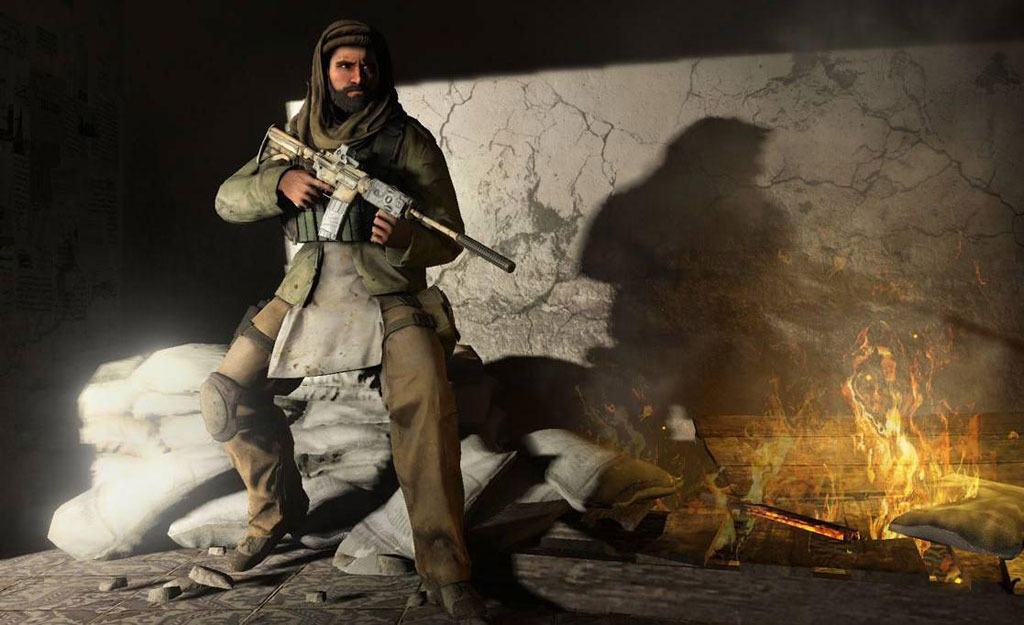
By contrast, EA didn't actually have to do anything. Nobody told them or the Medal of Honor team they couldn't cast players as "Taliban" in multiplayer mode. If anything, they said EA shouldn't do it. Maybe that's a small distinction to you, but the motivations are completely different. The first is censorship, pure and simple. The second registers disapproval. Perhaps strong disapproval, but the phrasing makes it a request, not a command.
Medal of Honor Taliban
Product of neglectful parenting.

When I spoke to Medal of Honor's executive producer, Greg Goodrich, and again in the statement he issued last Friday, he saw it as a matter of authenticity, not free speech. His game takes place in 2002 Afghanistan, where the Taliban were in charge. The decision to back down came from Greg's respect for the soldiers and their families, and the very real pain this might cause them, not because he used a bad word. In all honesty, using "Taliban" instead of plain old "terrorist always felt incongruous with the whole "honor the soldier" philosophy that's always been Medal of Honor's main drive.

Anyway, let's not pretend the First Amendment is a blank check. Try shouting "FIRE!" in a crowded theater, or publish a patently false accusation that could damage someone's livelihood, and you'll learn a lot about the limits to free speech. Some things, you just shouldn't say, in the same way there are some things you just shouldn't do.

I know a large contingent of gamers like to throw out "It's just a game!" to justify any and everything their hobby might do. That's lazy thinking. Is it really impossible to cross a line -- or indeed, to have lines at all -- just because it’s not "real?"

Fine, we can represent a terrorist organization dedicated to killing Americans and then kill Americans. It's just pixels. Whatever, no big deal. How about rape?

Is it acceptable to rape someone in a video game? Before you scoff, thinking to yourself "They’ll never put rape in a video game, no way," surprise, surprise, they already have. Repeatedly. Custer’s Revenge simulated the 8-bit rape of a Native American prisoner on the Atari 2600. Nearly a quarter-century later, RapeLay, a 2006 PC game released in Japan, tasked you with stalking and raping a 10-year-old girl.
 
Yeah. There are lines.  
Scalia
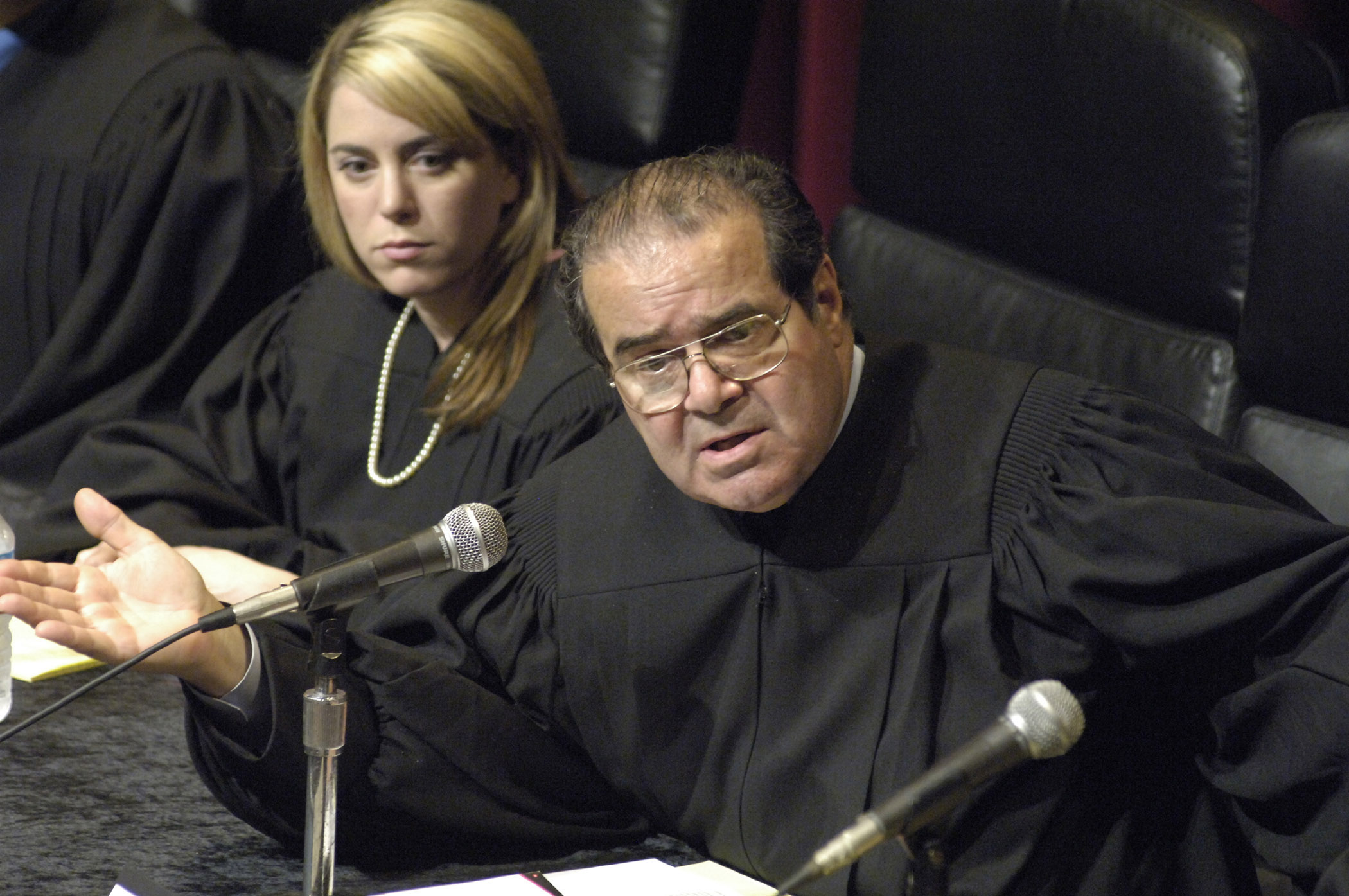
Justice Scalia often smokes fools in Call of Duty multiplayer.

If, intentionally or otherwise, Medal of Honor crossed one -- and many people think they did -- I'd call uncrossing it a good example of self-censorship. When one word threatens to derail the intent of your work, the smart man ditches that word.

And I seriously doubt it took much work. The Medal of Honor multiplayer I experenced in late September didn't show any sign of the Taliban. I saw "Insurgents" who were described as either Chechnin or Uzbek...groups with suspected ties to the Taliban, but not actual Taliban members. Nobody uses the word "Taliban" in the multiplayer mode. If you want to convince me somebody stomped on EA's freedom of speech, first show me the actual speech. I sure as hell couldn't find it, and believe me, I looked.

Regardless of how deeply the Taliban were embedded in Medal of Honor, EA did what it should've done, without government intrusion. We are a self-regulating industry, like film, like television. We have our ratings system, and for the most part, it works. They didn't give up their freedom of speech...they exercised it, in the best possible way: by choosing to not say something they felt might be inappropriate.

The philosophy behind AB 1792 would have ordered them into silence first. That is true censorship, and that is unacceptable.

 
Problem? Report this post
RUS MCLAUGHLIN'S SPONSOR
Comments (11)
230340423
October 04, 2010

Great stuff, Rus. This is the post I wanted to write on this topic, and you just did it better than I ever could.

Default_picture
October 04, 2010

Sadly, the picture you used of all 9 justices is out of date.  Justice Stevens is no longer on the court.  He was replaced by Justice Kagan.

N504124366_1001553_4199
October 04, 2010

Rus,

Aside from the bills you've posted being only part of the whole story (the other bill(s) are here - HR231 http://www.thomas.gov/home/gpoxmlc111/h231_ih.xml, and AB1179 http://www.mediacoalition.org/mediaimages/ab_1179%5B1%5D.pdf), I get where you're coming from and I wholeheartedly agree that certain things should be left alone. However, I can't help but see a bit of absurdity in the slippery slope extremity of certain statements. For example:

"Taken to extremes, under the "harmful matter" classification,  a 20-year-old playing Halo: Reach at home while his 17-year-old sister reads a book in the room is subject to a $2000 fine and/or a year in jail. To say nothing if he'd rented or bought the game for her."

I think that's not at all a plausible scenario, and on the verge of a strawman (not accusing you of intent to manipulate, but seriously, this argument isn't a correct one). The bill is designed to make retailers keep track of who they sell to. It makes them responsible for what they're putting in the hands of the people. It doesn't have any effect on what a parent allows. If that 20 year old kid plays Halo reach with a 17 year old in the room, so what - the bill isn't at all about this. What happens to the game after sale by proper persons, the bill has no effect. A parent can buy the game and then give it to their 5 year old... because that's parental consent. What cannot happen is the parent give the 5 year old 50 bucks and drop them at the mall for them to buy it on their own.

I also see the industry for what it is and have to ponder with all these publisher executives piping on about "Freedom of Speech" without any thing substantial beyond tired rhetoric pandering to an relatively uneducated mass (i.e., Kotick making the asinine remark about how laws based exclusively on age are unheard of and 'beyond absurdity'), why do they bring corporate ethics into the fray when they make their arguments before the people and not before the courts? Simple. Becuase business ethics are dictated by what the consumer will allow, not free standing upright morals. If the ethics these people preached on were 'common sense' and 'practical' why then are they an item that must be taught in higher education? Better yet, since their taught in higher education, does the requirement to pay a fee to learn ethics remove "common" from the discussion piece? I think so.

When Jeff Green said that no one in their right mind wanted to sell games to minors, there was no one willing to offer up why Best Buy ads showcased MW2 closing with "a must buy for the whole family" - apparently SOMEONE is trying to convince people despite the ESRB rating, it's 'family oriented'.

Lastly, when Dr. Frank Gaskill makes attempts at interjecting the concept that disallowing children to play games like GTA is 'common sense', he forgets the point of fact: many parents DID let their children play GTA, so the sense was not all too common.

I'd love to get in a full blown conversation with you on this. You're passionate about it as am I, but this is your ground and I do not wish to hijack your post or incite a huge debate between site staff and a reader. That said, if you're interested on my full take I have several pieces I've written that full explain my position, but more importantly, why - perhaps email correspondance or something along the lines of a joint pro / con op-ed may be in order.

http://fairchild6.com/news/news-opinion/enact-a-law-restricting-m-rated-game-sales-yes-please/shawn-gordon-2/

http://fairchild6.com/blogs/jeff-green-mission-potential-legally-affected-citizen-calls-jeff-green-hypocritetoo/shawn-gordon-2/

http://fairchild6.com/blogs/war-abstract-nouns-debate-video-game-violence-is-wrong/shawn-gordon-2/

Lastly, and I know it's trivial, but the semantics make a WORLD of difference, "Try shouting "FIRE!" in a crowded theater, " anyone can do without repercussion. It's 'falsely' shouting fire that is the proper connotation. Again, sorry - but the whole semantics and context thing is super important.

Dcswirlonly_bigger
October 04, 2010

In the middle of your post you discredit the "it's just a game" argument, but in my opinion, the multiplayer component of this product - and it is a product, pretty much IS just a game. I honestly don't think backing down on the word "Taliban" in the multiplayer will have any effect on whatever kind of story or experience EA LA is trying to convey with the campaign. There's probably very little, if any, artistic intent going into EA DICE's competetive multiplayer mode.

What really needs to be argued here in regards to Medal of Honor is, when someone eventually does try to go all the way in the endeavor to honor our soldiers with a video game, should that game even have multipalyer?

Img_20100902_162803
October 04, 2010

Find it crazy where one medium can be punished in a harsh manner, in this case video games, where books, movies, music and television can get a free pass. Then again, we are in a country where tobaco and alcohol remain legal where marijuana remians otherwise.

Img_20100902_162803
October 04, 2010

Find it crazy where one medium can be punished in a harsh manner, in this case video games, where books, movies, music and television can get a free pass. Then again, we are in a country where tobaco and alcohol remain legal where marijuana remians otherwise.

Rm_headshot
October 04, 2010

Darius: I know, but try finding a new class picture with Kagan in it. Don't ask me why they haven't taken/released one yet. It's not like she hasn't been on the job for a month or so.

Shawn: I checked those revised laws -- thanks to linking to those! -- and while the "harmful matter" phrase itself is gone, virtually all the language associated with "harmful matter" is still in there. And yes, that brother/sister example is an outlier -- I say so above -- but the language still references "exposure," which in "harmful matter" terms, is just as illegal as buying/renting the material. The penalties are exactly the same (though the revised laws chop the fine down to $1000). The CA Penal Code is amusingly specific on this. It is, for example, against the law to show a minor "a photograph of an exposed penis in an erect and turgid state."

Is busting kids gaming in their homes what the law's about? No. But I think we can each throw out dozens of examples where the letter of the law subverted its intent. And since any adult could report these "crimes," it's not beyond imagining that one day, some adult would.

Your Jeff Green analogy assumes the people running Best Buy are in their right minds. I've seen their business model. They're not.

Daniel: To you, yes. To a guy who's served in Afghanistan and lost buddies, or a gamer who's brother died on 9/11? Maybe it would go a bit deeper.


N504124366_1001553_4199
October 05, 2010

@Rus,

>>>>"but the language still references "exposure," which in "harmful matter" terms, is just as illegal as buying/renting the material."

Yes, it is illegal to expose minors to that material in the retail environment. If the parent is present, which they'd be required to be, at the time of sale or rent, then they may hand the items off without the retail establishment having any further worry.

That aside, none of the propsed laws have an effect on a developer ability to produce the kinds of games currently in production. Thus, there's no abridgement of the First Amendment.

>>>>"But I think we can each throw out dozens of examples where the letter of the law subverted its intent. And since any adult could report these 'crimes,' it's not beyond imagining that one day, some adult would.'"

Yeah, I guess... I still think that if this scenario were to happen, it would be seen as frivilous.

>>>>"Your Jeff Green analogy assumes the people running Best Buy are in their right minds. I've seen their business model. They're not."

Yeah, business executive don't observe ethics when they're optional - yet those same ethics are the ones Jeff et. al. use to support the claim of self-regulation... see the circle here? I get your point though  

Me
October 05, 2010

Ian Bogost's Gamasutra article published today has definitively, IMHO, addressed this issue regarding EA and the difficulty of claiming freedom of speech if one does not utilize it, but you say something that I think is factually untrue:

"In our nation's history, legislation censoring what books we can read, what film and TV shows we can watch, what music we listen to, or what games we can play has never been ruled constitutional."

State statutes regarding film censorship have been upheld by the Supreme Court, and were responsible for over thirty years of censorship of movies via the Hays Code - and that was a medium which was much more mainstream and accepted at the time than video games are right now.

Robsavillo
October 05, 2010

I agree partly with Shawn. I winced when I read the "taken to extremes" example -- that's in no way a possible scenario. It's a strawman argument.

But while this law doesn't explicitly regulate content, it's possible that we'd see a chilling effect on the industry. If the state can legally limit the type of content sold to minors, then developers will have a monetary incentive not to produce those kinds of experiences anymore.

N504124366_1001553_4199
October 05, 2010

@Marko

I agree. We have to wonder 'what's in a name?' I would understand if they were labeled a perjorative or a slur, but "Taliban" is the politically correct term.

Perhaps looking at this like flag burning might help a bit. Now, I don't particularly like flag burners... it makes me heated, very quickly. I think that destroying a symbol indicates harmful intent - however, it is protected under the Constitution therefore, I dont have to like it, I don't have to respect the action,  but I have to accept it and defend a persons right to do so. That said, I think it's more about playing as a Taliban member and shooting a US soldier and the idea is that by changing the name, somehow the action is softened. This whole things is disgustingly one sided  I guess shooting the depictions of a person is okay as long as they're popularly unpopular, or it's only okay to shoot the popular guy if the shooting is from an 'unknown' rather than a known. The point is, it seems no one cares that US soldiers can be shot, they only care by whom.

You must log in to post a comment. Please register if you do not have an account yet.