Developers need to support their released games on all platforms equally

Dsc03881
Friday, October 12, 2012
EDITOR'S NOTEfrom Rob Savillo

How would you feel if your version of a game was the only one to not get the patch? Should we accept this behavior?
If something goes wrong with a baby product, the company issues a recall. Food producers list the ingredients that might cause an allergic reaction. But video games, on the other hand, have turned out differently. While a game for the PlayStation 3, Xbox 360, or PC receiving patches to fix bugs is nothing new, developers should know that it still needs to be a complete package.

What happens when a publisher releases a broken game with no plans to fix it? Not only does that company have consumers' money but it isn't going to use that money to fix the problem. This is where things get interesting.

Now, let's have a look at what is loved and what gets the shaft. Patches are just patches. Downloadable content given to one version of a game and not the others? Then that’s when the "mommy loves me more" argument comes into play.

PS3 owners won't be getting Skyrim’s latest content. Let’s think about it.


It’s mind boggling that some players will only get part of a somewhat complete experience; although, they know the risk. Of course, how many of them are still playing Skyrim or planning to play it again when Borderlands 2, Resident Evil 6, Call Of Duty: Black Ops 2, and Madden 13 are already out or will be soon? Their money can now go toward something else that will be a complete experience right out of the box instead of content you might not like.

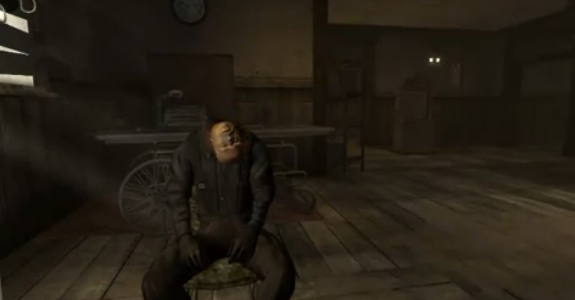
It is weird that the Silent Hill HD collection for the 360 is staying broken while the PS3 got the fix (or something like that). Even worse, with Silent Hill being broken, 360 owners are left with a inferior product with no sign of being addressed. Yet, that same argument applies to the 360 gamers. No one is playing that game now.

Where does it stop? If patches are merely band aids, then late DLC to one system is the pain that continues to run without a cure. If we're to believe we're getting these realistic and online gaming experiences, we are just fooling ourselves. These discs contain software that is 85 percent or less of a game. Anything we buy for those neglected systems is left inferior. You want a real game? Buy something for a 3DS, DS, Wii, or Vita.

What can we look forward to in the next console generation? Well, really nothing. It's going to be the same song and dance, and it might go downhill from here. Who cares if Unreal Engine 4 is powering your game when the developer has abandoned support on your chosen system? You want the Nintendo Seal of Quality for all games? Then tell these developers that.

You can start by mentioning it to Bethesda.

 
Problem? Report this post
BITMOB'S SPONSOR
Adsense-placeholder
Comments (2)
Dcswirlonly_bigger
October 12, 2012

Of course that's what the environment should be, but the discrepencies that occur between content updates on different platforms occur for various reasons, some technical, some business-related, some on the developer, some on the platform holder.

Bethesda has owned the Skyrim issue, but the whole thing is undoubtedly due to the PS3's memory restraints compared to every other platform on which Skyrim has been released. It's probably totally on them anyway though since they chose to release Skyrim on the PS3 knowing this. I fear they may have to come up with a highly imperfect solution like gimping that content when they finally do release it on PS3.

The Silent Hill issue I imagine is due to the costs of releasing content updates on Xbox Live. Microsoft gives you one free content update, and that's it. After that they cost tends of thousands of dollars each, which is why the developers of FEZ had to give it up. It probably didn't make business sense to Konami at that point, never mind the Silent Hill port being doomed from the start, having been based on incomplete code from the PS2 games.

On top of this you have how Sony and Microsoft have to handle QA themselves for every content update and patch, which can take weeks. Next gen they need to treat their services a little bit more like Steam, who puts all the QA onus on the developer, resulting in much faster and more seamless content updates. It's already been rumored that Nintendo will be doing something similar to this and nearly as fast with the Wii U.

100media_imag0065
October 12, 2012

So is the life of a publisher. They never have, and never will, have thier customers best interests in mind. It is all about the mighty dollar, no matter the cost to consumers. Great article by the way. What I have noticed in my many years being a part of this industry, is just how much publishers hate their customers. They really just despise us. Here's how...

I've written many comments just like this one, but I don't mind repeating myself if it educates someone who wasn't aware of the problems this industry faces today at the hands of publishers. Let's look at some of the ways publishers have been screwing customers to make an extra dollar.

Downloadable Content: Remember when this console generation was new and fresh, and gamers were scared of DLC? We cried that such a thing could be used for evil. We worried that we would be sold half of a game for full price, and be forced to buy the rest as DLC if we wanted the full experience. We wondered how long it would be until publishers started removing content from finished games in order to sell to us later. We pondered how many standard features that used to come with a game would be removed and gated behind a pay wall.

We demanded publishers, especially EA, tell us that they would not resort to such evil. EA, and many publishers like them, assured us that DLC will be a way for publishers to extend the life of a product, and that we would all love it. Now, 6 years later, all of our fears have come true, and the publishers have lied to us yet again. Many, inlcuding EA and Ubisoft, have readily admitted to removing finished content from games to sell later. Many standard features, such as cheat codes and costumes, have now been gutted and hidden behind pay walls. Games have gotten shorter and shorter, while more and more DLC are released for them. Publishers have done exactly what we feared, and exactly what they said they wouldn't. Most, but not all, DLC is manipulative.

They even went a step further with things like pre-order bonuses, which guarantees you won't get the full experience even before you buy the game. And then they go ahead and sell these bonuses later, so customers who thought they were getting something unique got nothing. And even another step further with exclusive DLC, which completely alienates millions of potential customers, and punishes them for buying that publishers game on one console instead of another. Loyal customers spending their hard earned money are punished for doing so, thanks to many publishers like EA.


Digital Retail: Again, I will keep this one short. I read that publishers save an average 30% total cost when releasing their games digitally. After all, they don't have to worry about buying or making plastic cases, manuals, inserts, covers and disks. Nor do they have to worry about shipping, warehousing, gas prices, and everything that goes with making and releasing a game. So, one would think that if they are saving all of this money by releasing their games digitally, they would be more than happy to pass some of these savings on to customers when we are buying their games digitally.

If you thought they would, you should no better than to expect a publisher like EA to do you any favors. Here is a fun fact: Right now, this very second, there is not a single digital retail game on Xbox Live or PSN that costs less than the real thing at a common retailer. Im serious. It's true. 100% of the digital retail games on both Xbox Live and PSN costs MORE than the same exact game at a retailer. The only difference being you get less of a product when buying digitally, yet you are expected to pay more.

You loose your right to own the game. You loose your right to lend the game to a friend, or borrow one from a friend, or rent the game, or trade it in. You loose every single right you have right now when you buy your games digitally, yet publishers don't want to give you even a small discount. As a matter of facr, when Sony was building the Vita, they approached many publishers, including EA, and asked them to offer customers a small discount when they buy their games digitally. After all, publishers are still going to make a ton more money off of those digital sales when compared to what they make at retail, even including a small discount. Well, the majority of those publishers, including EA, all declined.

And that is how much they respect and appreciate you and your business. This is also why publishers like EA can't wait for everything to go digital. We loose all the rights we had, and it ends up costing us more money.


Online Passes: I will keep this one short. Online Passes are scams. They serve no purpose but to fool people who don't know any better into paying for something that they already paid for. It punishes honest gamers who legally purchased their games, and serves no purpose to any customer. Online Passes were force fed to us by publishers claiming that server costs were expensive, and people buying used games were adding to the server load without paying the publisher. Very quickly, this was proven false by many.

When someone buys a used game, they are not adding more load to any server. They are simply using the server space that was already paid for by the person who originally purchased the game. You are simply swapping one person for another, not adding one on top of another. Another blow to this "server cost" theory was when publishers started locking out single player content with these Online Passes.

If these "passes" were to help pay for server costs, why are you gating single player content behind a pay wall, EA? Well, Publishers realized they were caught in a lie, especially EA and THQ, so they stopped blaming server costs when they knew they couldn't get away with it anymore. They then just started blaming used games, which is also false. And brings me to my next point.


Used Games: Publishers love to blame used games for all of their problems. Even though none of it is true, they nonetheless pretend to be hurt by it. Speaking as someone who has had many years in the used market, let me explain how it actually works. Most people can't afford to pay $60 for a game, but these same people want to buy as many games as they can because they love the industry. So what do they do? They find old games that they aren't playing anymore, and swap those old games for new ones. Magic.

In my time, the massive majority of people who came into my store traded in old games to afford new ones. The old games they traded in where, the majority of the time, well over 6 months old. That means the publishser is no longer making any real profit off of the game. Many of these people, including me, would not be able to buy a quarter of the games we buy today if we weren't able to trade in our old games to afford new ones. As a matter of fact, I would estimate over 90% of the people who came into my store traded in older games, and then used that credit for brand new games.

Imagine if you will, that these people were no longer able to do that. What is going to happen? Is the industry suddenly going to be massively profitable? Or, are sales going to sharply decline because customers can no longer fund their purchases through the sale of their old games? I can tell you, 90% of the people who came into my store to trade in old games and buy new ones would not be able to afford those new games if they weren't able to trade in their old ones. When publishers finally get their wish, and used games are abolished, the industry will loose billions in sales. People will no longer be able to afford the games they want to play. But its ok, we've got free to play games, right!?


Free to Play: No, I wrote an article a few months ago for this very site. I have yet to publish it because I am not quite finished yet, but what the article was about was these so called "Free" games. To simplify the article, I took a look at some of the msot popular "free" games, and first added up the cost. Now, some of these games have pruchases that could be purchased as many times as you want, so I averaged 2 pruchases for each. Other purchases are one-time deals, and they were only included once in the total.

When I was done, I was shocked to see that all but one of these "free" games are astonishingly expensive. Well over the $60 we would pay for a product today. Even worse, the majority of these games gate very importabt features behind these pay walls, as well as witholding essential features, and demanding payment for them. I have not finished the article yet, but I have so far concluded that free to play games are the most expensive games on the market by far. Yet, publishers claim they are free!

The only "free" thing about them is the download. Once that is done, you better keep your credit card close. Is this the future we want for games? Some publishers, like EA, have even begun shoving micro transactions into PAID games like Mass Effect 3 and Battlefield 3. So when you include the price of DLC, or the Season Pass which demands you pay them for something they haven't even created yet, and the Online Pass, and the micro transactions, and the price of the game outright, you have yourself one hell of an expesnive game. Even Ubisoft has announced plans to start putting micro transaction into games you already paid $60 for.

Enough is never enough for publishers. They have bled gamers dry, but they keep pushing and pushing and pushing and pushing. Now they are pushing so far that we are going to have to have micro transactions into $60 games? Is it far enough yet gamers? Is this far enough yet for you? Are you ready to fight back yet, or should we all just continue on and ignore it like we've been doing for years?

You must log in to post a comment. Please register if you do not have an account yet.