Home
Home

If memory serves, depictions of homosexuality took a similar path in movies and television. Members of the community first struggled to be included, and then they fought for more positive depictions. It sounds like Fallout: New Vegas and Fable 3 serve as steps in the right direction, but I agree with Allen. Developers can do more.
For gay and lesbian gamers who seek representation in the games they play, the 2010 holiday season proved to be a boon. Building on the ability to pursue gay relationships in the previous game of the franchise, Lionhead’s Fable 3 introduced gay adoption (a development praised by GLAAD in a press statement around the time of the game’s release date). In the same vein, the Obsidian developed Fallout: New Vegas became the first game in the Fallout series that explicitly built in gay and lesbian character creation into the core game mechanics.
Certainly this is laudable, considering that earlier in the year Obisidian and BioWare released RPGs in which their protagonists were decidedly straight (an issue that Husdon and Muzyka try to address in their interview with Tracy John from Kotaku). However, one lingering question remains mostly unanswered: Is representation enough? More specifically, can developers do more towards positively representing sexual orientation than simply allowing gamers the choice of playing homosexual characters in their games?
In the GLAAD statement linked above, Peter Molyneux explains why the team added gay adoption to the game: “More and more, there are same-sex couples choosing to have a family, and we just wanted to reflect that in Fable 3… It’s a charming thing, having a baby, and we didn’t want to exclude gay people from that.” This is clearly an issue that Molyneux wants to address in his game, and it appears that GLAAD would argue that the simple act of accounting for gay adoption is a step in the right direction.
A gay marriage between two Fable III players
Of course, it would be hard to argue that this isn’t a step in the right direction. But gay adoption isn’t exactly new to gaming. Well-read gamers would quickly point out that The Sims has long accounted for gay families. Games have come a long way since The Sims, and they can do far more than simply reproduce same-sex relationships through visual representations.
As interactive systems, games have the unique ability to express what academic and designer Ian Bogost calls “procedural rhetoric” in his book Persuasive Games. To paraphrase (and admittedly over-simplify) Bogost’s thesis, games are able to persuade players through gameplay. For example, a player might be more inclined to exercise by playing Dance Dance Revolution because it scores a player’s performance and provides constant feedback -- feedback that a non-interactive exercise video is unable to provide.
And really, this is where Fable III ultimately fails. Yes, a player can have a homosexual relationship and adopt a child, but the game’s treatment of marriage is so simplified and farcical that it allows for unintended consequences. Representatives at GLAAD might be horrified to discover that a gay player might end up abandoning their family and become a dead-beat parent, all because the game does not incentivize relationship building (in fact, some reviewers have suggested that interacting with NPCs in Fable III is so difficult that they would rather ignore that mechanic entirely). These representatives might be even more horrified to learn about the “Henry VIII” achievement which encourages players to get married six times and murder two of their partners.
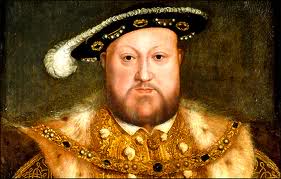
Henry VIII - Best not model your marriages like his.
The game’s “procedural rhetoric” encourages behaviour that is counter-productive to its representational politics. In fact, a conservative might twist the game’s message by arguing that the game proves that gay relationships are destructive and that gay parents cannot properly raise children. The game trivializes marriage to the point where players, gay or straight, have no incentive to treat it seriously.
I’m sure I’m not the only one who has helped friends with the “Cross-Dimensional Conception” achievement. Many of us probably have children in the game that we’ll never see again, let alone give a second thought to. It would be very simple to incentivize relationships or good parenting -- a happy family might be a financial burden on your character, but keeping them happy might provide greater combat bonuses. This small incentive might be enough to encourage the player to get married, adopt a child, and have the kind of healthy family relationship that GLAAD had in mind when they released that statement.
Fallout: New Vegas, on the other hand, positively accounts for gay and lesbian characters in its game mechanics. When the building a character, a player can define their character as gay or lesbian by choosing either the “Confirmed Bachelor” or “Cherchez La Femme” perks. While a player doesn’t need to choose these perks, both provide combat bonuses (10% more damage against male or female characters respectively) and unlock story options that straight characters will not be able to see.

The "Confirmed Bachelor" perk in Fallout: New Vegas
That’s not to say that New Vegas does not participate in representational politics as well. It amused me to no end to read messages on GameFAQs that amounted to “CONFIRMED BACHELOR MEANS GAY!?” Furthermore, Veronica’s personal dilemma as she struggles with her sexuality and the Brotherhood’s demand that she marry a man and procreate is a striking example of a personal conflict that many gays and lesbians could probably identify with in some manner.
However, by providing gameplay incentives that come with being homosexual, whether that’s dealing more damage or being able to flirt your way past a gay or lesbian guard, the game is able to subtly comment on sexuality through gameplay as well as provide positive representations of gay characters in the game itself. At the very least, it might convince a straight player to play a gay character and assume a subjectivity that is foreign to them -- an act that games are uniquely suited to allow. One might argue that the game’s visual and procedural representation of homosexuality is not the most positive, but at least the game pays more than just lip-service to being gay. Sexual identity is built right into the mechanics and is a part of the game that is hard to ignore, which is more than can be said for Fable III.
I would answer the rhetorical question I posed earlier by saying that game designers can do much more than simply visually represent gay and lesbian characters in their games. By using “procedural rhetoric”, by building these identities into their game mechanics, game designers can make being gay an integral part of playing their game. Because the medium has matured to such a degree, game designers have an opportunity -- and perhaps the responsibility -- to use these rhetorical strategies for more than kill counts.