Home
Home

Joshua and his interviewee take a look at what makes Japanese marketing and design so different from their Western counterparts. To me, Japanese design has always seemed a little less focus tested. It's just conjecture, but I cannot believe that a game like Catherine would exist (for better or worse) if Atlus had simply asked a room full of random people to play it and share their thoughts.
Fifteen years ago it took an airplane, a miracle, or a very expensive phone call just to make contact with someone in Japan. Well, the times, they’ve been a-changin’, and now anyone with a computer can effortlessly talk to virtually anyone in the world.
A cursory glance at the volumes of pictures and literature about Japanese culture reveal obvious aesthetic differences when compared to ours, but what does that mean, particularly for a gamer? You may have played a hundred rounds of Black Ops with a squad composed entirely of Japanese teenagers, but outside of combat tactics, what is their gaming culture really like?
In an attempt to gain some insight into this deceptively interesting topic, I spoke with Sony Associate Project Manager Nicolo Accordino, formerly of The Rumble Pack podcast. Fascination begot education, and after years of study, Accordino’s passion has afforded him a very solid understanding of Japanese culture. “You’re chatting with someone who learned about Japan -- it’s language, history, and economy -- because of how different it was, specifically as it was represented in games,” he says.
Perhaps the concept of utmost importance to understanding Japanese design is their idea of cooperation, something that came up early and often in our conversation. “Games like Monster Hunter, Dragon Quest, and even the two-on-two battles in games like Pokémon have all grown out of this desire to make things more cooperative,” notes Accordino.
An interesting paradigm also exists within the Japanese approach to marketing. “In Japan, they start their marketing process from a very insular perspective," Accordino observes. "They start first and foremost thinking about what will resonate with their own people.” Another way to look at it is as a sort of reversed form of brand loyalty -- the perfect marriage of an enthusiastic gaming public and brilliantly targeted marketing that cultivates devotion to your title before it's an established franchise.
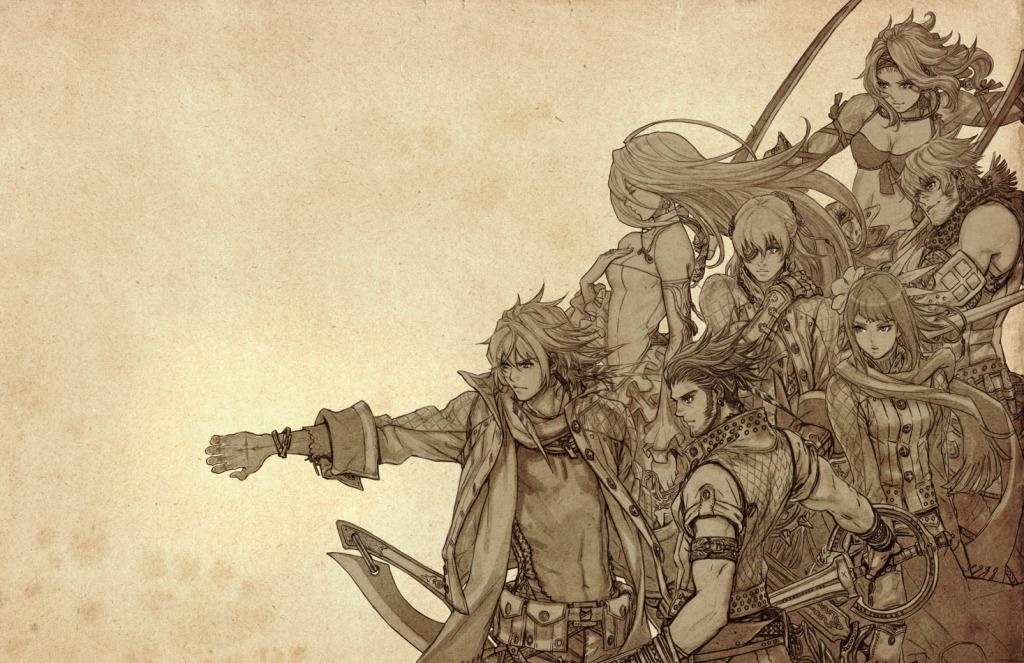
The ongoing saga of The Last Story's American localization is a good example of tapping that resonance with the public. Final Fantasy creator Hironobu Sakaguchi developed the game for a Japanese audience, much like many other famous Japanese franchises. The developers didn't have Europeans and Americans in mind, so no one devised a plan to publish the title outside of Japan.
In America, we have become accustomed to companies like Activision developing and marketing games that focus on current trends. The goal is to create a blockbuster franchise. Of course, these companies eventually surpass the demand of the public -- to the point of oversaturation. It's a refreshing idea to think that a company might develop without concern for how the product will fare in other markets. It’s a very indie-rock ethos applied to a decidedly non-indie arena, and as computers bring the world around us ever closer, it doesn’t need to be such an anomaly anymore.
For more information about Project Rainfall and their efforts to get The Last Story localized for American audiences, please visit their website.