Making monsters in The Last Of Us

Default_picture
Monday, December 19, 2011
EDITOR'S NOTEfrom Layton Shumway

My brothers and I were discussing this very topic last night: Why is contemporary zombie fiction so popular, and what does that reveal about us? Steven explores this topic below. 
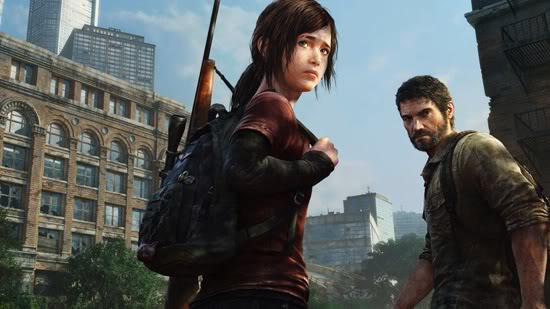
The Last of Us

As Rob Savillo points out in response the trailer for The Last Of Us, something is wrong with my zombies. They have no face.

The law of entertainment (not a real law) states action requires violence; shock and awe requires blood. And since action fans aren't homicidal monsters, we have to believe our enemies deserve death. But we can't always stop mid-explosion to prove that an evil dictator's individual bodyguards are equally evil. Ski masks provide anonymity and remove personality.


That's why zombies are great -- they're creatures devoid of humanity, just as militia fighting for their homeland (but wearing balaclavas) become target practice. Even armed men with exposed faces, but speaking a different language, become "tangos." (And let's just leave Nazis alone.)


The only decent way to treat these monsters is to kill them all. 


The illusion of righteous murder is especially complete in the world of Killzone 3. The hellish planet of Helgen is populated solely by military complexes, ruins and scrap-yards. The Helghast telltale crimson eyes are asking for death. And the Helgen schools, churches, homeless shelters, along with their women and children are nowhere to be found. Even their elderly are cantankerous warmongers bent on violence. 


How could you harm this father of three?


The absurd joke here is that by dehumanizing enemies we are safeguarding our own humanity. By simultaneously painting "bad guys" as monsters -- bereft of families, hopes and dreams -- we are ensuring we don't become monsters ourselves.


Children, however, are safe, tucked out of sight, or indestructible, without health bars or death animations. 


Why? What's the difference?


Their humanity cannot be stripped away. There is no justification for killing children because they can never deserve death; children are synonymous with innocence. And in the rare cases when children are in danger, they are master geniuses, with industrial pranks at their disposal to disembowel bumbling comedians. (Home Alone, anyone?)


Movies can afford to give more nuance to violence. Savillo points to the film The Road as an apt portrayal of shades of gray. (Are the cannibals monsters? Or just trying to survive?)


But games are cut from a different cloth. Adding subtlety to violence in action games such as Uncharted is nearly impossible simply because of the sheer quantity of killing.
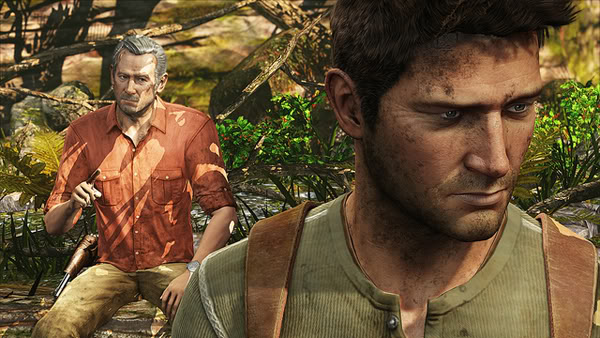
 

Uncharted 3

Now to take care of that orphanage


A two-hour movie like The Road can only contain so much death. The average Uncharted game may take up to 20 hours. Spending all that time conflicted over the murder of thousands of people would make anyone a monster, either through mental torture or desensitization. 


To cage the beast, we must kill sub-humans. We save our humanity but still feed our monstrous appetites. (I would never kill a real person...but man, it feels good to violently maim that zombie.)


While the enemies of The Last of Us aren't the morally conflicting cannibals of The Road, they do reveal a sicker sight. By not forcing us to face our inner monster, we become zombies ourselves. By holding onto the illusion that a mass murderer like Nathan Drake is the "good guy," we can appear humane while feeding on flesh.

 
Problem? Report this post
BITMOB'S SPONSOR
Adsense-placeholder
Comments (11)
Robsavillo
December 19, 2011

Ths is a very clear and succinct explanation of the issue. I'm less concerned, though, with what players "want" and more interested in what developers could (and should try to) deliver.

Default_picture
December 19, 2011

I agree, but do you think The Road the game be any "fun" for gamers?

Robsavillo
December 19, 2011

I suppose I don't think we should limit the medium's expression to fun. Don't get me wrong: I enjoy a good spell of mindless action every once in a while, but I can't listen to the same note over and over. Games need to spice things up a little more often!

Default_picture
December 19, 2011

Amen brother, we just need to consistently let developers know this is what we want, and maybe soon we'll get the game the dead island trailer hinted at.

Default_picture
December 20, 2011

A game like The Road could be fun given how different it would be.  Rather than see every person on the screen as a target to deal with, the player would have to consider the moral factors of the world, and what's happening.

In my opinion a great bad guy is one you can agree with, or at least see things from their prospective, and understand why they do what they do.  You don't get that very often in gaming though. Bad guys tend to be either cannon fodder or one dimensional single-minded individuals.

Continuing on with the idea of The Road: The Game it could have resource management systems, and be relatively open ended with a few non-hostile people whom you can choose to help/screw/be screwed. Weapons in the game would probably just be a knife, and a handgun with a few bullets, perhaps only 20 bullets in the whole game. Thus making players consider their actions, and either try to bluff, sneak, or fool  hostilities when possible.

Default_picture
December 20, 2011

Y'know, I used to think that video games had to have an artsy-fartsy value. Unfortunately, that means that I'll spend less time killing hordes of zombies and other random monsters. It's such a difficult dilemma.

( T_T)\(^-^ )

Default_picture
December 20, 2011

Randy I would play that game. I would play it so hard. But like Jonathan says, it would mean less time mowing through hordes of enemies, which is usually tons of fun.

So can moral ambiguity be fun?

Is going to an art gallery fun?

Default_picture
December 20, 2011
I simply think that it's a different type of fun. And I don't necessarily think that a game "needs" killing in order to be fun. Animal Crossing did a splendid job with simple tasks, weed picking and fishing. "Fun" is a vague quality which has so many different meanings.
Default_picture
December 20, 2011

Ahh, but picking weeds and fishing are not usually considered art, (no offence to green thumbs). So where does staring "unblinkingly into the darkness of your own blood-stained soul" aka "art" fit into the traditional definition of fun in videogames?

Default_picture
December 21, 2011

With video games they tend to be based around verbs. Shoot, drive, run, seek.

Moral ambiguity can be fun "in the eyes of some people" if its handed right. But it would need to be open ended enough with many choices, and outcomes factoring into events that are happening or will happen.

I mean The Sims is a huge hit, and it's basically an building program with 'living' dolls. While some people enjoy the complete control they have over their creations, others enjoy the interaction their creations have with other Sims.


Perhaps with the themes of a game that is about moral ambiguity it can't be soul crushing dark all the time, nor can it be sunny and happy. It would have to set you up with a situation, and a world. Then it would lay open the possible paths one could take in this world. Then at the end, make you question if you did the right thing in the end. I guess the main design goal would be to get gamers to consider their actions, and think more deeply about the choices we make, and the effects they have.  The ending of said game shouldn't ask the question "Was it worth it?" but really "Did I do the right thing? Could I have done better? What if I did..." But to be effective the choices can't be as macro as killing a kids parents, or sending the kid to college. But more micro like giving his parents some extra money that you can't really spare, then coming across a more 'worthy' cause that the money could have went to.

To summarize.

Classic Rock will forever be changed. Or really moral ambiguity can be fun if the interaction is there, and the choices and consequences are wide open.

Default_picture
December 21, 2011

Nice, i like your example of doing a good deed, like giving money to a npc, only to find a more worthy cause down the road, one you can only stand helplessly by, unable to help because you already spent your money.

I was so confused by the beggar in fallout 3, the one who asks for water, and when you give him one... nothing happens. But it's neat because no one rushes out to reward you or pat your back. it's a step in the right direction but like you say, there needs to be more interaction and depth.

You must log in to post a comment. Please register if you do not have an account yet.