Home
Home

Recently, under the guise of her online persona Feminist Frequency, pop culture critic Anita Sarkeesian made waves online by introducing the Tropes vs. Women in Video Games Kickstarter, a video series exploring female stereotypes in the world of games.
Predictably, as any subject matter involving feminism usually goes, the response has polarized readers. From sexist attacks on the announcement video to over $137000 in donations, the venture highlights how contentious the portrayal of women is, especially for an industry still emerging creatively.
Being a feminist, her views are obviously slanted toward how women are characterized in games. And while a valid question, her project brought to light another important issue: the mischaracterization of men as hulking, death-defying heroes, a standard to which most male players cannot compare.
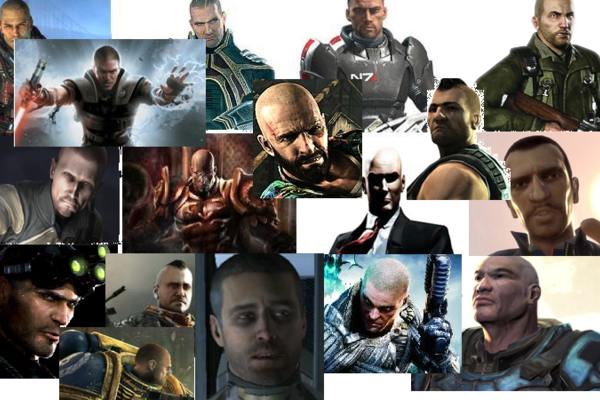
As a result, “An analysis of misandry present in modern interactive video game media” aims to broadcast the opposing side. A video series displaying how men are constantly subjugated, and sometimes vilified, as abusive, homicidal, head-shaved warriors with little remorse or resentment of their actions.
Understandably, video games are produced for a male audience. It isn’t outlandish to suggest most consumers purchasing these games are male. Both publishers and the public think your average enthusiast spends unlimited hours labouring away while surviving on a chips-and-Red Bull diet, which is furthest from the truth.
Because of other media, bald or shaved male characters associate with obscene acts of violence or heroism, a strange dichotomy of the male psyche. From movies like American History X portraying bald, ruthless neo-Nazi violence to Bruce Willis in Die Hard, the male persona as represented in media slowly transformed. And the budding medium of games willfully soaked up the badass-ery.
The grisly image of a bald man committing ultraviolent acts as subtly advertising. Since the persona is so strongly attached to utter destruction, creating a “typical” character achieves two things: depicting that person as violent as to where some may relate; and to play psychologically on the interactive nature of the act, seemingly making the player think they are committing the act.
This is not to say all players are prone to violence — in fact most aren’t. It’s built on the publishers’ wrongful notion that these games sell well because of the amount of violence. That because all men become excited by violence.
And this trend has reached unprecedented levels recently, most with heavy advertising campaigns. Some include: Mass Effect 3, Infamous, Hitman, God of War, Grand Theft Auto 4 and Killzone.
The fund’s description makes an apt point as well:
“Such stale and stagnant design clashes vividly with the rainbow of personalities that are so abundant in real life, and seeing as how the hardware necessary has been available for a few years, isn’t it about time that video games reflected the diversity of the audience?”
Couldn’t have put it better myself.
You can find more rants over my personal blog, Holygrenade! Make sure to subscribe!