Double Fine's Kickstarter success shows publishers what players want

Default_picture
Sunday, February 12, 2012
EDITOR'S NOTEfrom Eduardo Moutinho

With the big Double Fine Kickstarter news, let's see if more indie developers take the same approach to fund their projects. I just hope Tim Schafer and crew return all the love with a truly memorable experience.
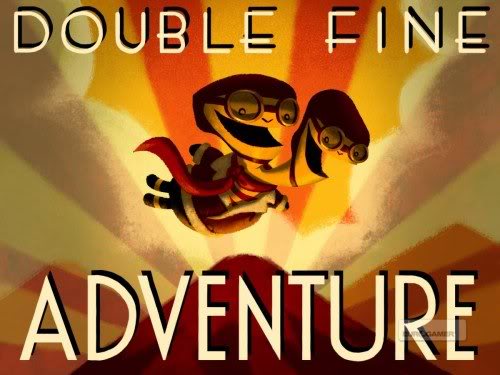
A large number of reactions emerged from the Double Fine Kickstarter news, but one of the first headlines that started popping up around the Web was whether or not the ability to successfully crowd-fund a major title is a revelation for the future of the industry.

Kickstarter is not going to rewrite the book on game development. Double Fine's success simultaneously shows independent developers a new avenue for advertising and funding their releases while retaining creative control. It should also force publishers to review what the market (read: game players like you and me) really want.

This whole thing reminds me of when Radiohead released their (terrific) album, In Rainbows, back in the halcyon days of 2007. Radiohead fans waited four years for a new album when the band suddenly announced that they were releasing a new collection of music. On top of that, fans could pay whatever they wanted for the music and download it directly to their computers.

In an unprecedented move, Radiohead completely ditched the record labels and trusted their admirers to appreciate the value of music. Some reactions on the Internet called the decision the future of music. Double Fine's announcement triggered the same variety of reactions in the gaming world.


A cursory look at the music industry five years after Radiohead's experiment shows that artists are still making gobs of money while signed to multimedia conglomerates. However, there now exists many more avenues for up-and-coming groups to market their work without needing the approval of another company. Radiohead's experiment wasn't ultimately for their benefit. It was for the little guys.

Let's get back to video games. Independent developers have been successfully avoiding publishers for a long time. Thanks to the rise of digital distribution and the "buy an early version of the game to fund development" model that Minecraft made popular, getting a publishing company to agree to distribution rights is much less important now.

Using Kickstarter to fund video games is not a new idea (you can find a gaming section on the site), but the Double Fine announcement put tens of thousands of eyes on the platform as a viable way to back development without needing to pitch the idea to a publisher. And that is how it will impact the industry.

The Psychonauts studio put their "old school" adventure title on Kickstarter, and look where that got them. They received 200 percent of their requested funds in less time than it would take to properly pitch an idea and sign a publishing agreement.

And Double Fine gets to keep complete creative control.

The traditional software publishing system isn't going anywhere in the next few years. Music isn't as good a comparison here, as publishers are more restrictive than major record labels as far as what they put out these days.

I understand that corporations don't want to take risks. When you are spending $40 million on larger games, the next Call of Duty is a better play than a quirky point-and-click adventure title.

But really, Double Fine's fundraiser should make the big boys step back and ask, "Do we really know what our audience wants?"

Next time, instead of going with what you know, why don't you ask us?

 
Problem? Report this post
BITMOB'S SPONSOR
Adsense-placeholder
Comments (4)
Default_picture
February 12, 2012

It certainly can't hurt for them to take a look at this, but it seems more of an unserved niche. Big publishers want to crank out huge AAA no-risk games.They're Wal-Mart (or Costco if you want to be charitable, but their business practices seem more Wal-Mart).  I think they know these small audiences are out there, but they're just not interested in spending the time on them when they could be using it to make Call of Duty:Vietnam.

For instance, if you take that $1.5M, that's just 75k copies at $20 each. Rayman Origins did 50k units in four weeks and is considered a sales failure (even though it's a fantastic game). And there's just no way you're going to get the majority of CoD/Battlefield players to play a Tim adventure with all that boring reading and thinking.

This seems like it would be much more interesting to the medium boys like Atlus who are already experienced with catering to niche markets. There's good money to be made there where the big boys won't go. They and Steam have low cost publishing covered, but financing the game in the first place has always been a hard nut, so it would be very interesting if someone without Tim's following could manage to use this.

Default_picture
February 12, 2012

That was pretty harsh, so let me say that I think the big guys are capable of allowing some creativity if you can convince them they'll make tons of money off it: Skylanders is a good example. But not an adventure game.

Default_picture
February 12, 2012

Thanks for the thoughtful comments!
The optimist in me hopes that bigger publishers can at least notice how effective it can be to cater to the demands of the market, no matter how big or small. The realist in me knows that, as you said, it will probably only work with the small-medium companies.
It's interesting that you mention Atlus - I think they are one of the other companies that could successfully crowd-fund a game. They have an incredibly loyal fan base and just recently showed that they will print a new run of a game if there is enough critical demand.
Whether the optimist or realist in me is right, I am excited to see if the feasibility of crowd-funded games can change the direction of the big/small players in the industry. 

100media_imag0065
February 13, 2012

I think the problem, like stated many times, is that they want the next big hit, not the next modest hit. Sure they can fund and make a small profit off of a Double Fine game, but why waste the time, money and patience when that money can be spent on a game that will be a great sucess instead? The real problem is, unfortunately, that they are already giving us what we want.

Call of Duty sells through the roof every year. Skyrim flew off store shelves and Battlefield 3 has sold over 10 million copies since launch. Those numbers tell them that what we want is core, bloody first person games. At least, that's what they THINK we are telling them. Double Fines new game will surely be a success, but not the type of success we have told them time and time again that we wanted. Everytime we open our wallets for Call of Duty, we close the doors on studios like Double Fine.

This is a tragedy for the game industry. Just like our economy, and how the middle class is being wiped out in favor of the millionaires and billionaires, the middle of the road games that are just as good, if not better than these million seller franchises, are being wiped out and ignored in favor of the sure thing. Just look at how nobody would give Double Fine money to make Psychonauts 2. That is a beloved game by many, and fans have been screaming for a sequel for years.

Yet, studios have ignored the game, refused to fund it, and ignored fans wishes because they know that the few million dollars it might generate isn't worth their time when their currently in development AAA shooter is expected to rake in hundreds of millions of dollars.

You must log in to post a comment. Please register if you do not have an account yet.