Home
Home

Outland is a thrilling, successful blend of bullet-hell and platforming gameplay.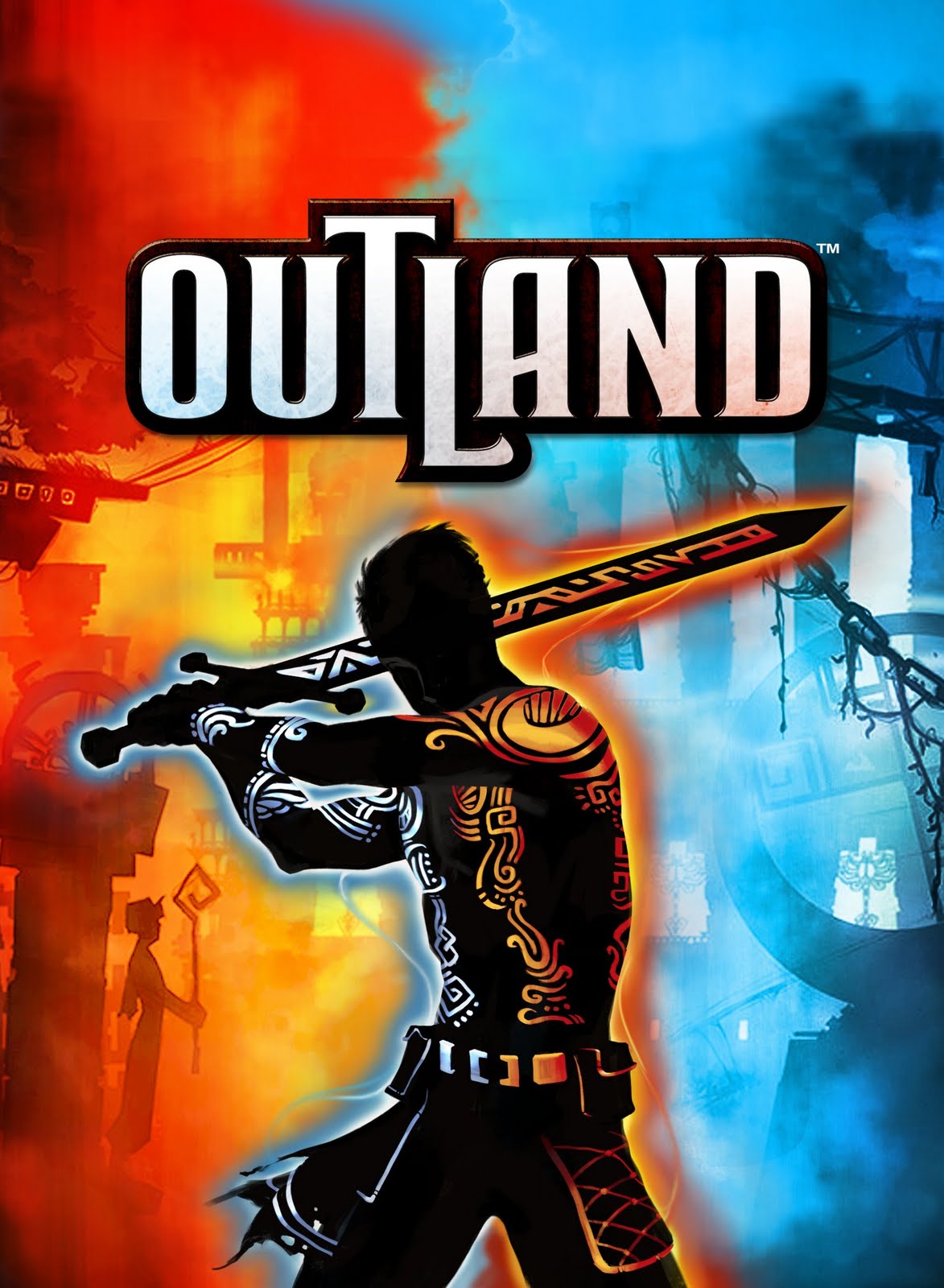
Platform(s): PlayStation 3 (reviewed), Xbox 360
Publisher: Ubisoft
Developer: Housemarque
Genre: 2D platformer
Outland is more than a simple homage to Treasure's classic shoot-'em-up Ikaruga. A game that marries the fluidity of platforming with the madness of a bullet-hell shooter in spectacular fashion, Outland crafts a stylish, nail-bitingly challenging two-dimensional action side-scrolling game. A game where the simplest of jumping puzzles become extraneous death courses, bullets of red and blue hues flooding the screen in a dazzling, horrifying display. An exercise in skill and patience, as it were -- and a beautiful one at that.
A shadowy foreground paints a scene of silhouettes against an intense saturation of primary colors in the background. Small, intricate designs, tribal in nature, decorate both the scenery and its inhabitants, their glow making each character and object pop. Tribal artistry pervades Outland, its ancient setting -- filled with remnants of a once thriving civilization, massive stone structures looming in the background -- complimenting the artwork. You never approach those looming structures, only seeing them from a distance, wondering what secrets lie within them and amongst the streets of the city they inhabit. You never learn anything about your environment, a brief cutscene at the beginning of the game being all the set-up you get.
Moreover, the game performs brilliantly, it's animation silky smooth. The nameless protagonist moves with the utmost grace, climbing and jumping with absolute fluidity. Snappy controls help achieve the feeling of fluid motion, allowing you to jump, slide, and launch around with ease.
Scrambling up walls and platforms make up the majority of Outland's action. A platformer at heart, jumping puzzles are the bread and butter of Outland. Usual conventions such as moving and non-moving slabs of ground suspended in mid-air rear their heads, issuing a fair mix of quickened movements and patient navigation. The protagonist leaps across distances, but not without aide of momentum. Luckily, building up a good run isn't necessary as in other games in the genre, which is crucial, because most of Outland's challenges involve leaping to and fro between small pieces of land, great distances lying between. Attempting to gain strong momentum on such precarious placements, snappy, responsive controls or not, would only frustrate; missing a ledge because you're just a hair short of reaching it being especially infuriating. Outland isn't clear of frustrations like that, but they are also not infatuations as they are light vexations. The difference is that mistakes in Outland feel like something caused by yourself rather than the game mechanics working against you.
That's where the bullet-hell component comes in. Feelings of that sort commonly reside in shooters of the bullet-hell variety despite the constant trudge of trial-and-error -- a usually negative mark against games. To describe it as tough but fair would be accurate, as while the game often presents extreme challenge, it never crosses into the realm of impossibility. A hard line to walk, but Outland does so splendidly.
Bullet-hell manifests itself through the torrents of red and blue hued projectiles. Small box-like objects laced throughout the game's geometry fire off the harmful energies of light and dark. You can only dodge those energies at first. Soon enough, however, you harness the power of these energies, allowing our hero safe passage through the once deadly colored bullets through alignment. Align yourself with light (blue) and that energy no longer harms you; same with aligning with dark (red). Pressing R1 swaps between the two, something you'll be doing a lot of as you move deeper into Outland as the energy streams become more complex.
So complex they become that, at times, not a single ounce of respite can be found, the assault only increasing in intensity; streams of both energies intermixed converging on you constantly, small breaks in their movement pattern serving the only solace available. That level of extremity seldom surface, but when it does, the game doesn't hold back. Boss fights in particular love to deliver such punishment, launching flurries of bullets right when they're most vulnerable. These mammoths pull no punches, relentless in their attacks. Alignment swaps only grant solace for so long, the enemy taking swipes at you soon after firing their artillery of energy. Besting these monstrous foes is thrilling, for each battle feels grand in scale. Environments breaking apart as the battle continues, making the landscape more treacherous, the enemy colossal in size -- it all works to create an extravagant, enthralling climax to each level.