Permadeath: Wave of the future!

Rm_headshot
Thursday, July 12, 2012

Dark Souls

Friends, I'm afraid modern video-game design philosophy has painted itself into a corner where it's now virtually impossible for players to lose. So long as you adjust the difficulty down to your skill level and apply some persistence, you'll eventually win every time...guaranteed. That effectively separates video games from every other category of game in existence.

Hey, I grew up in an age where a quarter bought you three lives or less. Maybe you earned a few more, but when your last ship vanished in a fiery explosion, game over, man. Now everything automatically resets on death, bumping you back to the last save point and quietly erasing all traces of failure. Oh, you’ll find plenty of examples that offer unforgiving modes, from a few Diablos to the more recent Dead Spaces, but I’m talking about something more serious. And permanent.

So are others. Permanent character death is on the rise as a core game mechanic, and it’s exactly the shot in the arm the industry needs.


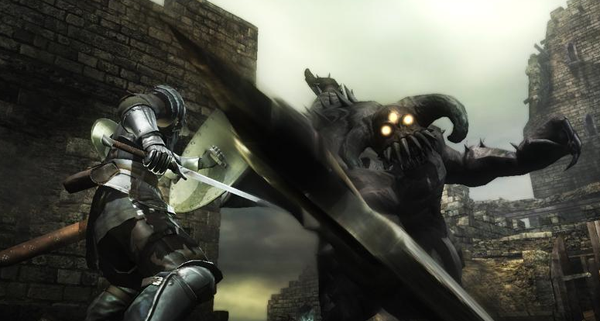
Rougelike games have incorporated permadeath for years, but the idea started escalating into a trend when underground hits Dark Souls and Demon's Souls came along. These games became famous because they’re actually hard. Every single encounter could prove fatal, at which point you lose all the souls -- the major in-game resource -- you've collected.

Strictly speaking, that's not permadeath, but it still added something completely lacking in other games: consequences. You can’t afford to take any fight lightly, because losing carries a steep price. And gamers loved it.

Compare that to BioShock’s “epic” Big Daddy fights. The first few times I elected to take out one of those roving murder dispensers, I planned out meticulous ambushes and prayed it all worked. But on normal settings, BioShock resurrects you instantly, weapons and equipment intact. It wasn’t long before I switched to chip-damage tactics, constantly dying, resurrecting, and running out to cut a few more slivers off Daddy’s health bar. Attrition did my work for me.

The Souls games allow you retrieve lost souls from your rotting corpse, but most likely whatever killed you the first time is back to full strength and waiting around to kill you a second time. And a third. And a fourth. Until you either get better, or you take the hint.
Dark Souls

Always assuming something doesn’t tag you along the way, which isn’t an assumption you can afford to make when permadeath’s a factor. Nothing sinks the stomach quite like charging around a corner and right into the sights of a way-too-powerful foe.

A constant sense of risk makes every moment important. You pay attention. You focus. You’re drawn in.

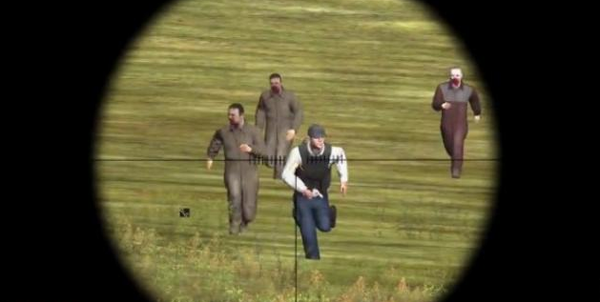
Paranoia kicks in, too. I wouldn’t think twice about slaughtering scores of undead in any number of games, but in DayZ, a survival mod for massively multiplayer online shooter ARMA 2: Operation Arrowhead, seeing a solitary zombie shambling around in the distance raises the hairs on the back of your neck. It’s a serious thing. You give those walkers a wide, wide berth. If it sees you, it’ll charge. Using a gun to defend yourself might alert more zombies. Three or more at once pretty much insures it’s lights out. To say nothing of constantly watching treelines and windows for unfriendly players who might snipe you and claim your stuff.
DayZ

Without permadeath, all the tension in DayZ goes away, and that’s really the main reason to play it. You’re in a real zombie apocalypse with deadly ghouls and unpredictable humans. Its website even tracks player death stats just to make the situation perfectly clear. Don’t get too attached to breathing.

That makes it tough to get attached to a story, too, though Heavy Rain pulled it off by interweaving four playable characters and their plot threads. If one died, their future levels could be lost without breaking the narrative. I can’t think of anyone else who’s even tried something as ambitious lately.

And of course, permadeath de facto makes a game much more difficult, which can be a turn-off. Nobody pays 10 bucks to see 70-percent of a movie. They really won’t pay $60 for a game they can’t finish.
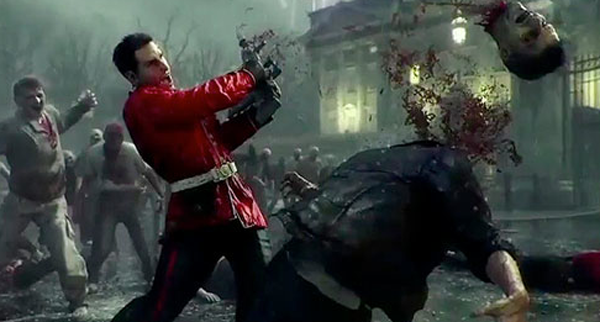
ZombiU

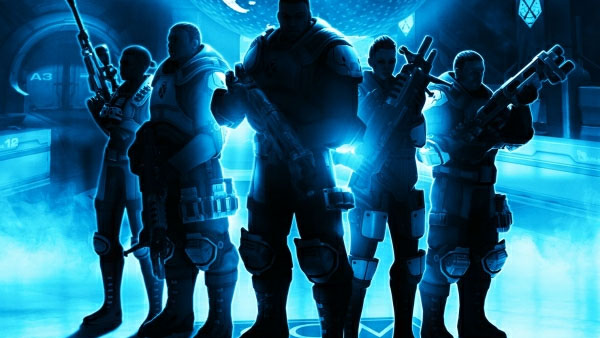
Ubisoft’s trying to split these differences in their own zombie romp, the upcoming Wii U-exclusive ZombiU. Unless you have a syringe that acts as your get-out-of-death-free card, one bite kills you, period. You then switch to another nearby survivor -- an actual character, as opposed to DayZ’s fairly blank slates -- who sets out to finish what the last guy started. You can even find and headshot your former character -- now a part of the brain-eating horde and conveniently tagged with a waypoint -- to buff your inventory.

Just think. Permadeath on a Nintendo platform. I’d call that fairly hardcore.

I'm not suggesting that permadeath fits into every game plan. A breezy adventure a la Uncharted simply stops working if the bad guys ace lead character Nathan Drake in the first five minutes and he never comes back. But I’d love to see it tried in something like a Call of Duty, where you’d click over to another member of your squad every time someone drops you...and fewer teammates makes your job tougher going forward. That would turn the Michael Bay movie of military shooters into something more Steven Spielberg.

And yes, you’d fail. That’s fine with me. I want gamers to fail more. Failure helps us learn, and it make victory sweeter...but only when our failures carry a price. In any other type of game, that means loss. Video games might be in a class all their own, but it wouldn't hurt to play it old school now and again.

 
Problem? Report this post
RUS MCLAUGHLIN'S SPONSOR
Comments (7)
Default_picture
July 12, 2012

The way to do permadeath right is to structure it so that another character -- or group of characters -- can continue the story without the former. In an FPS, control could switch to a squadmate. Imagine going down and then experiencing your former avatar's death through his best friend's eyes. Cliche? Sure. But the perspective and permanence changes everything.

Default_picture
July 12, 2012

Personally, I think the permament character death thing goes right out the window with the ability to exit to dashboard or have multiple save files.

It works with Dark Souls because you don't care about your character. You just don't want to lose any progress. Plus in Dark Souls, death isn't really game over. Bosses remain dead. And you keep all your gear, just not your souls.

Default_picture
July 12, 2012

This, of course, is one of the reasons that developers like David Cage encourage only a single playthrough. The temptation is there to replay sections and get it "right." But your playthrough is uniquely yours, warts and all.

Default_picture
July 13, 2012

Demon's Souls was actually built around permadeath when it was in early development but they couldn't make it work.

Also, you don't lose your gear in the Souls games.

Default_picture
July 13, 2012

Didn't the original Steel Battalion, when you died, force you to hit the "eject" button on its giant, monstrous controller or it would ERASE YOUR SAVED GAME?

THAT'S hardcore.

Robsavillo
July 13, 2012

Yep. If you failed to "eject" before your mech blew up, the game deleted your save file.

Roguelikes (turn-based dungeon crawlers) have been doing this for decades. When your character dies, the game deletes the save file. You're only allowed one save file at a time.

Ironmaus
July 15, 2012

To begin with, I love permadeath, but I think you're not giving enough separation to the many design concepts you're lumping under that term.

To start with, you talk about getting a set number of lives per coin in the arcade titles of your youth. It's strange to refer to this mechanic nostalgically as this still happens in most arcade-like titles that come out, particularly in the so-called casual space. Take the iOS title Tiny Wings, where each trip starts on the first island, no matter how far your last trip was. The twin-stick shooter Geometry Wars starts from the first wave (in most versions) after your lives are lost. Even puzzle games like Tetris or Bejeweled start you from zero with each new game. This is a fairly standard mechanic for any game that focuses on mastery or achieving high scores and it's never really gone away.

Then you talk about the not-quite-permadeath of Dark Souls. It seems like what you're really praising here is both the game's level of difficulty (which is a whole other conversation) and its form of attrition. There's actually a fascinating discussion about this happening over at GameDev.net right now (that I'll link at the end of this paragraph). This is the idea that players shouldn't have to do EVERYTHING again when they lose, but should have some mechanic that keeps them from infinitely resuming from the place where they lost and facerolling their way to victory. In most cases, this means costing the player time, spent running back from the nearest save point (weak attrition), spent retrieving lost items from the last playthrough (medium attrition), or spent grinding out more resources before attempting the fight again (strong attrition). This is useful in games where the designers want to make players learn how to play better but not force them to replay the beginning of the game hundreds of times before experiencing either higher-level play or the game's end.

http://www.gamedev.net/topic/627645-weekly-discussion-on-rpg-genres-flaws-week-3-attrition/

Sometimes the attrition is insurmountable and leads to an early game over. If ZombieU has limited characters you can swap to before you have to start from scratch, then it has this hard-limited attrition, but my guess is that it won't, because if the game has any story, I believe those designers will want people to see the end of it. That, I think, is the big difference between where permadeath makes sense or doesn't: narrative.

In DayZ, there isn't a fixed narrative, so there's no reason to cut the player any slack. This playthrough, I killed some zombies, found some beans, beat up another player for their shotgun, then died to a zed mob in a farmhouse; cool story, let's play again. But I can only imagine how awful Bioshock would have been with permadeath. That game seemed to me not to be about mastering the combat, but about experiencing the story, seeing the end of which was very important to appreciating it. Sure, the combat was fun, but the story was paramount. I doubt it would have received quite so many accolades if the difficulty were ramped up, permadeath were turned on, and most players' experience was, "Arrived in Rapture, shot some people, started taking photographs, died, arrived in Rapture again, shot some people, started taking photographs, died, arrived in Rapture once more, shot some people, started taking photographs, died, quit to go play a shooter where I didn't have to take photographs."

You're right, video games are in a class of their own, but the things that make them unique can also be frustrating. I read a paper once where the author proposed that video games were the only medium that tested a person's ability in order to access content, and they mentioned how ridiculous it would be if applied to other media. Imagine if you couldn't listen to the second track on a CD because you weren't hearing the first track properly, no matter how many times it played, or that you had to pass a comprehension exam before being allowed to read the final chapter of a book. Imagine watching the first ten minutes of a film fifty times before ever getting into the second hour.

TL,DR: I think challenge is good and permadeath sometimes makes sense, but mostly when we're certain the point of the game is to be challenged or that permadeath is a part of the story, not a barrier to experiencing it.

(Also, looking back over this, it says what I want to say, but it's overly long and could be read with a vaguely condescending tone that wasn't my intention. Sorry about that. :D)

You must log in to post a comment. Please register if you do not have an account yet.