Home
Home

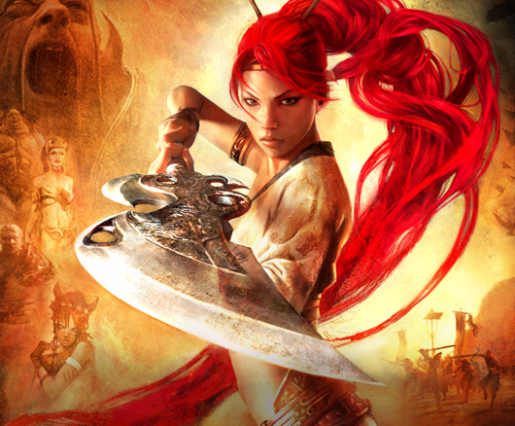
A common reaction to the first footage of Ninja Theory's Heavenly Sword was to call it "Goddess of War". This is a fairly appropriate comparison; heroine Nariko--who does not wear much more clothing than Kratos, despite the several thousand blade-swinging arguments in favor of armor with which she is confronted--performs acrobatic attacks against large groups of enemies with a weapon that, yes, occasionally includes chains. But while both games are QTE-heavy actioners, Heavenly Sword quickly distinguishes itself.
To continue the comparison to God of War for just a little longer, the main thing about Kratos is that he is a giant asshole, so it's difficult to connect with him outside of a desire to rip the wings off of every stupid Harpy in Greece. Nariko, on the other hand, has some deep-seated father issues, sure, but her primary motivation is to protect the people around her, despite most of them thinking she is a crazy, cursed witch. This tension and isolation makes Nariko almost immediately relatable, and adds a welcome bit of pathos alongside the well-trod "GRR-ARGH-FLIP-KILL" play mechanic.
Having said all that, the plot is really nothing too special: cursed sword, evil king, gang of Metal Gear Solid-style animal-themed bosses...we've seen it. But the cutscenes are well done, and there are even some weird campy moments that will either make you groan, laugh, or re-watch the scene to see if they actually happened (SPOILER ALERT: they did).
As a PS3 launch title, Heavenly Sword served partly as a showcase for what the console can do; some of the larger battle scenes are reminiscent of the "look how many ships we can fit on the screen at once" levels near the end of Star Wars: Rogue Leader. Similarly, players use new-and-exciting-at-the-time Sixaxis controls to guide projectiles to targets and for midair recoveries during combat. This all works really well, actually, but these features still read like bullet points on a press release (and I'm not sure that they weren't).
Heavenly Sword's combat system is surprisingly nuanced. Nariko can use three different "stances"--speed, ranged, and strong--and switch between them at will; each stance has its own combo list, and different stances block different enemy attacks. Additionally, there is no block button. Nariko will block automatically, but only if she is not attacking. It's a cool idea, and encourages strategic button presses over mashing.
Still, it's not all great. Heavenly Sword is as short as it is pretty, and it is very, very pretty (I played almost the entire game in an afternoon, and finished it before lunch the next day). There is also little to no replay value, unless you really like concept art, and the camera often decides, usually during already-difficult boss fights, that the most dramatic angle possible puts either you or your opponent off-screen.
Despite these problems, however, Heavenly Sword is definitely worth playing, but it is not worth the $60 it cost at launch. Buy it very cheap or rent it.
Follow me on Twitter, if you so choose.