


Editor's note: Antonio thinks that story is simply a framework used to make an interactive experience more palpable to the person playing it. He loves a good tale, but in the end, it's all about how the thing feels when you get it in your hands. And if you really pressed me, I'd have to say that I agree -James
 I'm reading Richard Marius' A Writer's Companion. In a chapter entitled "Figurative Language," he proffers:
Writers use clichés out of weariness or uncertainty or hesitancy. A writer sits at a desk, struggling to put something on paper (or on the screen), realizing, as we all do, that writing is hard work and that sometimes words don't come easily. A cliché pops up.
As much as I agree with Marius, sometimes you have to use a clichéd story as an excuse to introduce a beautiful experience. And even then, the clichéd story is not pointless if the writer knows how to use it.
Glory of Heracles has a premise that sets it apart from other role playing games: Greek mythology. The concept interested me, so I read the plot on the game's official website. It's a bit disappointing. The second paragraph of its description reads, "Meanwhile, a boy washes up on the Island of Crete. He doesn't remember how he got there or even who he is. He soon meets companions with equally murky backgrounds." The creators could have tried 10 different turns of story, but for some reason they settled on an amnesia tale.
As much as I hate amnesia stories, the idea of losing our memories is palpable to us: Our memories are essential to our identities. We shape ourselves based on our past mistakes and triumphs, and the idea of waking up one day as a blank slate is frightening. I hate forgetting what I walked into a room for -- it's annoying. That annoyance stems from a more base fear: The prospect of a fugue ruining personal progress.
Great reveals occasionally sneak in to a video game: Cloud, from Final Fantasy 7, remembering that he assumed some else's identity was a shocker. Bioshock offered a golden nugget when it revealed that not only was Jack born in Rapture, but that he was brainwashed there, too. Both games use the same cliché, but the hackneyed concept is a means to leverage a great story. Bioshock does it very well; its genre allows for a presentation that makes the gamer feel as though they are Jack. I have not played Glory of Heracles, but using characters who are immortal can also lead to a great story twist if the writer has the right idea in mind.
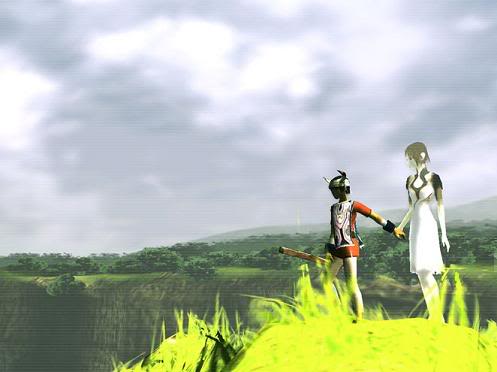
Ico, for the PlayStation 2, is beautiful to look at. Official PlayStation Magazine described the title as an Impressionist painting. Ico's surroundings and vistas are awe-inspiring. Would the game fall apart if it lacked a clear story? I don't think so. The designers could have the shadows attack Yorda without cause, and the writers could have led you to your escape from the castle without offering a reason for your imprisonment. Sure the gamer would have to fill in the gaps, but I don't think that would deter people from enjoying Ico's graphics or playability.
Most mediums can't get away with that. Story is essential to novels, and trite characters won't entice the readers. Bit it seems visual mediums have more leeway when using clichés. Their look or their interface can be a doorway in to a fantastic world, and a strong design can be the experience's linchpin. James Cameron's Avatar didn't have a great story -- the whole thing is a gateway in to an exotic place that the viewer has never been to before.
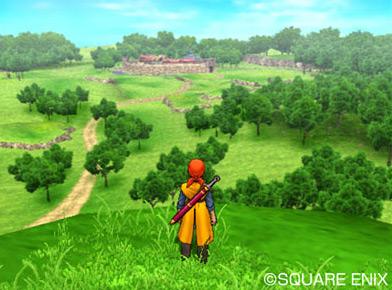
Dragon Quest 8 is my favorite role playing game. But as I played through it, I realized that its story is nothing new. That said, its look is beautiful, and its turn-based battle system is fun. Despite the somewhat flat story, its characters are entertaining enough to make me care about them. When I finished it, I concluded that the story is an excuse to enter a cel-shaded world and bask in its whimsy.
People expect video games to find a balance between story and gameplay. If you can only have one, however, I'd bet that a game with a crappy plot and interesting play mechanics would be more appealing. In the end, I play video games for my enjoyment. The story can be sacrificed -- it isn't the centerpiece of the experience.
I don't mean to issue the video game industry license to lower its standards on story. But as a gamer I'm more inclined to say that no matter how good the story is a video game's greatest strength is its visuals and interactivity.


Despite agreeing with your take on stories in games, many of my favorite games tend to have great stories. I don't mind seeing some cliches, because rarely do you see anything that's completely original anyway.
What would Mass Effect be without it's story? A pretty crappy game, that's what. I have to disagree with your take here. I read a book for it's story, I watch a movie for it's story and I play games for their stories. If a game has an amazing story and decent controls, I'll suffer through it in order to experience the story that those game developers have created. Story is an integral part in any form of entertainment and I can't see why anybody would want to diminish that part of the medium.