Home
Home

Perhaps more strongly than James, I detest games writing as product reviews. Aside from the obvious problems of quantifying a thoroughly personal experience, they're usually boring reads.
In contrast, I want to see more of what Kieron Gillen called New Games Journalism. I feel that Bitmob embraces this concept well -- it's one of the reasons the site first attracted me. I hope James finds a home here as well.
Reading Modern Warfare 3 coverage, I found a rather interesting review. I won’t name the site or the reviewer because, ultimately, it isn’t important. But it really got me to thinking. The review gave MW3 a 5 out of 10, and I was excited to read it. Not because I possess any hatred for the MW franchise (in fact, I think they’re a lot of dumb fun) but because I was interested in the reasoning behind the review.
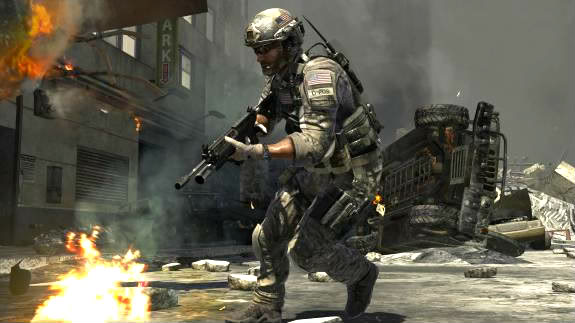
The game has received almost universal praise, and for a reviewer to be so far off from the mainstream, I wanted to know how it affected him. It being a review, I just assumed there would be justification for the score.
I was mistaken, and what I read was about three pages of the writer telling it like it is and expressing his disinterest in the franchise and anger towards an industry that, in his eyes, was too afraid to say the truth. I was sad.
As someone who loves writing about video games and someday wants to make it my profession, it seemed as though the morals and beliefs I had about the industry had been disproven right before my eyes.
It wasn’t a review; it was a diatribe with a score attached. I’m not one to complain about review scores or reviews in general, but a blatant editorial treated as a review was something that angered me. Little did I know that how I think about reviews -- and gaming journalism in general --would be tested in the following days.
I always justify reviews as strictly opinion of the writer and not necessarily anybody else...but are they? It seemed hypocritical to scream for objectivity in journalism but to say it’s the opposite when it comes to a review.
I read too many comments on too many reviews for a multitude of games, and one fact became clear: readers want different kinds of reviews. For good or bad, it would seem that the overwhelming majority of comments on almost every review were dissatisfied with the end product. "Why didn’t Z receive a perfect score?" "Why was Q scoring so high?" And the most interesting yet possibly most reductive: "Why did X score higher that Y?"
The last issue was addressed almost perfectly by Adam Sessler of G4TV in an episode of Sessler’s Soapbox. Adam examines the problem far better than I ever could, and I would implore you to go watch his video. He makes valid arguments for the futility of a comparison between most likely incongruous things.
If a review for Uncharted 3, for example, gets a 4 out of 5 and Modern Warfare 3 gets a 5 out of 5 does that mean that MW3 is a better game? It is a hard question...and one of the areas I seem to dissent from Sessler and his rather well spoken idea.
The question shouldn’t be is MW better by comparison, but rather, does the comparison accomplish anything? Without playing both games, how can you know which one you like more? And isn’t that the whole point?
If I like a game that is panned by critics, does that make my appreciation incorrect? Of course not. I love Nier by Square, a game where the majority of mainstream outlets gave mixed or negative reactions. I don’t care if it gets a 5 out of 5, a 3 out of 5, or a 1 out of 5; to me, they are wrong. However, I should not expect any reviewer, or any gamer for that matter, to think the same way I do or experience the game the way I did. I could love it for reasons well beyond the game's actual quality.
I played Nier not long after graduating college and found myself in an anemic job market; I had nothing else to do. I was sad and upset about not being able to find a job, and I felt like I hadn’t accomplished anything. Along came a title that captured my attention, and if even for the brief time I played, Nier allowed me to forget about my situation and help me through a tough time.
How in the hell would you expect me to review the game without drawing on that experience? Would you even want me to try and detach myself from it in order to give an "unbiased" opinion? What would be gained? This thought lead me back to my main argument for why I think we put too much stock in reviews based on scores: Reviews are the exploration of a inherently qualitative experience. Can you not see the issue there?
My infatuation with the game had just as much to do with who I am and where I was as graphical quality and the combat system. Detaching myself from this fact would not increase the value of my review; it would totally devalue anything I had to say.
It could be argued that I just shouldn’t review the game, and it should be given to someone else...but is that really the answer? Don’t you want to hear about somebody's experience with a game and not just about the game in general?
It is very fair to say that reviews should be solely based on the facts, but who really cares at that point?If all you want is technical specs and a list of modes, you can just read the back of the box. I always thought that readers would find a reviewer with whom they had similar tastes or one they grew to trust. Instead of looking for a high number attached, they would read the review and form their own opinions about the game -- they, in turn, would add something to the discussion not just about the game but about gaming in general. Lofty expectation, I know, but I truly believe in it. We have to get away from this scholastically hollow means of discussion.
I love reviews, and I love games; but I do not always need the two to be in sync. Too often, I see review scores taken as a validation of one’s opinion and not used in the way I wish they were. Who really cares if you like a "bad" game or a "good" game doesn’t interest you? Your experience playing the game is all that matters. It isn’t the reviewer's fault, however, if he doesn’t see the game the same way you might. No one is wrong in this case because opinions are not fact. And who is anybody to claim dominance over another?
If reviews are just meant to be buyer's guides, then what is the point of taking the time and spending the energy to write one? I never want anybody to spend money they will regret, but just remember that reviews are written by people.
Instead of looking for scores that match your preference, find one that raises issues or talks about the game in a way that you find intellectually stimulating. You may be surprised with how much you agree with a reviewer even though you think the score is off. At the end of the day, quantified quality isn’t perfect.