Separator

Death in video games: A minor inconvenience made major

Tltwit
Wednesday, February 09, 2011
EDITOR'S NOTEfrom Layton Shumway

Tim's got some interesting thoughts on the way modern games implement death and failure. As he points out, we've certainly come a long way from plugging quarters into arcade machines. I'd love to see more innovative ways to die...and to learn from that death.
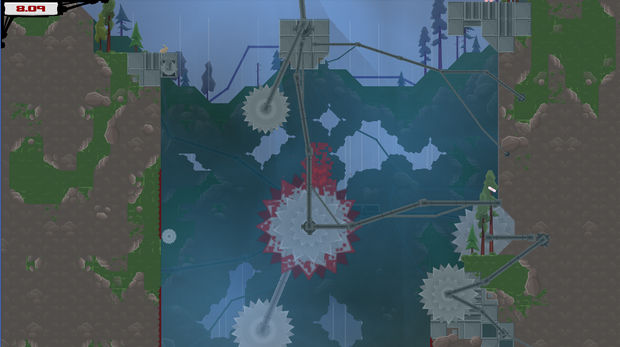
Super Meat Boy

Where, O death, is your victory? Where, O death, is your sting?” - 1 Corinthians 15:55

A video game is often a great way to thumb your nose at mortality. Unless you're playing the depressingly literal “One Chance,” every defeat comes with the promise of another attempt. The darkness that your demise plunges the world into only lasts for the number of seconds you wait before hitting the "continue" button.

Unfortunately, virtual immortality can feel like a curse depending on how a game functions through each failure. Losing should be enough of an inconvenience to discourage it but not so frustratingly convoluted that players actually count the time they're not progressing through a game against it. Here are a few basic suggestions developers should consider to make a player's time in limbo a more pleasant necessity.


Get back to dying ASAP

So you failed that challenging area...again. Ideally, there should only be time to take a deep breath and get back in. Got enough time to wipe the sweat off your controller, ponder a bit, glance around, give your controller a few curious sniffs, and jot down a note to buy some cleaning wipes next time you're at the store? That's getting too long. The wait should provide a moment to gather one's composure, not feel like a penalty box.

The turnaround speed between each grisly, squishy death in Super Meat Boy will spoil you for any other game. The character will respawn instantaneously at the starting point after each failure, no questions asked. In a clever move, your body count climbs almost covertly until you finally finish the level, upon which the game replays all of your attempts at once like a meaty storming of Omaha Beach, waves of characters destroyed until your one lone winner emerges. Fun and humbling.

You can't keep a good chunk down.

On the other hand, Castlevania: Lords of Shadow is a beautiful game in several respects, but picking yourself up after each defeat is an ugly affair. Not only does it throw in the unnecessary step of forcing you to select “Yes” when asked if you want to restart from the last checkpoint (the default is “No,” as if a button masher once stole a developer's girlfriend), the checkpoint sometimes drops you back before some kind of climbing scene or balancing act. These likely are not the sections that killed you, but they must be relived anyway every time you want to have another go against the enemies who slaughtered you. It's a frustrating toll to pay for failure.

Give us something to do while dead

So you have a fancy game and need the time to re-render the world each time a player bites it. Fair enough. Just throw up some tip screens while they wait. Everybody loves tips, right?

Wrong. Tip screens are like the Clippy of the game world. “I see that a giant wolf ate you again. Did you know you can press B to dodge attacks? When your health bar is low, find something to recover!” Playing Snake in a YouTube window feels like a better way to spend time than watching the same help slides over and over.

If you want to help the player, let them practice. Bayonetta delivers brilliantly on this front, providing a simple black backdrop and a huge list of moves to try. It's such an easy concept yet so engaging -- you'll wonder why more games don't utilize something similar. Sometimes I thought the loading time ended too soon, which should tell you something.

Just kill death?

Why does a game like Super Mario Galaxy still have a “lives” system? It's simple to collect them, and each world has plenty of checkpoints where you can restart while you still have them. And on the occasion you should run out, your big penalty is...getting sent back a bit to the start of that particular stage?

Sometimes it feels like games treat death in a certain manner only because our minds have been conditioned that way. When Entertainment Weekly writer Jeff Jensen was criticized for naming Kirby's Epic Yarn a “Worst Game of the Year,” he considered the absence of a “lives” system a detriment:

“To be clear, it's like Kirby's Epic Yarn doesn't possess any degree of difficulty. Some levels do require some puzzle-solving and nimble button-pushing. But there are no stakes. You can't 'die.' There is never the threat of a 'game over' like Pac-Man or Donkey Kong.”


Kirby: The Anti-Meat

I find it somewhat interesting that Pac-Man and Donkey Kong, two original arcade titles, would come to Jensen's mind in this case. They can be undoubtedly challenging games, but was that challenge installed for any specific means other than getting the player to slip another quarter into the machine? In an age where the arcade is all but dead, does staving off death still have to equal the most worthy challenge?

BioShock essentially makes you immortal through the majority of the game, sending you back through Vita-Chambers with almost Super Meat Boy speed. It did little to stop the game from being praised as a worthy and engaging title. Kirby's Epic Yarn, in its own way, eschews death and places its challenge in collecting beads and items to open up new levels. Get hit and instead of your life bar going down, you lose merit and reward.

Is it still easy overall? Yes. But in this respect it creates the perfect family game, letting younger children play without the worry of ending it too soon while still establishing enough of a bar to keep older players interested. Both games did what they set out to do without making death the primary threat.

Death and defeat still have their roles in games today, but they are not the anchors they once were. Game worlds and designs have become more complicated since the early days of 1-UPs and Konami codes. Modern games should demand a certain effort from players without dangling a number of remaining lives over their heads.

Can I get an amen to that?

 
Problem? Report this post
TIM LATSHAW'S SPONSOR
Comments (5)
Robsavillo
February 10, 2011

Your mention of Bioshock's vitachamers is interesting specifically because critics derided that mechanic vehemently. Vitachamers were a very divisive aspect of the game. Most of Bioshock's praise relates to narrative rather than gameplay (again, critics took issue with the game's streamlined approach to System Shock 2's ideas).

As far as death in games is concerned: What we're really talking about is failure and what type of consequences a designer wants to impose on the player. The lives system gives you several chances, then forces you to start the game from the very beginning when you run out. Yeah, arcade design certainly plays into the mechanic, but the fact that you can earn more chances to continue means that some semblance of challenge is woven into the design.

Personally, I'd prefer that more games do something interesting with death/failure by tying those ideas directly into the core game design. Demon's Souls is a great example, where death handicaps the player (50% reduction in max health) but also shields the player from being invaded by another in PvP and opens up the player to joining another's game in coop (where you don't have to risk anything at all). Conversely, before death, you can summon extra help to stave off an attack from an invading player. You also won't lose progress (in the form of found items) upon death, and you have an opportunity to reclaim lost souls (the game's currency, experience, and most abundant resource). But death does send you back to the nearest archstone (each level is split into several stages by archstones) and all enemies respawn. Death fits in nicely with the game's lore. The whole system works extremely well; in this way, death is a central tenet of the core game design and provides challenge and real consequences for failure, thus encouraging better play.

I think most games are too easy on the player, which has the effect of boiling gameplay down to attrition. If there are no consequences for death/failure, why allow me to fail at all? Why not make me invincible? Taking your argument about the influence of arcades on the lives system to its logical extreme, finite health is just as archaic. (So is finite ammuntion; hell, most shooters these days give you so many bullets that you might as well have infinite ammo at this point. But I digress....)

Tltwit
February 10, 2011

@Rob Savillo: You raise some good points. 

I wasn't exactly trying to relate to the "arcade mentality" throughout my piece. It mostly just intrigued me that Jensen went to two arcade classics when he thought of death and challenge. The inclusion of extra lives in many arcade-like titles is worth bringing up, but I would argue they are there to help the player feel like he or she is making some sort of progress against inevitable death. You would want to keep trying if you knew that reaching a certain point/skill level would give you some sort of reward or extended play, even if the game is made to have all but the best lose those extra chances shortly afterward. I'm not saying anything is necessarily wrong with an arcade-like setup; just that it doesn't have to be the only or "standard" concept through which all " real" games should be compared. 

I unfortuantely haven't played Demon's Souls yet, but they way you describe its treatment of death sounds creative and purposeful. It forces you to replay part of the game, but in a different way. Things sound like they have actually changed for the player somewhat instead of forcing him or her to relive the same points the exact same way until they do exactly what the developers want them to. I like that.

I also agree that, if a game wants to make limited lives, health and/or ammo part of its experience, then it should. I was never bothered by ammo management or ribbon finding in Resident Evil because I knew that was a solid intention of the game. But does it mean a game MUST have those kinds of limitations to be considered a "real game"? MUST challenge always be a requirement in a good or worthy gaming experience? Of course not. The respawning effect in BioShock irked some people, certainly, but when I played the game, it didn't become to me about creeping along with the threat of death over my head as much as exploring the world, learning the story, and finding new and interesting ways to mess with the enemies that populated the world. Perhaps it makes me a bit "simple" seeing how long it would take to take down a Big Daddy with just the wrench, but I'll admit I had fun doing it and it became incorporated into my view of the BioShock world.

Simultaneously, I can see how players who really thrive on challenge may be frustrated by the wave of more "casual" experiences and how the industry as a whole seems to be tilting away from what they love. I certainly don't want that aspect to disappear from gaming as it's certainly a necessary pillar and we do need "hardcore" challenges. I just don't think it's the primary support anymore. 

Shoe_headshot_-_square
February 11, 2011

I like these tips! And I never played Bayonetta beyond the demo...that's a really neat feature.

Captgoodnight_1a
February 11, 2011

Great article! To add to your examples of more creative ways that the subject has been approached, I'm also reminded of what Prey had done. Dying there had you sent to an afterlife-type area where you "fought" your way back to life by shooting spirits. Depending on how well you had done, you would return to life with some health or spiritual energy. Failing to do well in this segment would return you to life, albeit at a potential disadvantage. Still, it wasn't as popular as it was hoped to be and more than a few players found it a distraction to simply getting back into the game.

Another neat example is how Heavy Rain treated death by allowing the main story to continue on if you had allowed one or more of the main characters to die along the way. The price for failure in this regard is the loss of a potential story thread and an ending that may not be satisfactory to the player. "Doing better next time" here wasn't so much to score more points or finish a level if your curiosity about the lives of its protagonists was far more important.

In other games, though, such as the Wizardry series, death is treated as an optional "hardcore challenge". Wizardry 8's Iron Man mode, when activated, can't be changed for the current game you are playing. If the entire party dies in this way, the game will also wipe out your save file. Ouch. But for some, it's the ultimate rush to play that close to the edge.

Rob had also mentioned Demon's Souls. One other, slightly unorthodox, reason that I should mention for dying in Demon's Souls is to avoid invasion by other players. In this case, more than a few players actually use death as a pre-emptive "block" to avoid PvP situations where another player might randomly drop in to kill you for your souls if you are "alive". While it might be easier to avoid this by simply not being online, a large part of the game's fun - and the eerie sense that a stranger may challenge you - make it compelling enough to take the risk, adding to the overall ambiance of its experience.

Redeye
February 14, 2011

I agree with you on most points. People don't really think about the death mechanics in their game that much it seems. They just use what other people have used in the past. Then when people betray the past's mechanics people claim that it makes the game too easy.

Honestly I never really got that, if a game isn't boring I never really worry about how easy it is, still that may just be my personal taste in games.

You must log in to post a comment. Please register if you do not have an account yet.