Home
Home

If you've ever been curious about why From Software would even consider making such a game as Dark Souls that rejects so many modern design conventions, Grayson may have an answer for you.
 By now, there have been several articles on the recent hit Dark Souls, a game currently lauded as one of the most difficult ever designed. This difficulty, brutal as the size of the very first boss, is easily the most debated topic. For many who cry foul against such unforgiving odds, there are those who seek to embrace and champion it, claiming it harkens to a time when all games were just as quick to challenge the player.
Above all else, though, people want to know why. Why make such a difficult game? Why play it, or even more, why try to beat it?
With Batman: Arkham City just released yesterday, why continue subjugating oneself to a near-constant stream of deaths when the same time could be spent uncovering a brilliantly woven tale of Gotham’s most insidious villains seeking to bring the Dark Knight to his knees? The answer, I think, is where many gamers might not think to look.
Released back in January of this year, Amy Chua’s Battle Hymn of the Tiger Mother received a fair amount of controversy for its views. In the book, Chua details her experiences as a mother using a very strict, ethnically defined "Chinese" method of child-rearing. Wrought with anecdotes of denying sleepovers, birthday parties, and even bathroom breaks during piano practice, Chua’s ultimate purpose was to show how Eastern parenting methods hold academic excellence paramount to a child’s self-esteem -- something she describes as important to "Western" parenting.
Now, the idea of comparing these two objects might seem far-fetched, but allow me a moment to elaborate.
Context
It’s relatively safe to say that as of the past several years, video games have gotten easier. Whether it’s a wider selection of difficulty modes, a growing plethora of checkpoints, or an increase in tutorials that gently help the player master new abilities before continuing on, there’s no doubt that games have slowly grown softer in order to include a wider audience.
While that is by no means a mistake on the designers’ part, it isn’t without certain side effects. If you were to ask an average gamer to beat a few levels from Mega Man 3, the required trial-and-error needed to master each stage would often prove to be too much for him. Most would become frustrated -- even outright angry at times -- and some would probably just flat out give up. But to those who grew up in the older generations of gaming, this was the norm. In order to avoid the dreaded "game over" message, players needed to practice.
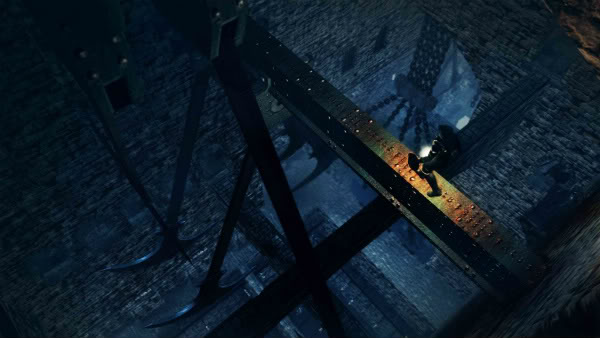
Much like how Chua compares Eastern methods of parenting to Western, Dark Souls is a stark challenge to what most gaming has become. Without mercy and demanding perfection at every moment, Dark Souls is not a game meant to punish but to discipline. In a sense, the difficulty is almost a side effect of the philosophy From Software seems to implement...in that they built an excellent game that necessitates an equally excellent player. As a pianist must slave through hours of mistakes and failures to master Islamey by Mily Balakirev, so too must a player spend countless hours to complete even one level of Dark Souls.
The anti-rage
In one account when one of her daughters acted out in disrespect toward Chua, she quickly responded by calling her daughter "garbage." Many parents were outraged to hear Chua defend her words proudly as her strict father called her that in a native dialect on several occasions while Chua grew up. Chua later explained that calling her kids such aggressive names did not damage their self-esteem but only instilled shame and guilt in what they had done. Her daughters, as Chua came to learn herself when she was young, eventually understood how their parents' demands were proportional to how much they respected them as family. Chua knew her daughters could do better, and more importantly, so did they.
It might seem unorthodox to fight fire with fire, but the practice is quite common in video games that exemplify difficulty. By now, many players can probably attest to a point at which they, for lack of a better word, "raged" at Dark Souls. Maybe they died just when they had the boss in his final moments, or they fell down the same hidden pit for the umpteenth time. For one reason or another, many enter that phase where they play Dark Souls in anger, acting in disregard of the usual precision required to survive. And like a stern parent with no tolerance of insubordination, the player dies even quicker than before -- usually from some enemy or obstacle they already mastered long ago.
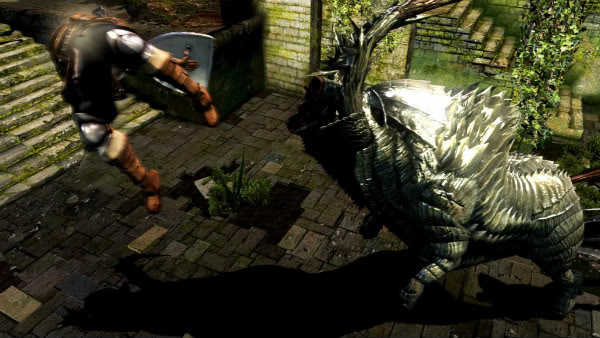
This isn’t by mistake. What many gamers touched upon while playing Demon's Souls back in 2009 was this unusual sense of understanding between themselves and the design of the game. Yes it was difficult, but players eventually understood they had the tools to conquer it. They may have reached a point somewhere in the game that tested their patience to the ultimate level, but players knew they would have never reached that far if they didn’t have the skill.
It was after my own "rage" moment that I finally calmed down and realized that this game respected me enough to continuously challenge me from level-to-level. And to conquer it, I needed to return that respect. Dark Souls has simply taken that same method and perfected its relationship to the increased difficulty.
I realize that comparing a video game to literature can, at times, seem obscure or too high-winded for usual gaming articles. My intention here is not to be another writer that excuses Dark Souls' difficult nature but to hopefully look at its design from another angle that may help better explain why From Software chose to amplify their title to such chaotic levels of hard. No matter the reason, I can honestly walk away from Dark Souls knowing that I enjoyed myself even more than my time with Demon's Souls, and I hope From will continue their challenging trend.