Separator

Forgiving Japanese Games

Default_picture
Sunday, April 11, 2010

On a recent IGN Beyond Podcast (Episode 130), Jessica Chobot, Colin Moriarty, Ryan Clements, Greg Miller, and Sam Bishop compared the Final Fantasy XIII and Mass Effect 2. Whether the comparison was justified or not, they went ahead and did it -- and here's what I have to say:
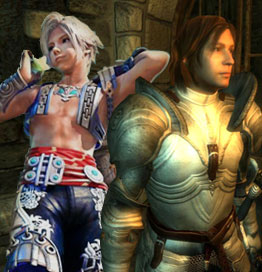
During the course of the show, there was a point where Jessica Chobot mentioned the voice acting in Final Fantasy XIII, something for which Ryan Clements later had to justify as a notorious fault of Japanese games translated for a Western audience -- and that in relative terms, Final Fantasy XIII actually did a competent job. So this got me thinking. Do we accept and purchase Japanese games, on the basis that they provide that certain characteristically Japanese experience that cannot otherwise be found in Western games -- and forgive Japanese developers as a result for their traditionalism and resilience to change because they provide such an experience?
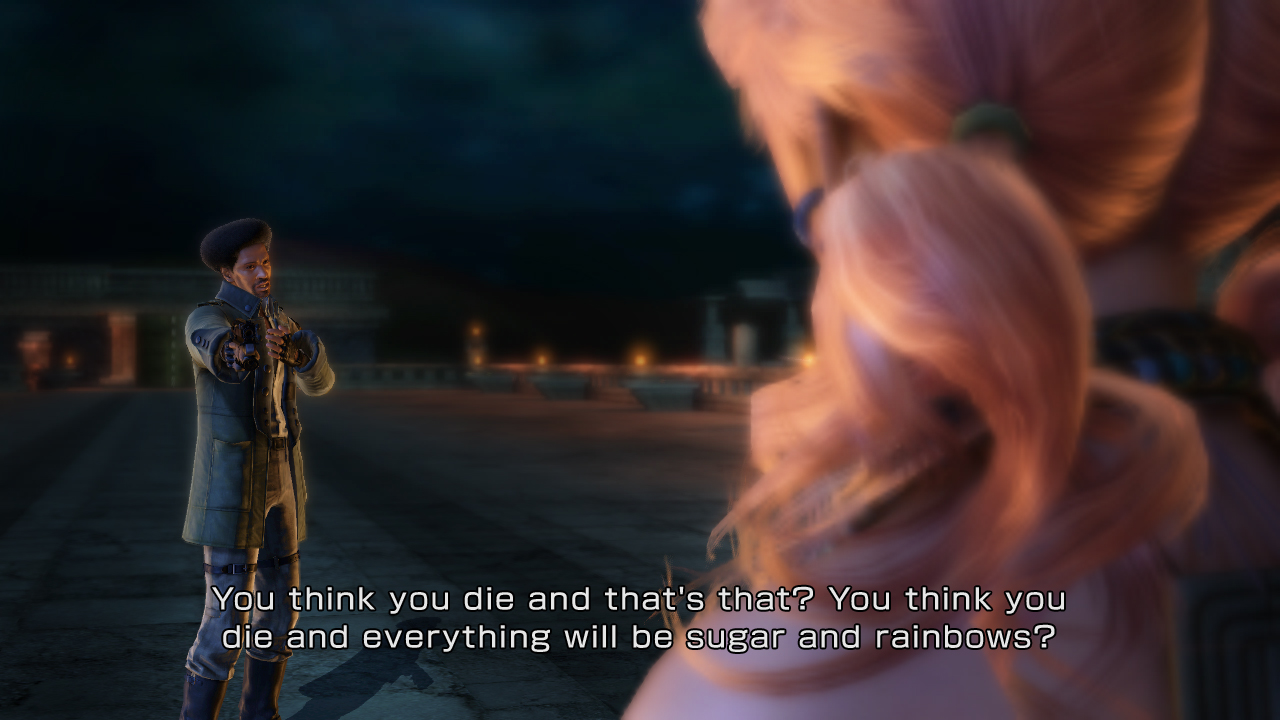
In other words, is the reason Japanese-style games exist today due to the fact that they provide such an experience, albeit, barely changed for ten years, that appeals to a core group of fans that very well may never die out?

I feel that with my experience playing both Final Fantasy XIII and Mass Effect 2 (each has been admittedly rather limited), I approach each game with an entirely unique mindset. With Final Fantasy XIII, I treat the cut scenes as if they were anime, and listen to podcasts when slogging through the linear world. Whereas in Mass Effect 2, I’ll find myself actively engaged, listening, and playing as my Commander Shepherd. Don’t get me wrong though – while both may provide very different experiences, each game has its own merits, and seem to satisfy me in distinct ways. 
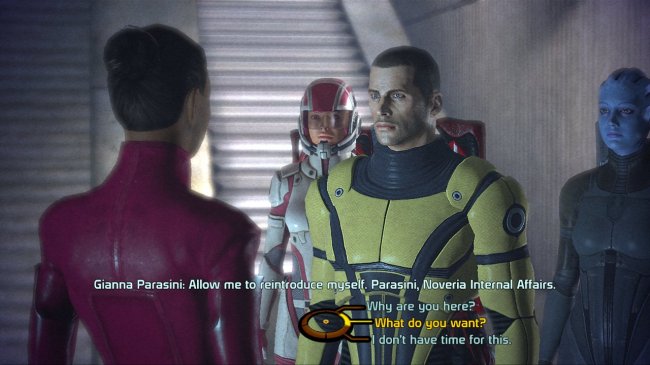
In the aforementioned podcast, another opinion Jessica Chobot voiced was that “Knowing that they have an English market coming out, why wouldn’t they just find a writer that could write for the English market … and do voice acting that could do it for the English market”.

Personally, I feel this sentiment almost couldn’t be any more narrow-minded, (which is ironic, considering that she later went on to use that same phrase when describing Greg Miller’s opinion regarding 3D television technology minutes later). The whole draw to Japanese-developed games is not only what they do well, but for me at least, it’s the quirky ways Japanese games are unconventional by Western standards.

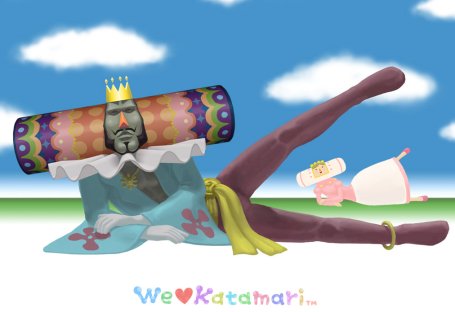
Take an obvious example, the Katamari series, a set of games that are as enjoyable as they are unusual. From the ridiculous, ballerina-costumed King of Cosmos, to the out of this world music (no pun intended), Katamari Damacy alone had the effect of comedy and bewilderment on gamers. Such a sensation is a dire rarity from Western video games, which is one of the many reasons Japanese games have such a dedicated following. 
Listening to this episode of Podcast Beyond had me reflect that while playing Final Fantasy XIII, I ended up forgiving many of the otherwise melodramatic and cinematically unacceptable (by Western standards) cut scenes. I think this is due to the way fans of Japanese media consume their medium, which is far less as involved because it’s likely he or she is aware of the fact that the story is so convoluted, that there’s almost no way of understanding it. So gamers get into this mindset where they don’t bother over-analyzing what exactly is happening, but rather, merely enjoy the nonsense as it unfolds.

A fitting example would be the cut scenes found the Metal Gear Solid franchise – even Kojima himself has gone on the record, saying that he can barely grasp what goes on in the franchise. In a post on ThatVideoGameBlog.com, Kojima has said, ““…I personally get confused too about the whole timeline and saga of Metal Gear Solid. This is especially tricky when you create the future first and then go back in time to create something new. There are a lot of small aspects where sometimes it doesn’t match completely.” This truly isn’t all that surprising. Did anybody actually understand anything that was going on in Metal Gear Solid 2: Sons of Liberty? If Kojima can’t figure it all out, we’re all doomed to a perpetual state of confusion when it comes to all things Metal Gear.”

So knowing this, there’s clearly some reason why we enjoy Japanese-developed video games. Whether it’s the risk-taking, the lack thereof, or that classic Japanese RPG style Japanese video games have come to represent, fear not!, Japanese video games are here to stay. With their characteristically shameful dialogue, punitive boss battles, whiny, introverted teen characters, and all, I don’t imagine Japanese games going anywhere despite their seemingly archaic qualities, which may lead many a famous video game analyst to go on the record, claiming that Japanese games may well find themselves eating the dust of the Mass Effects, Fallouts, and Modern Warfares of this largely western-based gaming industry we’ve come to recognize.

The first game I ever played was Japanese, I play Japanese games to this day, and I will no doubt continue to do so for as long as I am a gamer!   

Yes! 

 
Problem? Report this post
BITMOB'S SPONSOR
Adsense-placeholder
Comments (9)
37425_412468101714_719286714_4780931_4814727_n
April 11, 2010

I find it interesting that you use the term "narrow-minded" several times during this article, considering that seems to be exactly what your view of Japanese gaming is. Several times you claim to speak of all Japanese games when, in reality, you are only speaking about some of the quirkier, more niche titles. You seem to overlook series like Resident Evil and Street Fighter, which have progressed their respective genres heavily and had vast mainstream success, when calling out all Japanese games as archaic.

Default_picture
April 11, 2010

To clarify, I used the phrase "narrow-minded" a grand total of one time.

I will concede the fact that both Resident Evil as well as Street Fighter have experienced "vast mainstream success", but how exactly have each of those progressed their respective genres? Street Fighter 4's new art style? Resident Evil 5? Give me a break! I'd believe you if you were to cite the leap to Resident Evil 4, but not all that much has happened in the franchise since then to be honest.

 It seems like you gave up reading my article half way through, and the second you saw the phrase "narrow-minded", you just had to write your comment.

Besides, did you not get the sense that I was referring primarily to Japanese role-playing games? I guess I'll have to make that explicitly clear next time.

And I think you, and much of the BitMob community will agree with me that many of the JRPGs that come out in this day and age generally experiment less than most Western RPGs in terms of story-telling and gameplay mechanics.


Different strokes for different folks, I suppose.

Pshades-s
April 11, 2010

I can't say much about JRPGs as I haven't played one since the 20th century, but as a resident of Japan I can assure you that Japan makes TV shows, movies and games for Japanese customers first. I'm sure that Square Enix knows the series is popular abroad, but in no way does that affect their creative process.

As a consumer, I definitely "forgive" Japanese products for their shortcomings because I am aware that their media is in no way made with me in mind. However, there is only so much I am willing to overlook before I lose interest - hence why I no longer play JRPGs.

So did I love Resident Evil 5 despite its one-dimensional plot and acting? Yes, more so than I would a US-developed game with similar stupidity. I'm not saying that Japanese games don't have to evolve, because they do, but I definitely view them differently because I know they are produced by people who are very, very different than me.

Bmob
April 12, 2010

"Many JRPGs generally experiment less than most Western RPGs in terms of story-telling and gameplay mechanics." (paraphrased slightly)

I disagree. When you look at fighting games, the control schemes are often very similar, whether it's swords and sashes or fist-to-fist, characters, environments, pacing, and attacks are often the only changes between franchise to franchise. FPS's suffer from the very same monotony. Sure, they've got different weapons, different maps and different pacing, but on a fundamental level, there's little that separates Quake, Call of Duty and Doom.

But FFXIII has players following a strict story for much of the game, alternating between characters, and slowly introducing the gamer to new systems. Design is striking, realistic, and in large parts, Western. Compare this to Magna Carta II, which has a very objective approach, more akin to an MMO than an RPG, and an almost caricature-like art style which really sets it apart from others. And there aren't a great deal of similarities between Enchanted Arms, Lost Odyssey and Kingdom Under Fire: Circle of Doom, especially when compared to those between more popular Western games.

There184
April 12, 2010

I loved Persona 4 and Shenmue 2 because they come from an alien (to me) culture. I forgave their shortcomings because they were unique and had appealing writing, not because I wanted something Japanese. I loved and forgave the flaws of Mass Effect and Fallout 3 similarly.

The exploration of a new cultural setting is the important bit to me, but it can be real or fictional.

Franksmall
April 12, 2010

I am with Alex on Persona and Shenmue, but do wish I didn't have to forgive weaknesses. There were really obvious areas in both these games that could have been polished to make them more player friendly. I am noticing the same thing with Yakuza 3. It is really good, but also has things like stiff animation, unclear direction and other elements that could have been polished out.

Default_picture
April 12, 2010

Sandy Morley, I don't mean at all to be rude, but let me bring to your attention how obviously flawed your argument is:


""Many JRPGs generally experiment less than most Western RPGs in terms of story-telling and gameplay mechanics." (paraphrased slightly)

I disagree. When you look at fighting games, the control schemes are often very similar, whether it's swords and sashes or fist-to-fist, characters, environments, pacing, and attacks are often the only changes between franchise to franchise. FPS's suffer from the very same monotony. Sure, they've got different weapons, different maps and different pacing, but on a fundamental level, there's little that separates Quake, Call of Duty and Doom."

Did you not get the part about RPGs?

It's okay, I forgive you.

Default_picture
April 12, 2010


Alex Martin, with regards to what you said, "I loved Persona 4 and Shenmue 2 because they come from an alien (to me) culture. I forgave their shortcomings because they were unique and had appealing writing, not because I wanted something Japanese. I loved and forgave the flaws of Mass Effect and Fallout 3 similarly.", don't you agree that Western standards are shaped by Western games, rather than Japanese games? Do you remember a time where that wasn't the case? Maybe the 90s, when Nintendo and Sega ruled the gaming space, and therefore shaped gamers' expectations as to what might constitute a "quality" game?

As Western game developers have ran with the lessons learned from Japanese game design, and refined, and improved their techniques over the years, while Japanese games, and more specifically, Japanese RPGs seem to have in relative terms, gone by the wayside in terms of popularity, as they have become increasingly more reliant on convention. So to a Western consumer, a Western RPG is simply that much more attractive, knowing that the experience will likely be more streamlined, battling bosses will no longer be a concern, and dialogue and story will be generally more understandable and involving, and happily, far less melodramatic.

With being said, by a Western gamer's perspective in this day and age, do you not get the sense that the story issues one may experience are both far less as noticeable, and detract less from one's overall enjoyment of the given game? Whereas in Japanese games, I've found myself getting hung up by countless issues in terms of difficulty and the lack of intuitive gameplay.

And as I close, am I alone in thinking there's some sort of intangible quality Japanese games generally (and certainly not always) boast, for which I have often been attracted to Japanese games over Western ones?

Bmob
April 13, 2010

That'll teach me to read before replying, eh?

Either way, JRPG's got a lot of stick for not progressing as much as Western games, but whole genres stagnate completely, and don't get any of the bad press. Fighting games still haven't come out of the arcades, but how many times do you see people huddling around a Street Fighter booth these days?

You must log in to post a comment. Please register if you do not have an account yet.