Home
Home
As a reformed game collector, I can tell you first hand that Ross' advice is totally solid. If you're thinking about jumping into the hobby, do yourself a favor and check this article out.
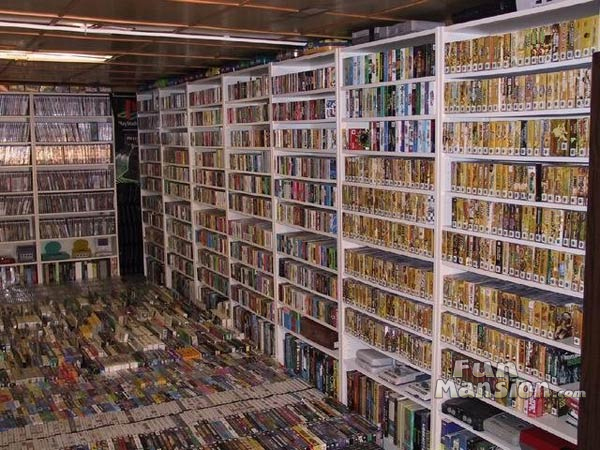 Collecting games can be an expensive hobby. For most enthusiasts, it begins with a few trips to the local game store. It's also possible that it starts when you find something shiny while looking for gifts on Amazon, or maybe it happens when you realize you still have your first Nintendo Entertainment System stashed in a closet at your parents' house.
You understand that at some point, someone paid full price for that console and its software -- unless they caught a sale or purchased everything after the Super Nintendo arrived. This realization makes it hard to let anything go, which leads to a de facto game collection.
But for those of you who are new to the hobby, you can use this article -- the first in a series -- as an easy-to-follow guide to collecting games.
The focus of this post is on the prep work that you should undertake when beginning. It's very easy to buy whatever game-related items you see and fill a closet with them, but it's much more cost effective and space efficient if you start with an end goal in mind.
1) Make lists and be specific
If you start buying everything you see for your old Nintendo or PlayStation, you will end up with little more than a scattering of (probably) valueless games, accessories, and preorder swag. This means that you should begin by figuring out what it is you want to collect. Be specific, and don't be afraid to have more than one list. But make sure you do have a list. Personally, I have numerous collections going at any given time.
For a long time, I’ve been adding games to my Dreamcast collection. Occasionally, I’ll get sidetracked by much more specific things, like purchasing complete copies of every Final Fantasy release. I almost always keep an eye out for good deals, though, regardless of what they are. At used-games stores and flea markets, people often don't know what they have.
Recently, I was able to purchase a great collection of like-new PlayStation role-playing games, with their original strategy guides. The stack included highly sought after gems like Suikoden, Suikoden 2, Valkyrie Profile, a pre-Greatest Hits copy of Final Fantasy 7, and a handful of others. The stuff was in pretty great shape, which leads me to my next point.
2) Figure out what level of quality is your personal minimum for used products
 Before you start picking up deals like the one described above, try to figure out what level of quality you find acceptable. This greatly affects the prices you pay for items. When you head out into the wild, you’ll find that people don’t always treat games the same way you do.
It's also helpful to make a list of some things you want to buy. On your list, make note of any additional things to look for with each game. Sometimes, pack-in materials can make that surprising find extra special.
If you want a "complete" copy of the game, be on the lookout for original boxes, instruction manuals, maps, mail-in cards, and epileptic seizure paperwork. A great resource to use if you are interested in what was originally included in the packaging is Ebay. A quick search often yields hundreds of results, with pictures that tell the story of a game’s retail history.
An unopened copy of a game is always the most valuable of its type. If you're looking to display your games, you may want to check out these more expensive options. On the flip side, if you’re more interested in playing than displaying, you may be OK with settling for just discs or cartridges. Playable condition is a far cry from “like new” or "mint."
When looking for old cartridges, you’ll likely come across items with missing labels, stinky cigarette odor, or corroded contacts that are ready to spread the disease to any console they touch. Discs come in varying conditions, too. If you're only in the market to catch up on the classics, it may not be a bad idea to find a local shop that can lightly buff unplayable discs for you. This will allow you to be less picky when buying games. (Note also, however, that buffing a game instantly and drastically decreases its value.)
3) Familiarize yourself with the "collecting quirks" of products you're interested in
When searching Final Fantasy 7 on Ebay, I came up with almost 3,800 results. Each result features many slight differences. Since this game sold a few million copies at retail, it had numerous print runs, with minor variations. The most sought after version -- and the most commonly overpriced -- is the first print run, which includes a misprinting of the word “masterpiece” in the text describing the game on the back of the box.
In addition, that copy of Gyromite in the previous picture wasn't smashed for no reason. The large black plastic rectangle is actually a Famicom converter. It allows the top chip, which is a Famicom copy of Gyromite, to connect to the bottom chip, which is a standard NES chip that plugs into the American system's 72-pin connector. By removing the top chip and plugging in any Famicom game, you can play Japanese games on your American console. Most copies of Gyromite don't have these converters and are worth pennies; the ones that do sell for $20.
These are just two examples. Dozens of games have weird quirks that can make them more valuable.
4) Organize, organize, organize
So you've shopped till you dropped, and you've just arrived home. You're going to need a place to store all your purchases. While a closet is a good start, you will eventually outgrow it. No argument: If you are a serious collector, this will happen. And closets don't make great display cases, anyway!
Shelving of some sort will likely be your weapon of choice. Start small and move up as your collection grows. Begin by adorning your desk with your new-found treasures. Then find some shelves that tie up the room and begin filling them with all sorts of trophies from your hunts.
But be careful! You never want to forget who you’re living with. If you're a bachelor (or bachelorette), you don’t have anyone to answer to, so you can adorn your walls with damn near anything. But if someone comes over that you want to impress -- perhaps a person of the opposite sex -- you may not want to be showing off your Dead or Alive Extreme 2 calendar.
If you’re living with someone, keep their feelings in mind, too. Significant others, parents, and roommates may not enjoy seeing your gaming memorabilia. Do your best to keep them happy, but at the same time, try to find a middle ground. If you share your love of games with those you share your dwelling with, then this may not come as much of a difficulty.
It's also worth noting that you should be aware of how the people you live with treat their things. If they are excessively sloppy or cavalier with their own personal effects (or if they are children), you may want to take extra steps to ensure that mint copy of a game doesn't suddenly turn up on the coffee table as a coaster.
Finally, it will be nearly impossible to display everything you collect. One of the best lessons to learn is that a good strong box can go a long way. Make it accessible, so that you can play your games, but easy to store when you don’t have enough space. Making the best use of the space you have is important.
In the next post, I’ll talk about some specific ways to find the best deals, as well as how to navigate the labyrinth of the Internet and come out happy with your purchases.
Please leave comments if there is anything you’d like to add, or if you just want to discuss everything you find wrong with this post, the author, or the world in general. Also, check out other posts at TaiPow, or check out what our video team is working on over at our YouTube channel, TaiPowGaming. Also, make sure to listen to our podcast, the Powcast, available on our front page and on iTunes.