
Separator

Roger Ebert is a Work of Art

Pixel-justin-01
Thursday, May 26, 2011

That’s right, I said it…Roger Ebert is a work of art.
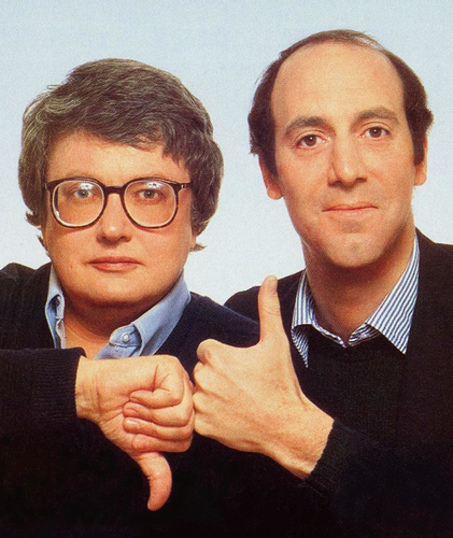
A young Ebert (left), just look at the chiseled, statuesque jaw line.
 

I mean, think about it, he has appendages that decide the fate of movies that took years of manpower and millions of dollars to put together. If you can’t please this man’s thumbs, you don’t deserve to be on the big screen…and I’m okay with this, when he sticks to what he knows, reviewing movies.


However, when he branches into other mediums that, at age 67, may never have been intended for his demographic, like video games, I feel like anything he says ought to be taken with a considerably large grain of salt. Mind you, that is not to say that a 67 year old cannot enjoy or engage in a video game, just that the odds are far less likely than those of someone 30 years younger doing the same.


In my recent Internet browsing I came across a journal post from April of last year, that made me just as angry now as it did when I first read it. Revising an argument made before, Ebert shared his thoughts on the possibility of video games qualifying as an artistic medium.


“Let me just say,” Ebert shared, “that no video gamer now living will survive long enough to experience the medium as an art form.”


Clearly, I am biased here. Obviously I consider video games an art form, or, at the least, a currently developing one. In saying that, I would challenge Ebert’s opinion using the very source material he cited in his rant, a TED X presentation made by former USC student and President of ThatGame Company, Kellee Santiago (video can be found here).


Saying that, “games already ARE art,” she compares the current state of video games within the historical spectrum of art as a medium. Current games are the near equivalent of the “chicken-scratch” that is cave paintings from the Neanderthals. While saying that Ebert is foolish to believe video games lack the potential to evolve as a medium, she does agree with him, saying, “No one in or out of the [video game] field has ever been able to cite a game worthy of comparison with the great poets, filmmakers, [and] novelists."

 

These cave drawings are clearly art--and for all Ebert knows, they are screen shots from Cabella's Big Game Hunter.


Personally, I would counter that point. That argument is terribly subjective and is determined solely by the gamer themselves.


Being an avid fan of Shakespeare I know I have, on rare occasion, found diluted Shakespearean elements within a video game to some degree. Was this the intention of the designers? Is it merely a happy accident or coincidence because of my knowledge base? Obviously that is a whole other argument, but while it may not put games on an equal pedestal with Vivaldi, Shakespeare and Chaucer, it certainly allows them access to the tools to begin molding a pedestal of their own.


Using the Wikipedia definition of art and combining it with Robert McKee’s definition of what constitutes “good writing,” Santiago develops her own definition, which I find particularly poignant in this case.


Her definition states, “Art is a way of communicating ideas to an audience in a way that the audience finds engaging.” I find that this definition, despite using Wikipedia as half of its source (something I would never recommend doing), easily applies to nearly every medium of art.


The goal of any artist is, at the very least, to engage the person who will eventually be viewing their piece in some way. I find the same applies to video games in nearly every genre. While Santiago uses purposefully artistic games like the Xbox 360 Arcade phenomenon “Braid” and the PS3 game “Flower”, I would go so far as to say even games like the original BioShock and Super Mario Sunshine back on the GameCube fulfilled the same purpose.

 

See, Roger? I don't know about you, but where I come from, paintbrush = art.


Hell, BioShock, while being something Ebert would essentially call a “brainless shooting-gallery,” not only fulfilled its purpose as a First-Person Shooter but completely redefined the genre at the same time.


While eliciting the emotions that come along with a tour through the underwater hell that is Rapture, the game also forces gamers to question nearly everything they have ever thought about the FPS genre. Typically we surrender our free will to orders made by the NPCs, and no game directly questioned our willingness to obey quite like 2K Boston’s blockbuster hit.


That’s not even accounting for how aesthetically gorgeous the graphics were.


Some of the best movies, the best books, the best paintings and drawings, and the most interesting architectural designs came from a desire to force us to question comfort and conformity. Whether it be out of the dangers of becoming too comfortable, or just the need to shake the status-quo, art, as a medium has always been the most convenient vehicle for change. So then, I ask, how could a game like BioShock NOT be considered, in some degree, art?
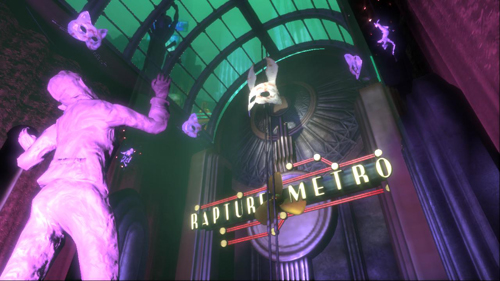
 

The attention to detail in the architecture of Rapture alone is jaw-dropping.


Well, according to Ebert, the line is drawn between art and games because, “One obvious difference…is that you can win a game. It has rules, points, objectives, and an outcome. [One] might cite [an] immersive game without points or rules, but I would say then it ceases to be a game and becomes a representation of a story, a novel, a play, dance, a film. Those are things you cannot win; you can only experience them.”


According to the Merriam-Webster Dictionary the primary definition of a game (from a list of four various definitions) is an, “activity engaged in for diversion or amusement.” At least one of the other definitions does recognize that some games have an inherent scoring mechanism. But, the primary definition, the one that your average reader will look at, and typically not beyond, not only defines games, but in my opinion could equally apply to art.


Looking at “Braid,” Santiago notes the aesthetic artistic elements as well as those in the games plot and mechanics. The ability to rewind time and correct our mistakes, thus preventing the player from “dying,” combined with a emotionally reflective storyline throughout, she argues, makes us reflect upon ourselves a large part of the experience, as one would with art. Ebert counters by saying, “In chess, this is known as taking back a move, and negates the whole discipline of the game. Nor am I persuaded that I can learn about my own past by taking back my mistakes in a video game. She also admires a story told between the games levels, which exhibits prose on the level of a wordy fortune cookie.”


Here, Ebert’s lack of experience in the field truly hinders his point. Santiago notes early on that there is a distinct difference between games like chess, football, and baseball and video games. Therefore, when he compares the rewind feature in “Braid” to reneging on a move in chess he is essentially comparing apples to oranges.


Standing behind his misconception, it is no surprise that the game’s rewind mechanic would not create feeling of self-reflection, and no amount of writing would compel him to think about his own choices, mostly because he has decided “Braid” is no more than a bad game of chess, which clearly, it is not.


Ebert’s final argument is that Santiago’s effort to define her vision of art in the 21st century, disproves her entire point. As he puts it, “she shows a visual with six circles, which represent, I gather, the components now forming for her brave new world of video games as art. The circles are labeled: Development, Finance, Publishing, Marketing, Education, and Executive Management. I rest my case.”


Rest your case, do you, Mr. Ebert? What exactly are you trying to say? Are you saying that the film industry, which you call art, does not thrive off of those very six same components? Are you telling us that Michelangelo, in painting the Sistine Chapel did not, in some cruder fashion, have to figure out the development, the financing, and the management of the project before beginning to paint? That Beethoven didn’t have to meld his publishing knowledge, his education and certain marketing savvy into his plans to write new operas? I’m sorry, but that is just clearly incorrect and insultingly pretentious of you.


In the end, Ebert feels that a gamer’s incessant search for “validation” of some sort shows that we too are unsure that video games should be considered art. “Bobby Fischer, Michael Jordan and Dick Butkus never said they thought their games were an art form,” he says, “Why aren't gamers content to play their games and simply enjoy themselves? They have my blessing, not that they care.”


Granted blessing aside, I don’t believe it is validation we are looking for Mr. Ebert. What it is we are looking for, is the acceptance within the artistic community we so readily deserve. That being said, you cannot rightfully write us off when we come to you, one of America’s foremost artistic critics and ask that you acknowledge what we, as a vastly large community, already know. Just because you are not as well versed in our particular field, does not mean we are wrong, sir.


If anything it means that you’re afraid of what you don’t understand, and the easiest way to solve this is to pick up a controller and learn—it isn’t hard, and you’ll find we’re a very forgiving group. So give it a shot Roger, surprise us all and try and evolve your opinion like we all know you’re capable of—you ridiculous work of art, you.
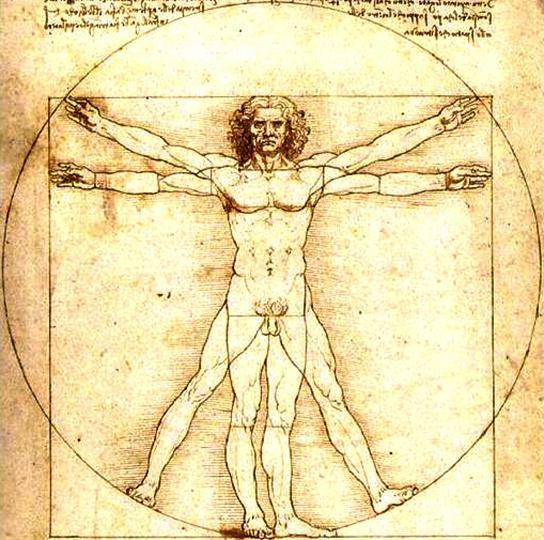


Video games, where the past, present and future of art become one.


Justin Brenis is co-founder and editor at Pixel Perfect Magazine in Cleveland, OH. Check them out at www.pixelperfectmag.com. You can also follow them on Twitter @ThePixelPerfect.

 
Problem? Report this post
JUSTIN BRENIS' SPONSOR
Comments (27)
Dscn0568_-_copy
May 26, 2011

This brings back memories. So many articles were written about this that Bitmob had a Spotlight feature just for Roger Ebert articles, and there were still one or two Ebert-related pieces that were front paged afterwards.

While I wasn't as offended as some people, looking back at it the aritcle was an extremely short-sighted, and Ebert even apologized for this later: http://blogs.suntimes.com/ebert/2010/07/okay_kids_play_on_my_lawn.html.  I personally enjoy reading Ebert's articles and watching the new At the Movies, but re-reading the original piece I think if you're going to use a click-baiting name like "Video Games Can Never Be Art" you need more than a counter argument to Santiago's presentation video to prove your point.

Pixel-justin-01
May 26, 2011

Chris, I know this was a topic heavily discussed when the article was still new, but I was just lazily googling about when I came across it again...and I was genuinely surprised at how frustrated reading a year later still made me.

So, then I wrote this up and now I feel a lot better haha...glad that you enjoyed reading it, and I totally agree with you about the click-baiting.

Sexy_beast
May 26, 2011

While people have been so busy asking whether or not games are art, has anyone ever taken the time to ask, "Does it matter whether or not games are art?"

Besides me, that is.

I'm sick of this discussion. Not because I'm somewhat on the receiving end of it as a gamer, but because gamers really want their medium respected in such a way...if being considered "art" is respectful. If the world suddenly agreed that games were the same as Duchamp's "Fountain" or a velvet painting of Elvis, would it make them more enjoyable for us gamers? Not in the slightest.

So I think we all should just put this topic to rest, whether it's used for actual discussion/debate or as a means of humor.

I'm an art graduate and even I will gladly admit that none of this matters.

Me04
May 27, 2011

Agreed. The games as art debate has become nauseating due to the regular acts of stupidity from both sides. It quite simply doesn't matter what Roger Ebert thinks and I don't care to change his opinion on that.

Still, the stupidity at which people respond to him is just as frustrating as many people find Ebert's arguments. That's not me attacking this piece, by the way. I'm specifically referring to someone who posted a link to a YouTube clip of Metal Gear Solid 4 (in particular it was the Meryl and Johnny scene in the final act -- yeah, that one) and asked him if he could deny games were art after watching that. Even worse is that Ebert watched it and replied. CRINGE!

It was either a very well-made troll, or pure ignorance and stupidity.

Pixel-justin-01
May 27, 2011

Ryan, I wouldn't say that none of it matters. I would say it is probably a tired argument at this point...and I would even agree that Ebert's opinion is just that of one person (as is any critics).

However, the only reason I chose to write this so long after the fact is because I was surprised to see how charged up reading this made me. If anything, regardless of whether or not video games will ever be displayed in an art museum (ahem, The Smithsonian's upcoming video game exhibit), it is always an interesting discussion to see gamer's opinion on this matter.

I even say that I don't believe any of us are looking for validation. Who cares if one man changes his mind--even if most of the country looks to him as a judge of character (which I think is silly).

All in all, I just like to generate discussion, and I respect your decision to let sleeping dogs lie.

Thanks for reading!

Sexy_beast
May 27, 2011

Again, what's the point of generating such discussion? I'll admit that I was pretty invested into the topic, myself, but that died off once I studied art and realized that the word itself is meaningless to the progression of a medium. What this discussion/debate does is make gamers look like even bigger babies whenever someone doesn't share their view on the medium.

If someone mentions games being a little too violent, gamers get angry. If someone complains about games being a little too offensive in certain areas, gamers ridicule them and call them names. If some stiff-lipped beatniks claim that games aren't sophisticated enough to be art, gamers shit their pants and name titles that would make Ed Wood laugh.

It's not "letting sleeping dogs lie," it's taking whiney dogs that crap on the rug and kicking them outside where they belong.

Default_picture
May 27, 2011

I'll say this much, Ryan. Most games contain dialogue that'd make the master of schlock himself blush.

Default_picture
May 27, 2011

Yep, saw that video where the dude acts these out. I'm surprised there's only one from Resident Evil...that series could easily comprise all 50.

Not coincidentally, it's mostly poorly-translated JRPGs.

37893_1338936035999_1309080061_30825631_6290042_n
May 27, 2011

Got to agree with Ryan and Chris, both parites just need to let it go. Gamers are totally looking for validation for games as art (covering it up with synonyms like "acknowledgement" and "acceptance" is not fooling anyone,) and while I thought it was fine at first, it's gone horribly arwy.

Ebert is not the final word when it comes to what is art. No one person is. It takes a lot of people a long time to have a shift in thought processes. And the more people picking up controllers and playing games, the faster this process will go. Why gamers are putting all their eggs in the Ebert basket is beyond me.

Let's chill out. Let games evolve on their own without constricting them to a label (even one as broad as art.) I'll give Ebert one thing: the more gamers bitch and moan about it, the worse our argument becomes.

Pixel-justin-01
May 27, 2011

Chase, I don't think that "letting it go" necessarily is the right response. While it might not be most effective to continually respond to it, and the way some people do gives people like Ebert the validation HE is looking for, I think that discussion breeds evolution.

Granted, if the discussion is different people all saying the same thing the same way than that could potentially slow the process down, but I think that no good evolution (maybe besides, you know, Pokemon) ever began without hearty discussion.

I agree that Ebert is not the Art Police, and lets hope it never comes to that. He's one man with a singular opinion--somehow though, someone out there decided that this singular opinion was top quality (and in regards to movies, it can be) and so now when he comments on anything from video games to the price of canteloupe, it feels like the whole world glances on patiently awaiting his thumbs. It's kind of sily if you ask me.

All in all, I can't argue some of your points. Nor would I want to. I agree that as a community we need to let games evolve--and if you look at my previous comments you'll see that this piece was written more out of shock that I still felt so passionately about this a year after reading it for the first time. 

Thanks for the read!

Default_picture
May 27, 2011

While I've long argued about the importance of the "games as art" debate (primarily to insulate it from unconstitutional legislation like California AB 1179, among other reasons), Ebert's opinion is hardly the final word, nor does it matter. Think of it this way: do we give Fox News much credence when they publish hopelessly uninformed reports on Mass Effect and Bulletstorm? Do we consider their opinions legitimate? Of course not! Then why do we legitimize Ebert? His standing in the artistic community may be a few rungs higher than Fox, but both entities know zilch about video games. Hence their opinions are irrelevant.

Pixel-justin-01
May 27, 2011

Jason--but clearly they make for interesting discussion. If not amazing things like The Daily Show wouldn't exist! :-P

Default_picture
May 27, 2011

Justin, did you see their recent report on the NEA's FY 2012 Arts in Media Guidelines? If not, stay tuned for my forthcoming article.

I wouldn't call it a reasoned debate so much as it is promoting idiocy (and pandering to an entrenched audience who has preconceived notions of gaming).

Pixel-justin-01
May 27, 2011

I look forward to reading it!

Just for clarification, to what are you referring when you are talking about promoting idiocy?

Default_picture
May 27, 2011

Promoting idiocy=suggesting that Mass Effect allows for simulated rape, or that NEA FY'12 guidelines cover blockbusters like Call of Duty. There's legitimate political differences, and undeniable facts. When Fox gets the latter wrong, the former is irrelevant.

Default_picture
May 27, 2011

While Ebert's knowledge of film is unimpeachable, his understanding of video games is rooted in a 1970's mentality, where the medium hasn't evolved since Space Invaders. That said, I'm not sure why so many people legitimize his comments by repeating them. Ebert isn’t the country’s official cultural spokesperson, nor is he the only person who fails to recognize how far video games have come since Tennis for Two.

Moreover, if gaming is represented by the likes of MGS4, Resident Evil, Grand Theft Auto IV, and Red Dead Redemption, then the medium isn't close to what I'd consider art. Particularly in the area of storytelling, gaming has a long way to go. Few who consider themselves "gamers" will acknowledge this, but the "story" of most video games sucks. A handful of thoughtful games--Heavy Rain, Uncharted 2, Portal 1 & 2, Bioshock, L.A. Noire--transcend the medium, but most gaming stories are terrible, with B-movie dialogue and zero character development. Most games don't know the meaning of subtlety.

Before we indignantly attack Ebert, we ought to make sure our cherished medium is rock-solid (it isn't).

Pixel-justin-01
May 27, 2011

Jason...I'm shocked! How could you say that games like Damnation, the rebooted Prince of Persia, and Final Fantasy XIII don't have beautifully written story lines and dialogue? 

(I'm just kidding, they're terrible :-P)

No, I agree with you, most games take plot and dialogue and put it in as a backseat to action when in some (read: most) cases it is really needed to accentuate the experience. Especially now that game are becoming more and more like interactive films on a regular basis.

Looking to Chase's comment above, I don't think video games, or any art medium, can ever be "rock-solid" as you say. Perhaps I am reading into your comment wrong, but art is such an evolutionary process that if it became rock-solid wouldn't it then be so predictable and commonplace in its methods that it would start to lack that intrigue that makes art, art?

In the end, I wouldn't call this an indignant attack on Ebert, though being the writer I could just (read: probably am) be biased. I would say this was more a comment on people who, like you said, haven't yet recognized how far games have come since the 1970s--and it just so happens that Roger Ebert stands as a figurehead for that group, seeing as he can so easily put his commentary out in the open.

Thanks for the read!

Default_picture
May 27, 2011

Gaming needn't be perfect, but it ought to be more defensible before we launch an airstrike on Ebert's throwaway comments (which is all they really were). I've had sublime experiences with gaming--L.A. Noire is evocative of my favorite movie, L.A. Confidential--but often, it makes me cringe. All these technological advances, and gaming can't unearth real writers. It boggles the mind.

37893_1338936035999_1309080061_30825631_6290042_n
May 27, 2011

Hopefully, this comes off as exaggerating a point to ridiculousness rather than me sounding pretentious, but I really feel like questioning anything as art is pointless.

In general, it sounds like everyone can agree that movies are art. But Jason, when you say that game writing is lacking and akin to "B-movie dialogue," are you now saying that B-movies aren't art?

So then the question becomes: What counts as a B-movie?

When it comes to games, popular figureheads for "proving" games are art are things like Okami, Flower, Bioshock, etc., but do we count Madden as art? Where do we draw the line?

There's no good way to define art. Either you have a vague and broad definition that allows way too much in (because if we count games as art and Madden is a game, is football itself now art? Is kickball art? Is freeze tag art?) or you have a narrow definition that leaves too much out (which, when it comes to legislation, can be really messy. If movies are art, but pornography is not, just when does nudity or a sex scene in a movie cross the line and become pornography and therefore, is no longer protected?)

Except when it comes to legislation (and I do not envy any judge tasked with attempting to define art for legal reasons,) the "is _____ art?" discussion is fruitless and pointless.

Things evolve naturally. Enough people at the Smithsonian must've been gamers in some form because I don't remember some big protest that forced them into an exhibit.

Or (to complete my cynical, but light-hearted rant,) it's probably all about money. If people are paying to go to Olly Moss art shows (which sometimes feature video game-related characters or themes,) and I Am 8-Bit galleries and (cringe) video game movies, they're naturally going to be lumped in with other mediums that are already recognized as art that also make piles of cash. 

Instead of quibbling over semantics and definitions, let's enjoy our medium for what it is right now: fun.

Default_picture
May 27, 2011

Yes, Chase, I am saying unequivocally that B-movies are not art. The ones I've seen (especially Sci-Fi channel originals) are nothing but cheap money-grabs, with shitty special effects substituting for character development, story, and dialogue.

To answer your other question--Okami, Flower, and Bioshock are art. Madden is not. Madden isn't trying to express anything artful (beyond the design of the players), so why should we treat it as such?. What is Madden trying to say? When does it achieve a sublime level of artistry? Subtlety? I'm not trying to take anything away from Madden, but it clearly isn't aiming for artistic achievement, and we shouldn't treat it as such.

Making a blanket statement like "video games can never be art" isn't akin to constructive criticism, nor does it add anything to the debate (it's meant, in fact, to end the debate). But attempting to break down all distinctions, and eliminate all labels, does no good either. Casual games are a clear subset of our industry. We can choose to acknowledge that, or pretend that there's no such thing as "casual" or "core" and everything is everything. Some games and movies are clearly more artful than others. We can acknowledge that, or continue believing that Plan Nine From Outer Space is as competently made as Citizen Kane, and Superman 64 is equally as artful as Uncharted 2. Not everything is misunderstood or has something to say. Sometimes a shitty game is just a shitty game. And sometimes, a game (like Madden) doesn't try to "express" anything. It just exists for the enjoyment of gamers.

Even Ebert has admitted that most movies are not art. I give him little credence when it comes to video games, but the man knows movies.

No doubt, drawing the distinction between artful works is difficult (though in some cases, stand-out titles and shovelware should be quite distinct), but throwing up our hands and declaring everything equally artful isn't the way to go either. Everyone is special, so no one is.

37893_1338936035999_1309080061_30825631_6290042_n
May 27, 2011

But see, like Ebert, you can't be the final word either. No offense, but who are you to tell me or anyone else that something is or isn't art? Who is anyone really?

I love Jackson Pollock's work, but it can easily be said that it's just someone throwing paint at a canvas (and would the person who says that be wrong?) Why should that count as art?

In the end, everyone is going to have their own definition of art, and that's fine because, like we've alluded to before, the one time it really makes a difference is when it comes to legislation and censorship.

Default_picture
May 27, 2011

My point is not that myself, Ebert, or anyone else should be the final arbiter. My point is that we shouldn't be afraid to make judgments in the name of being inclusive. The best we can do is gather the available evidence and support our opinions.

Also, there's a world of difference between discussing the nuances of Pollock and lumping Madden together with Okami and Flower. As I said, not everything has something to say (nor makes the attempt). To say otherwise assumes that every movie, painting, song, game, and book is equally relevant, and due to extraneous factors, some can't achieve their true vision. By that assumption, everything is equally artful.

I believe that people make choices, and sometimes those choices are bad ones. Sometimes, people attempt to express themselves, and sometimes they strive for a quick buck. And sometimes, no effort is made to achieve artistry, and in fact, it's an apples and oranges comparison (a great movie vs. say, Tic-Tac-Toe). This separates the dreck from the art, and amusement (i.e. mere games) from creative endeavors that move you.

Default_picture
May 27, 2011

With L.A. Noire recently being released, I wonder if we can expect to hear more on games from Ebert anytime soon.

Default_picture
May 27, 2011

Ebert will never change his mind, because what makes video games unique (our ability to influence the outcome) disqualifies them from being art in his opinion. It doesn't matter how artful they become. If I remember, Ebert loved L.A. Confidential, so I would think he'd find the influence delicious. But he's preemptively made his mind up.

Dscn0568_-_copy
May 27, 2011

Actually I found it interesting that Ebert hasn't commented on any gaming related things since that article. He didn't review Scott Pilgrim (he was apparently working on his memoirs and missed it) and he hasn't commented on L.A. Noire being shown in one of the recent film festivals.

Profile_pic4
May 29, 2011

Great post and I'm always glad to revisit this topic.

It seems every time the "are games art?" question is asked, it is followed with a "...and do we care?"  I'd ask the same about movies.  Are movies art?  Before you answer, consider Cabin Fever and Pee Wee's Big Adventure.  ...Cringe...

Last point and then I'll move on.  Ebert is only being so patronizing and opinionated because someone decided his opinion mattered.  What he considers great cinema seems to arbitrarily change from moment to moment, so why should I respect his views on movies at all, much less the games-as-art argument?

Every parent knows this: If you talk about the boogeyman under the bed, you give him power.  Let's forget Ebert is there and move on.

You must log in to post a comment. Please register if you do not have an account yet.