Home
Home

Michael Soracoe, aka "Sullla," is a well-known member of Civilization communities CivFanatics and The Realms Beyond who's also worked with Firaxis during development of Civilization 4. He observes how online communities band around bad sequels to popular franchises through his own disillusionment with Civilization 5.
I witnessed a nearly identical turn of events surrounding UFO: Extraterrestrials, a turn-based strategy game that many of us hoped would be a worthy spiritual successor to the classic X-Com: UFO Defense.
Has a bad sequel ever broken your gaming heart?
 Every gamer has been in this situation before.
A long-running franchise that you've been following for years now is about to release a new title with loads of hype and excitement behind it. The early online reviews are positive, and you rush out to buy the game when it hits shelves. For the first couple of hours, everything is great: new content to explore, new features in play, and old characters reimagined with the latest, shiny new graphics. This is awesome!
But once the initial excitement wears off, you start to realize that things aren't as great as you first believed. You were enjoying this latest installment just because it was new and unfamiliar -- not because of its actual merit. Your second play session isn't nearly as much fun as the first, and by the third or fourth time, you're starting to realize that the gameplay is repetitive and tedious.
Unfortunately, you've run afoul of something all too common in the gaming industry: the bad sequel.
This is a phenomenon that we can apply to just about any franchise in any genre; if you're reading this, you can probably think of at least one personal example. I'm going to focus on Firaxis’s Civilization 5, a recent release from last September that falls under this categorization.
Civ 5 is unquestionably a bad sequel; while it released to rave reviews from the "official gaming press" due to heavy marketing from publisher Take Two, the user reviews have been far less generous, as evidenced by one-star ratings outnumbering five-star ratings at Amazon.com by a tally of 264 to 82. That's a rate of more than 3:1, with the worst score far outnumbering the best.
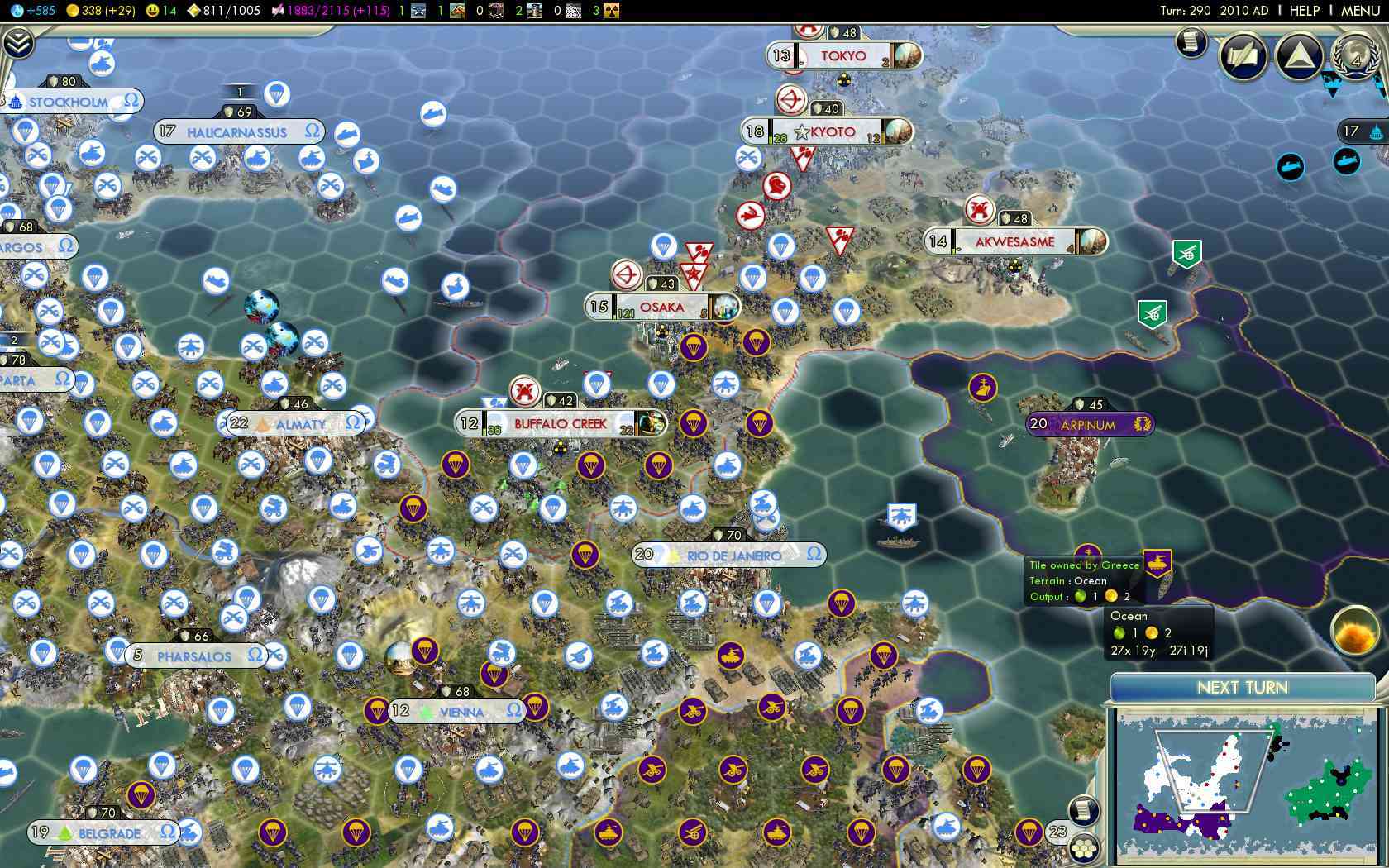
Civ 5 suffers from a number of faults in its design, like creating a global happiness mechanic which is supposed to curtail expansion (but doesn't) and a diplomatic system in which your A.I. competitors all act as insane warmongers. Most problematic of all is a one-unit-per-tile combat system, which is intended to create tactical warfare similar to the Panzer General series. But Civ 5 lacks the large-scale open maps and complex wargaming rules which made that series a success.
The result is a tangled mess where units clog up on terrain barriers to create unruly "traffic jams" compounded by an A.I. that has no clue how to play its own game. Tack on a horribly laggy and unplayable multiplayer component that makes competing against other humans nearly impossible, and you have a recipe for disaster.
If I had to sum up Civ 5 in one word, it would be "boring." It's a boring game to play with few interesting decisions to make and little going on. Short of outright not working due to technical errors, that's about the worst crime a game can commit.
Perhaps the most interesting thing about bad sequels is the social response that they create in their respective gaming communities.
Continue to page two for Michael's observation about how such online communities implode.