The threat of unbalanced design in modern gaming

Default_picture
Friday, October 12, 2012
EDITOR'S NOTEfrom Sam Barsanti

As Clayton points out, the biggest problem that developers of free-to-play games have to solve is how to make it so that the guy with the most money isn't necessarily the guy who always wins. Considering how quickly this trend is catching on, hopefully more developers will figure things out sooner rather than later.
YOU LOSE

Make no mistake, this is a rant article. Many of my arguments are commonly discussed, but I feel the need to wrap it all up in one nice package to properly present the results of purposefully unbalanced game design. 

The danger of unbalanced design first came to my attention while in a public development discussion in my America's Army days. We were having a standard back-and-forth about feature ideas and requests, but one guy was obviously going on a "We should make it like Counter Strike" rant, so I served him up a rant in return about why that is a great example of unbalanced design. Now, before I lose you, I fully understand why people play Counter Strike and have a jolly ol' time with it. Even I blew many hours on it when I was in college.

But that doesn't make it a balanced game. For one, the team that wins the starting match has a large advantage since winning teams get more money each round and can afford better weapons, giving them better chances of winning again. The guy's response to that was something along the lines of, “Well, you shouldn't lose the first match.” 

Before that, I had taken all of his comments as fair opinion, but that is where the realization came in that not only did he actually prefer an unbalanced and not particularly "fair" game, but also that he had no idea why.


I'm going to sound like a condescending jerk, but I still think it needs to be said that the common gamer typically has no idea what actually makes a game fun. They can certainly tell you what they like and what they don't, but it tends to take a pro-level gamer or designer to understand everything that is going on. Well-made level design embraces what makes a game fun with a number of considerations, especially in multiplayer. Some examples include time to contact with opponent, appropriateness of weapons/interaction abilities, and balancing structural design on non-symmetrical levels.

In my hope to shed light on the design concepts that I feel are just dick moves, I will also counter with why some people desire them. The overall theme I have a problem with is the classic "it pays to be a winner" idea. Call of Duty’s Kill Streak rewards are an excellent example of this, since they take an already successful player and give them more effective tools to keep the new or less-skilled player down. Call me crazy, but if anyone needs an artificial boost it’s the player who is doing crappy.
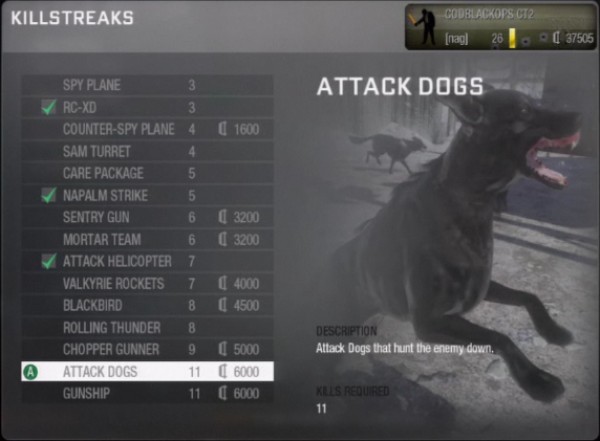
Why do people put up with this? I'd say the fun of having a dominating streak is apparently worth it to many gamers, even if achieving one might require them to lose more often than not. As a blast from the past, Monopoly is certainly worth mentioning for allowing something similar. By design, that game was meant to be frustrating and to convey how evil monopolies are. Surprisingly, everyone thought it was fun and the concept backfired. Despite the unbalanced design, players wanted that chance to be the dominant winner sending all their friends to the poor house. With this attitude, it is no wonder that unbalanced video games tend to attract less-than-mature players.

Another facet of this problem is weapon and gear unlocking. Some games offend less than others, but the issue is very prominent when more effective items require unlocking by either achievements or time spent grinding. Again, this is a roundabout way of rewarding an already more experienced player with better tools, while giving new players (who might need help) a disadvantage. Many can't help but to eat this up as this plays on human psychology for the drive of collecting and completing small goals. It is very easy to get caught up wanting to collect doodads and going out of our way to complete ridiculous achievements just to see an icon light up.

Maybe I'm on my own here, but I think competitive games should be balanced by concentration of skill on core game mechanics. Take chess as an example, since it is balanced and as old as dirt. If presented as a modern video game, it would go something like this: Starting players don’t get any knights, but if you win a round you get all of your pieces. If you lose a round, your opponent takes away two of your pawns. If you capture four pieces in a row, then you get to take an additional piece. That sounds cool and fair, right? 

There are some sneaky developers that are obviously having design meetings on how to exploit human behavior for profit. Games like Farmville are a near-perfect example for exploitation of our desire to collect and accomplish small goals. As that style becomes more and more popular, there will be more and more opportunities to make people pay for a balanced experience. 

In the future, there will be many cases of companies basically seeing what they can get away with when it comes to how much you pay for a game. Then there will be the double-whammy of games that are unbalanced on purpose, just to give you an incentive to pay up and make it balanced, annoying the next new players until they pay as well.

With these points in mind, I only ask you take some time while you are playing that seemingly frustrating game to ponder if you’re really having any fun. Some out there will still say yes, and that is their right, but for those who want change, they are going to have to vote with both their voice and wallet.

Fortunately, games do exist that make a solid balance out of all of these issues. Team Fortress 2 is a great example. The most critical gear and abilities are available from the start, while many variants are later available that tweak stats up and down for preferred playing styles rather than outright being better. The balancing solutions already exist, it is just up to the common gamer to both realize and demand what they want.  

 
Problem? Report this post
BITMOB'S SPONSOR
Adsense-placeholder
Comments (5)
Bmob
October 03, 2012

With the micro-transaction model, the unbalanced gameplay which favours those with lots of time or experience starts to favour those with more disposable income. How long until these games become classist?

Default_picture
October 14, 2012

Using the example of Counter-Strike is weak in your argument against imbalance. Counter-Strike's money system is an example of positive feedback in game mechanics, or in David Sirlin lingo "slippery slope" gameplay. It just means that if you lose, you have a harder time winning in the future. Contrast this with negative feedback ("perpetual comeback" in Sirlinian) where the more you lose, the more the game favors you to eventually win once in awhile. Neither of these game properties implies that the game system is imbalanced as a whole. It's just a property of the game state.

Really this is more an argument of what you prefer in games. I can understand that it can be frustrating to new players when they are put at a disadvantage when they inevitably lose, and it feels like the stronger team is unnecessarily rewarded. But when the opposite is true, it can become frustrating to the experienced players who put a lot of effort into honing their skills only to be occasionally beaten down by the game system for winning too much. Worse, the beat-down is delivered by another player, typically a worse player who can perceive their victory to be of their own merit rather than attributed to a system handing out gradually increasing penalties. Why is that desirable? Should a game system make it a goal that everyone wins at least once in awhile to preserve their feelings? Even if that were the case, negative feedback still fails the goal of preserving feelings since for every time you complain about how it felt to get hit with a CoD killstreak ability, someone else complains about how it felt to get hit with a Mario Kart blue shell.

In both of these cases the only demonstrable imbalance in the game is PERCEIVED imbalance. If neither of these properties interfere with the better player winning, the game isn't imbalanced at all. Its property of being positive or negative feedback loops isn't a good or bad quality inherently. Counter-Strike isn't good because it has a money system, it's good because of the amount of strategic decisions and team-player skills required to achieve victory. Monopoly isn't bad because a player who owns half the board has won long before the game ends, it's bad because of the lack of meaningful decisions required to get there.

Your article is really one of personal preference in games, and ought to be framed as such. It's a subjective look at what kind of games that certain people happen to like, but doesn't much address the concept of objective balance in games, which is the discussion of how many viable decisions can be made in the context of the game space and how those decisions interact with each other. In fact you make a very glaring contradiction in the article wherein you refer to Chess as a balanced game when Chess has the very property that you despise: positive feedback. Every time you take an opponent's piece in Chess, you are depriving him of tools with which to take victory. When you lose an interaction in Chess, you are setting yourself up for additional loss in the future. This is exactly parallel to Counter-Strike's money system and CoD's killstreak abilities. If you think they're bad in those games, why is it good in Chess?

You are correct in stating that unlocks in video games are indeed a flaw in competitive gaming when the objects that you "earn" are permanent and get you advantages over players based on time spent rather than contextual decisions made. Even Team Fortress 2 doesn't pass muster because if a situational weapon is optimal in a given circumstance, but I'm not allowed to choose that option because I haven't played enough or shelled out bucks, this unfairly limits my competitive ability because of how the developer chose to make money. Making money is the domain of marketing, not game design. I would not even have discussed Farmville and the like as I will not merit them as games at all but callous wastes of players' time with no meaningful decisions to be made.

I feel where you are coming from as I used to say the same of Counter-Strike, but after learning more about game design I came to find that it wasn't a bad game, just not one that I preferred. If you frame the article that way, it's fine.

Default_picture
October 14, 2012


Thank you for the additional insight. Preference is certainly a side factor here, but my main complaint is for full on unbalanced design towards the winning team. To clarify I am definitely not a pro blue-shell kind of guy. Losing due to sheer randomness or just because someone else was doing awful not long ago is even more infuriating. I know I briefly noted if someone needs help it is the new guy, but there was no intent to infer I think more games need a forced built in handicap. I feel most of these "it pays to be a winner" situations are to keep the player interested when it is human nature to want to win anyway, it all seems quite unnecessary.

You do bring up an interesting point up about piece loss in chess. I see this more as the equivalent of hit points. Everyone starts with the same equipment and losing them is part of the core game. On the flip side, the Counter Strike money system or games with kill streaks, suddenly new powers are gained during what could have been a more balanced game. It is not limited to personal perception and is easy to point out the unbalanced gameplay aspects. Saying chess has the same issues would be like saying any multi unit based game is unbalanced because you lose units. To win or even just play the game (special rules aside) units need to die. For the modern unbalanced games I speak of however, their core gameplay fundamentals would all still be there without all the fluff unbalanced additions. In Counter Strike everyone COULD get a set amount of money each round, but it gets all jacked up by giving the winners significantly more money to spend.

Team Fortress 2 is certainly not a perfect example of balance, but it is a good example of balancing free-to-play elements with gameplay balance. As stated, compromises are possible; my warning is to keep an eye out for systems clearly only in it for the money with blatant disregaurd to what most would consider fair gameplay situations.

I see you hate Farmville as much as I do, but it is still a good example of game design custom crafted to abuse human behavior for profit. Other games do it, just not quite so obvious.

And in closing I made sure to note I played CS and enjoyed it plenty to separate the good / bad game factor from balanced / unbalanced. I am quite aware of the design; whether or not I like it is a separate issue from the winner money system being a good example of breaking balance. Someday gamers are going to look back on how awful of an experience some games made it for new players and shake their heads, I just wish we would hurry up and make it to that day.

Default_picture
October 15, 2012

Since we're on the topic of positive feedback in games, it might be useful to analyze the actual effects that feedback generates. An aspect that one might like about positive feedback is that it places a lot of focus on the initial encounter and creates an additional tension in the first moments of the game. DOTA style games do this by having an early game that sets the stage for a late game. Since the two phases of the game are very different, it's valid to place additional emphasis on one part of the game that's meant to be accented. How well you do in the lane, where the number of moment to moment decisions is high, will determine your advantage late game where the number of those decisions reduces. This is perhaps more of a stylistic design choice, but its effects certainly ripple throughout the design.

One objectively negative effect of having positive feedback is that it tends to create scenarios where the game is functionally over before the rules declare the game over. An efficient game should not have a portion wherein one player's decisions are meaningless because he cannot overcome the system's favor towards the winner. That situation is a waste of both players' time and is usually resolved by the inclusion of an option to surrender. If the player detects that the match is over before the game system can, he must have the right to forfeit so the game can begin again in a state where both players' choices are once again meaningful.

Now to your examples. Games wherein units are gradually lost carry the positive feedback trait even if those units are identical and do not carry unique options; being disadvantaged by numbers is just as damaging to your ability to win as losing options. It is distinctly unlike hit points in that their loss carries greater ramification than simply a reduction in score. Street Fighter games have hit points, but your ability to win is (generally) not reduced as they deplete - you just have fewer chances to commit errors or to be outplayed.

Along with Chess, Starcraft is another example of a unit based game with positive feedback. While Starcraft differs from Chess in your ability to add units, it's important to realize that Starcraft is not so much a game about removing units from your opponent as it is about managing resources. The more efficiently you manage your resources and their resultant units, the more units (and thereby resources) that you can remove from your opponent. When your net income is able to vastly outpace that of your opponent, you have won the game; barring any mistakes in play on your part, your opponent's decisions no longer matter. Both Chess and Starcraft matches are very frequently surrendered. In fact if a player detects that a critical engagement will lead to an insurmountable income disparity, a Starcraft match would even be surrendered before the income disparity begins to emerge!

Back to Counter-Strike. Assuming that you are playing a structured set of some amount of matches, very rarely will one team surrender the set if behind by several matches. The fact of the matter is the game is very much winnable by both sides at any point. It may take a switch in strategy or a different engagement location. The fact that surrendering is typically not seen in a Counter-Strike set would indicate that it is not affected by positive feedback nearly as strongly as Starcraft or Chess where almost no matches are played to completion. This would appear to be more parallel to the fact that almost no one has ever forfeited a Street Fighter match midway through. If anything, Counter-Strike is affected more strongly by positive feedback through the depletion of teammates as they are killed during any given match. Being the sole living member of the team creates a stronger incentive to surrender than being behind some amount of money. This indicates that the money and resultant items available for purchase do not affect the balance of the game so strongly as you indicate.

I don't believe that Counter-Strike, Starcraft, or Chess will cause us to be embarrassed at our game design choices in the future. I could point out many examples of game design that I would hope are embarrassing to future designers, but that's completely off-topic. I appreciate the opportunity to discuss design with you.

Default_picture
October 22, 2012

Sorry for the delay, back from training. Certainly agreed it isn't fun to feel doomed to play out an already decided game. As always some games prevent the issue more than others, but usually it is a perception issue. For example having a bad start at a pro level game, doesn't mean you automatically lose, however chances are extremely low in winning based on past experiences.

Forgive my hasty example of hit points, as your detailed breakdown is certainly more correct. That said, at the end of the day I was merely trying to convey games with the foundation of losing units or pieces as a part of gameplay are totally different than examples such as modern games with their own unique gameplay foundation with unbalanced game design latched on at the end.

I feel strategy games such as Starcraft are more about knowing tactics and counter tactics for all situations than specifically resource managing, but alas that is a seperate topic :)

As for the Counter Strike factor, I agree it isn't so lop-sided that it is a disaster, yet depends a lot on the round count. When playing 20 rounds with people coming and going, the money effect is less noticable; however if you are only playing 3 rounds, it is a pretty big deal. I can't speak for others, but offhand if my team loses round one, I always feel like, welp round 2 is going to suck, but let's try our best. To me that gives off more of a surrender vibe than being the last man alive where the incentive is to win not only the round and bonus money, but priase from your team as well. Again the issue is that winning is plenty positive feedback enough, while unbalanced addons create unnecessary complications. Level grinding aside, I think it is safe to say it is rare where a player has already decided to play a game, but then decides to keep playing simply based on round money or a kill streak. Staying on that topic, the rage quit factor is much higher for those who suffer from being defeated by other players deploying such unbalanced "perks". 

A friend brought up an extra note worth consideration with one example being how the match time and respawn times change in TF2 as the assaulting team progresses through a map. This technically is a "pays to be a winner" class design, but I still think appropriate since even with this feature, TF2 can still suffer from stalemates. I bring it up as a reminder that balance is very much a grey subject where not all tweaks are necessarily unbalanced ones or bad ideas.

I highly appreciate you taking the time to put in thoughtful dialog as well! Always good to have further review to ponder on missed and new concepts.

You must log in to post a comment. Please register if you do not have an account yet.